


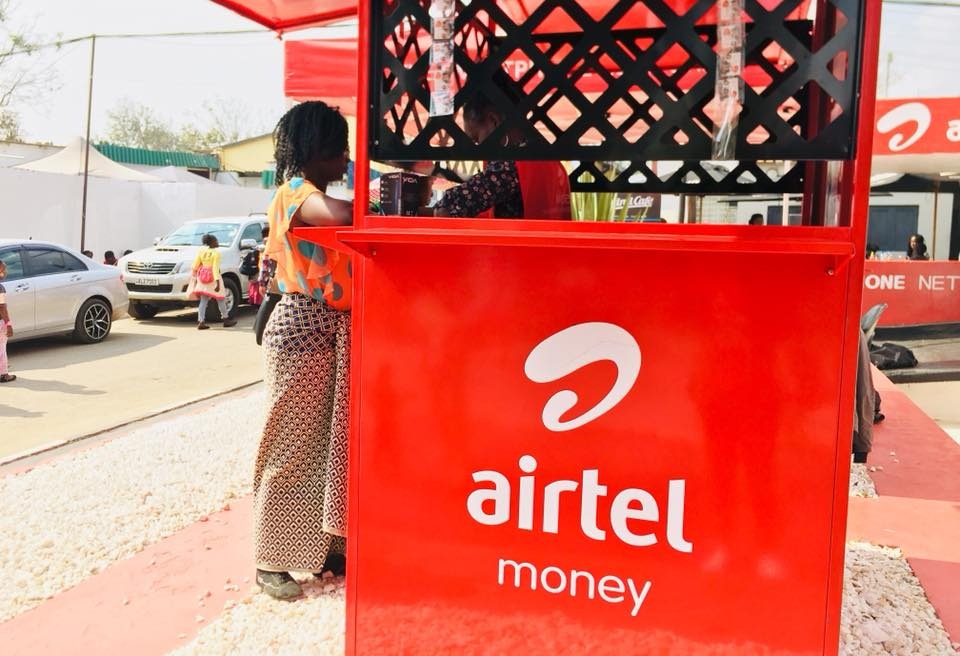
Airtel Africa has named London as its preferred listing (IPO) venue for Airtel Money, the mobile financial services unit that processed more than $245 billion in transactions on an annualised basis in the June quarter.
The Group’s announcement in the first-quarter results published Thursday shows a decision that also exposed how much of the unit’s profitability still depends on pricing set internally by its telecom parent.
Group revenue rose 31% on a reported basis to $1.85 billion in the three months to June 30, 2026, lifted by currency appreciation in Nigeria and Zambia; on a constant-currency basis, growth was 21.1%.
Profit after tax rose 27% to $198 million, a figure the company said was held back by a $37 million exceptional finance cost tied to a legal settlement and a $6 million loss on derivatives and foreign exchange, against a $22 million gain a year earlier.
Airtel Money’s numbers
Airtel Money, the group’s mobile money arm, again grew faster than the wider business. Revenue rose
38.9% on a reported basis and 25.8% in constant currency to $404 million, after $70 million in inter- segment eliminations for services billed to the parent’s mobile operations.
Its customer base grew 23.3% to 56.5 million. Average revenue per user rose 3.5% to $2.40 a month in constant-currency terms.
The division’s EBITDA margin, however, fell 363 basis points on a reported basis to 49.1%. Airtel Africa attributed the decline “primarily to the renegotiation of intra-group agreements” between Airtel Money and the mobile business, the internal charges the fintech unit pays for access to the parent’s agent network, infrastructure and subscriber base.
The company said the change had no effect on group-level margins, since it only moved profit between segments that are consolidated together.
Why it matters for the IPO
Those intra-group charges are invisible to outside shareholders while Airtel Money sits inside Airtel Africa’s consolidated accounts.
Once listed separately, they become a disclosed cost of doing business, and any renegotiation of the pricing between parent and subsidiary would flow directly into the margin, and valuation multiple, a public market assigns the fintech.
The quarter’s margin move is therefore less a one-off accounting note than an early data point for the question investors will be pricing into the prospectus: how much of Airtel Money’s economics reflect a real standalone business, and how much reflect a related-party arrangement that has yet to be tested at arm’s length.
Group chief executive Sunil Taldar said the London listing would give the business “access to a broad international investor base,” positioning it to “unlock the long-term value of one of Africa’s leading fintech platforms.”
Airtel Africa first signalled a possible IPO of the unit more than two years ago; Thursday’s announcement resolves the question of venue but not of structure or pricing, which will depend on the prospectus.
The Nigeria angle
Nigeria remains the group’s largest mobile services market by revenue growth, up 50% on a reported basis as the operator lapped last year’s tariff increases, but Airtel Money’s Nigerian business is still small relative to its other markets: revenue there grew 153% in constant currency, but from a base of just $5 million.
That gap sits against a Nigerian regulatory environment the report flags as a live risk to the mobile-money model generally.
The Central Bank of Nigeria has continued to push interoperability and its own payment rails, and a recent regulatory dispute over telecom operators’; airtime-and-data credit services disrupted products used by millions of subscribers, evidence, Airtel Africa’s own filing suggests, of regulators’; willingness to intervene at the boundary between telecoms and financial services.
Nigeria’s fintech sector, led by operators such as OPay and PalmPay, gives Nigerian consumers a telecom-independent alternative that Airtel Money does not face in several of its other markets.
The naira’s appreciation against the dollar, the group’s weighted average rate moved from ₦1,585 to ₦1,367 over the year, flattered reported revenue growth this quarter, a swing Airtel Africa’s own disclosures show can also move sharply in the other direction.
Group financials, in brief
Group EBITDA grew 24.4% in constant currency, with a margin of 50.1%. The company added more than
920 new network sites in the quarter, its highest first-quarter rollout to date, by its own account, and said smartphone penetration across its 14 sub-Saharan African markets reached 51%, with data traffic up 56%.
Airtel Africa bought back $46.6 million in shares during the quarter and reported leverage of 1.7 times EBITDA. The company also flagged geopolitical pressure on energy costs as a near-term margin risk.



