



When Nigeria’s small businesses entered 2025, they faced familiar headwinds, soaring operating costs, persistent inflation, tight access to credit and an unpredictable business environment.
Yet, for millions of entrepreneurs, survival wasn’t merely about enduring another difficult year; it was about finding the financial tools to adapt, grow and create jobs.
That is the story emerging from Moniepoint’s 2025 Impact Report.
While the fintech giant is often recognised for processing billions of dollars in digital payments, its latest report suggests its biggest contribution may lie elsewhere: becoming an operating system for Nigeria’s micro, small and medium enterprises (MSMEs).
The report presents a picture of a company evolving beyond payments into a growth partner, helping merchants access finance, manage operations, formalise their businesses and build long-term financial resilience.
More than Payments
For years, fintech competition in Nigeria has largely revolved around transaction volumes, customer acquisition and payment infrastructure.
Moniepoint’s latest report shifts the conversation.
Rather than leading with payment figures, the company measures success through business outcomes.
According to the report, 91 per cent of merchants said their business operations improved after joining the platform, 86 per cent reported higher earnings, while 88 per cent of businesses that accessed Moniepoint loans said those loans directly contributed to their growth.
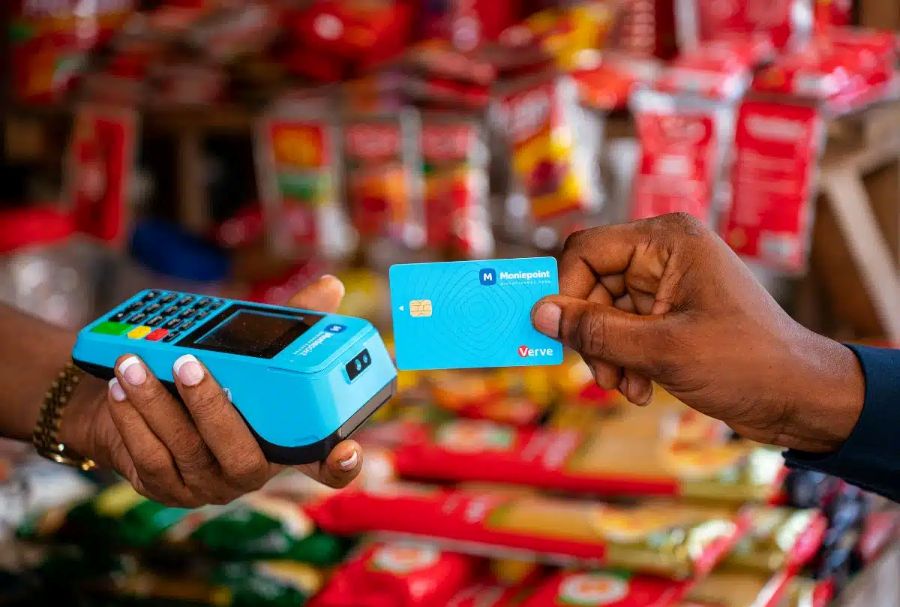
Those figures tell a broader story about Nigeria’s entrepreneurial economy, one where access to finance and digital tools increasingly determines whether businesses merely survive or scale.
Credit Remains the Missing Ingredient
One of the biggest obstacles facing Nigerian SMEs has always been affordable financing.
Commercial lending remains expensive, collateral requirements exclude many entrepreneurs, and informal businesses often struggle to build the financial records needed to qualify for loans.
Moniepoint appears to be addressing part of that gap.
The company disclosed that it disbursed more than $700 million in MSME loans during 2025, with merchants that received financing recording a 36 per cent increase in average transaction value, an indication that businesses invested the capital into expanding operations rather than simply covering short-term expenses.
The impact extended beyond revenue.
More than 27 per cent of businesses surveyed said they increased their workforce after receiving financing, while enterprises using the platform collectively employed over eight million people during the year.
In a country where MSMEs account for the overwhelming majority of employment, expanding access to working capital has implications that reach far beyond individual businesses.
Helping Businesses Run Smarter
Access to finance alone rarely guarantees business success.
Many small businesses continue to rely on handwritten records, manual stock management and fragmented payment systems.
Recognising this, Moniepoint introduced Moniebook, described as Nigeria’s first integrated platform combining bookkeeping, inventory management, payment processing and sales reporting.
The platform enables merchants to monitor inventory in real time, automate financial records, manage staff and track business performance from a single dashboard.
Its adoption appears to be yielding measurable results.
According to the report, 96 per cent of merchants experienced improved transaction security, 91 per cent reported smoother business operations, while 86 per cent said the platform contributed to increased earnings.
For many entrepreneurs, technology is becoming less about convenience and more about operational efficiency.
Formalising Nigeria’s Informal Economy
Nigeria’s informal sector contributes more than 60 per cent of GDP and accounts for roughly 90 per cent of employment, yet millions of businesses remain outside the formal financial system.
Without formal registration, many cannot access credit, secure larger contracts or benefit from government support programmes.

Moniepoint says it worked with the Corporate Affairs Commission (CAC) and the Federal Ministry of Industry, Trade and Investment to simplify business registration, helping formalise four times more businesses than previously achieved.
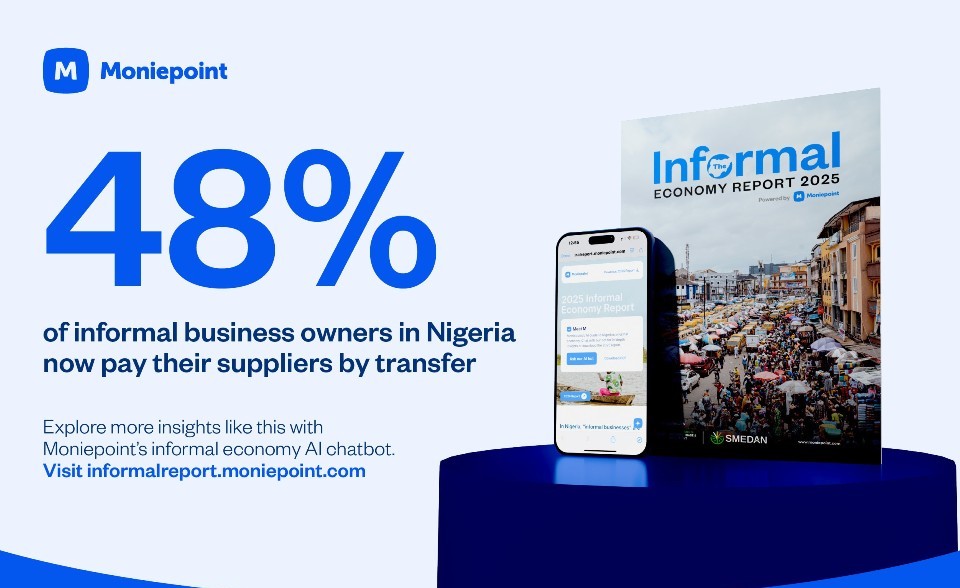
That effort complements the company’s second Informal Economy Report, produced in partnership with the International Finance Corporation (IFC), SMEDAN and the Federal Ministry of Industry, Trade and Investment.
Drawing insights from thousands of businesses and internal data covering more than five million informal business owners, the study found that 79 per cent of entrepreneurs experienced rising operating costs during the year, while 42 per cent had savings sufficient to last only one month.
Despite these pressures, many businesses continued to create employment and sustain local economies.
Financial Inclusion Beyond Banking
The report also highlights a gradual shift from financial access to financial wellbeing.
Among individual users, three in five reported increased savings after joining the platform, aided by products such as automated “save-as-you-transact” features and target-based savings accounts.
Overall, 83 per cent of users said their quality of life had improved, while 85 per cent expressed greater confidence in achieving their financial goals.
These findings suggest that fintech success is increasingly being measured not simply by transaction volumes, but by the extent to which digital financial services improve household resilience and business sustainability.
A Growing Ecosystem for Entrepreneurs
Beyond banking and payments, Moniepoint expanded its contribution to entrepreneurship through education, youth empowerment, women’s economic inclusion and business support programmes.
Its initiatives ranged from financial literacy training for women and persons living with disabilities to engineering fellowships, innovation challenges, grants for women-led enterprises and partnerships with universities to nurture future technology talent.
The company also continued to invest in physical support infrastructure following its upgrade to a national microfinance banking licence, allowing it to expand service centres across Nigeria while maintaining digital-first banking channels.
The Bigger Picture
For years, conversations around fintech have centred on valuations, funding rounds and payment volumes.
Moniepoint’s 2025 Impact Report offers a different narrative.
It argues that fintech’s greatest value lies not in moving money faster, but in helping businesses become more productive, employ more people, access finance, embrace formalisation and build resilience.
As Nigeria seeks new engines of economic growth outside oil, the fortunes of its more than 40 million MSMEs will increasingly shape the country’s future.
If the report’s findings are any indication, the next phase of fintech competition may no longer be won by the company processing the most transactions, but by the one creating the greatest economic impact for the entrepreneurs who keep Africa’s largest economy running.



