ADVERTISEMENT
Monday, June 8, 2026
Tech | Business | Economy
No Result
View All Result
  • Technology
    • Trends
    • Telecoms
      • Broadband
    • ConsumerTech
      • Gadgets and Appliances
      • Apps
      • Accessories
      • Reviews
      • Unboxing
    • EnterpriseTECH
    • Security & Data Protection
    • How To
  • Business
    • Company News
    • StartUPs
      • Founder’s Story
      • Funding
    • Deals
    • People & Moves
    • SME & Entrepreneur Focus
    • BUSINESS SENSE FOR SMEs
    • Competition & Market Positioning
    • Commerce & Mobility
    • Travel
    • WomenPreneurs
  • Economy
    • Macroeconomic Trends
      • Macro Monday
      • TE Insights
    • Finance
      • Banks
      • Fintech
      • Insurance
      • Digital Assets
      • Personal Finance
    • Policies
      • Tech & Society
    • Market Analysis
    • Jobs & Workforce Economy
  • Features
    • Guest Writer
      • Chidiverse
      • Digital Assets
      • GameTech
    • EventDIARY
    • IndustryINFLUENCERS
    • MarkTECH
    • TBS
    • NewsEXTRA
  • Editorial
  • Brand Content
  • TECHECONOMY TV
Monday, June 8, 2026
Tech | Business | Economy
No Result
View All Result
Tech | Business | Economy
No Result
View All Result

Home » 21.3m Women in Nigeria are Financially Excluded, EFInA Reports

21.3m Women in Nigeria are Financially Excluded, EFInA Reports

Techeconomy by Techeconomy
August 16, 2022
in Finance
Reading Time: 3 mins read
0

The latest Enhancing Financial Innovation and Access (EFInA) report indicates that 21.3 million Nigerian Women are financial excluded. 

The report on ProShare focused on “Women Economic Empowerment” derived from the 2020 Access to Finance assessment.

African,Woman,Using,A,Pos,Machine,In,A,Market,Smiling,
A woman using a pos machine in a market smiling, other people in the background trading

EFInA highlighted that women face significant market access challenges due to lack of finance, societal challenges, absence of essential business skills and prevailing gender norms.

Key Highlights about the financial activities of women:

  • 4.2m women are saving at home
  • 3.6m women are remitting through family and friends
  • 7m women are borrowing from family and friends
  • 2.4m women are interested in micro-insurance
  • 4.7m women are interested in mobile money

In the area of women empowerment which is key to addressing financial exclusion, EFINA advised the government and institutions to explore gender-responsive policies in the country. 

Subscribe to our Telegram channel for the latest updates.

Follow the latest developments with instant alerts on breaking news, top stories, and trending headlines.

Join Channel

Some of the policies include:  

  • Enforcing social protection systems for women like pensions, unemployment benefits, maternity protection and equal pay.
  • Revision, adoption and enforcement of legislation that mandates equality of rights and opportunities for women.
  • Implement policies that encourage a balance between working life and family life.
  • Implement laws and regulations to protect informal workers’ rights.

It stated, “Women’s economic empowerment is central to realizing women’s rights and gender equality. When more Nigerian women can access skills, resources and agency to improve their livelihood, they will be equipped to advocate for their rights both in their household and outside their home.” 

EFINA further noted that when more women have a chance to work, they contribute to the country’s productivity and economic diversification.

It is estimated that Nigeria’s gross domestic product (GDP) could grow by 23% (or $229bn) by 2025 if women participated in the economy to the same extent as men. 

Citing the Access to Finance report for 2020, EFINA, 36% percent of women in Nigeria are economically empowered. 

“For the Nigerian woman to be economically empowered, she needs to live in a gender-inclusive society that allows her freedom of expression should she choose to be educated, work, or compete for a political position.” 

It also revealed that only 24% of Nigerian women spend, save and manage risks in ways that allow them to be financially healthy, resilient and seize opportunities. 

Additional statistics from the report showed that 32m women were unbanked; 39% of Nigerian women had bank accounts, the Northern region has the highest population of financially excluded women, and 15% of adult Nigerian women belong to collectives and use collective social capital to meet their financial and non-financial needs.


0Shares
Previous Post

Apply: GESAwards for South African Edtech Startups

Next Post

PoS Transactions in Nigeria Rise to N1.05trn in 7 Months – NIBSS

Techeconomy

Techeconomy

Related Posts

FG contractors debt clearance Nigeria 2026

Nigeria: Finance Ministry Settles Over N700 Billion in Contractors Debt, Prioritising SMEs

June 8, 2026
Abbey Mortgage Bank Building | Commercial Banking

Abbey Mortgage Bank Acquires Banking Licence

June 6, 2026

Flutterwave Taps Tempo to Deepen Stablecoin Infrastructure in Africa after Turnkey Deal

June 5, 2026
Load More
Next Post

PoS Transactions in Nigeria Rise to N1.05trn in 7 Months - NIBSS

Comments 0

  1. Pingback: How Errandpay is Driving Financial Inclusion across Sub-Saharan Africa by Powering Fintechs, MFBs and MFIs – TechEconomy.ng - TechEconomy.ng - ABHI BEE
  2. Pingback: All On Invests £1m in Mobile Power to Scale Pay-per-use battery Sharing Platform in Nigeria - TechEconomy.ng - Tricky News

Leave a Reply Cancel reply

Your email address will not be published. Required fields are marked *

I agree to the Terms & Conditions and Privacy Policy.

This site uses Akismet to reduce spam. Learn how your comment data is processed.

Techeconomy Podcast
Techeconomy Podcast

The Techeconomy Podcast is a thought-leadership show exploring the powerful intersection of technology, business, and the economy, with a strong focus on Africa’s fast-evolving digital landscape.

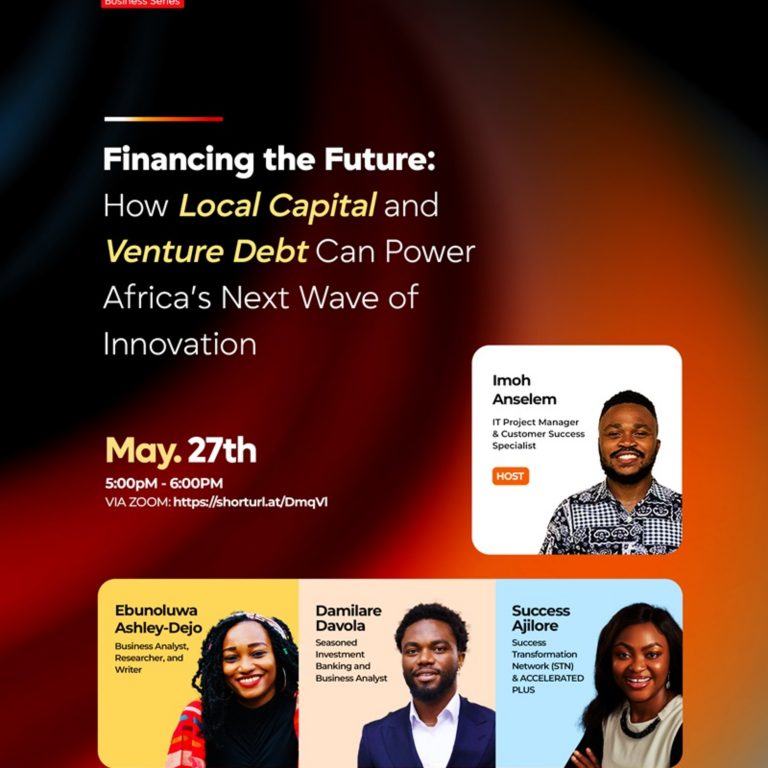
Financing the Future: Venture Debt, Local Capital & African Innovation | TBS May 2026 Webinar
byTecheconomy

Africa’s innovation ecosystem is evolving, but where will the funding for the next generation of startups come from?

In this edition of the Techeconomy Business Series (TBS) May 2026, industry experts explore how local capital, venture debt, and smarter investment structures are redefining startup growth and innovation across Africa.

🎙️ Featured Speakers:

* Ebunoluwa Ashley-Dejo

* Damilare Davola

* Success Ajilore (STN & Accelerated Plus)

Key conversations in this webinar include:

✔️ The future of startup financing in Africa

✔️ Venture debt and alternative funding models

✔️ The role of local investors in scaling innovation

✔️ Sustainable investment strategies for African startups

✔️ Opportunities and challenges in the African tech ecosystem

Subscribe for more conversations shaping Africa’s digital economy and innovation landscape.

#TBS2026 #AfricanInnovation #VentureDebt #StartupFinance #TechInAfrica #Techeconomy #AfricanStartups #InnovationEconomy

Financing the Future: Venture Debt, Local Capital & African Innovation | TBS May 2026 Webinar
May 27, 2026
Techeconomy
PROTECTING INNOVATION IN AFRICA’S STARTUP ECOSYSTEM
April 29, 2026
Techeconomy
BUILDING TRUST IN AFRICA ECOSYSTEM
February 27, 2026
Techeconomy
Navigating a Career in Tech Sales
January 29, 2026
Techeconomy
How Technology is Transforming Education, Health, and Business
November 27, 2025
Techeconomy
Search Results placeholder
MTN Live It 100 Thematic Campaign
ADVERTISEMENT
  • About Us
  • Careers
  • Contact Us
  • Privacy Policy

© 2026 TECHECONOMY.

No Result
View All Result
  • Technology
  • Business
  • Economy
  • Features
  • Editorial
  • Brand Content
  • TECHECONOMY TV

© 2026 TECHECONOMY.

This website uses cookies. By continuing to use this website you are giving consent to cookies being used. Visit our Privacy and Cookie Policy.