
ADVERTISEMENT
Wednesday, April 29, 2026
Tech | Business | Economy
No Result
View All Result
  • Technology
    • Trends
    • Telecoms
      • Broadband
    • ConsumerTech
      • Gadgets and Appliances
      • Apps
      • Accessories
      • Reviews
      • Unboxing
    • EnterpriseTECH
    • Security & Data Protection
    • How To
    • GameTech
  • Business
    • Company News
    • StartUPs
      • Founder’s Story
      • Funding
    • Deals
    • People & Moves
    • SME & Entrepreneur Focus
    • BUSINESS SENSE FOR SMEs
    • Competition & Market Positioning
    • Commerce & Mobility
    • Travel
    • WomenPreneurs
  • Economy
    • Macroeconomic Trends
      • Macro Monday
      • TE Insights
    • Finance
      • Banks
      • Fintech
      • Insurance
      • Digital Assets
      • Personal Finance
    • Policies
      • Tech & Society
    • Market Analysis
    • Jobs & Workforce Economy
  • Features
    • Guest Writer
      • Chidiverse
      • Digital Assets
    • EventDIARY
    • IndustryINFLUENCERS
    • MarkTECH
    • TBS
    • NewsEXTRA
  • Editorial
  • Brand Content
  • TECHECONOMY TV
Wednesday, April 29, 2026
Tech | Business | Economy
No Result
View All Result
Tech | Business | Economy
No Result
View All Result

Home » Managing Nigeria’s Debt Profile

Managing Nigeria’s Debt Profile

Techeconomy by Techeconomy
March 3, 2023
in Finance
Reading Time: 4 mins read
0
Managing Nigeria’s Debt Profile, Nigeria and IDA

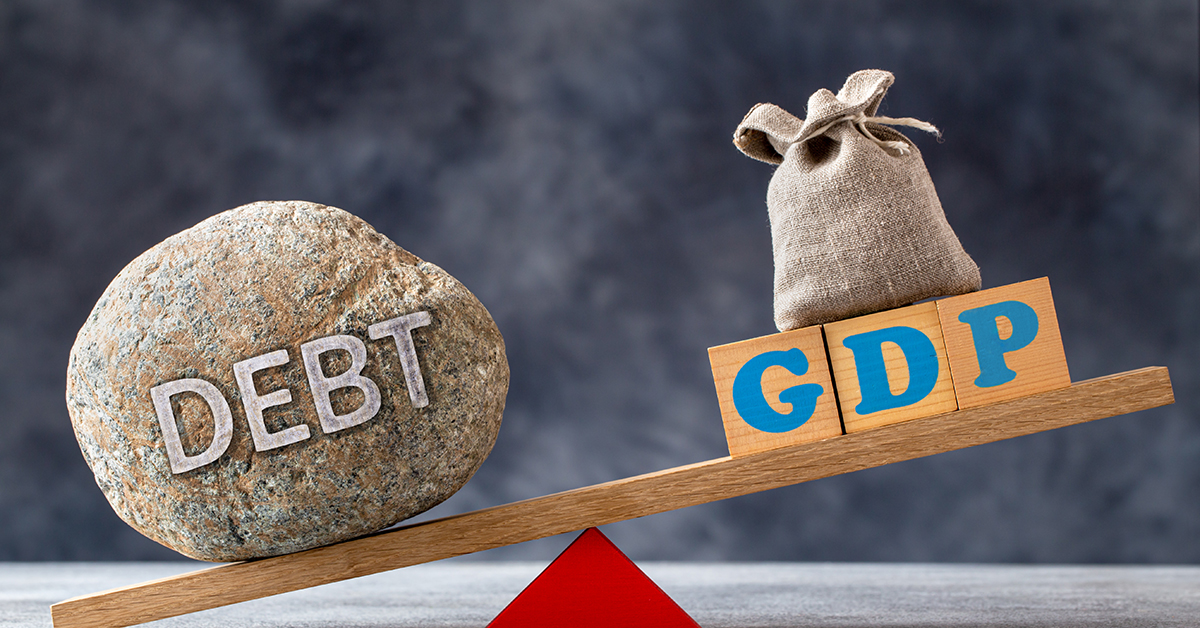
Debt-to-GDP ratio, a large stone with text DEBT and wooden cubes with GDP letters and bag on seesaw

Article Written by: Emmanuel Otori

The fact that Nigeria’s debt profile keeps increasing without any corresponding economic growth is very concerning. In January 2023, President Muhammadu Buhari authorized the appropriation bill, which had been originally proposed to be voted into law at a cost of N20.51 trillion, to be increased to N21.83 trillion.

The president then announced a planned loan of N1 trillion that will be sourced by Ways and Means, totaling a bill of N23 trillion that will be securitized.

According to the Debt Management Office (DMO), the incoming administration is expected to inherit a debt stock of N77 trillion in May or June 2023.

The Debt Management Office (DMO) is a governmental office responsible for the management of Nigeria’s debt. The management of public debt is as crucial as generating revenue. However, the goal of public debt management is to guarantee that the government’s financial requirements and payment commitments are met over the term duration at the lowest cost possible, along with a reasonable level of risk.

Nigeria’s economy continues to be in a gloomy position due to poor management of debt and the constant rise in inflation. For the purpose of reviving the economy, the government might employ a variety of measures for controlling and servicing existing and future debt.

Subscribe to our Telegram channel for the latest updates.

Follow the latest developments with instant alerts on breaking news, top stories, and trending headlines.

Join Channel

Sound Debt Management Strategy

Many times, problems with public debt management might be linked to policymakers’ disregard for the benefits of sound debt management.

This uncertainty can be decreased with a proven track record of implementing sensible macro policies, assessing risk and cost considerations, coordinating debt and utility accountability, repeating the debt limit, and reevaluating the costs of the debt burden.

It will be vital for the government to improve its debt management processes, including outlining precise rules for borrowing money and ensuring that it is done in a way that is transparent and accountable.

Financial Reforms

Instead of raising the tax rate for current taxpayers, the tax net can be widened. The government would generate more income and have less debt to pay off if more taxpayers paid their fair share of taxes. Also, the government’s revenue would increase dramatically with even a little increase, which might result in lowered tax rates for all taxpayers. In order to lessen its reliance on short-term financing, the government must take action by going for longer term obligations. If bonds are issued, this can mean increasing the long-term financing options available.

Even though the crisis of the country is not majorly caused by the debt management policies, the governments should make an effort to guarantee that the rate of rise of their public debt is structurally manageable and can be repaid under a variety of conditions while satisfying risk and cost obligations.

Furthermore, it is important to carefully build public debt portfolios, taking into account the foreign debt’s currency composition, term structure, and interest rate commitments.

Enhancing economic growth should be the government’s top priority as this would necessitate a combination of structural reforms and focused investments in major sectors of the economy.

Therefore, conscious efforts must be made to eliminate the high rates of fraud and waste in governmental operations as well as to diversify the nation’s productive capacity.

Emmanuel Otori

Emmanuel Otori has over 10 years of experience working with 100 start-ups and SMEs across Nigeria. He has worked on the Growth and Employment (GEM) Project of the World Bank, GiZ, Consulted for businesses at the Abuja Enterprise Agency, Novustack, Splitspot and NITDA. He is the Chief Executive Officer at Abuja Data School.

0Shares

Previous Post

JUST: Old N1000, N500, N200 to Remain Legal Tender as Supreme Court Overrules FG

Next Post

SIFAX Group Announces Two New Appointments

Techeconomy

Techeconomy

Related Posts

IMTOs naira settlement accounts | FX Exchange Market | Parallel | Black | CBN naira-only remittance

Dollar to Naira exchange rate today | April 28, 2026

April 28, 2026
Bitget Blockchain4Youth Learning Hub

Bitget Launches Blockchain4Youth Learning Hub to Strengthen the Future Web3 Workforce

April 27, 2026

CBN Increases ATM Card Fee by 50% to ₦1,500

April 27, 2026
Load More
Next Post
Sifax group Appointments

SIFAX Group Announces Two New Appointments

Leave a Reply Cancel reply

Your email address will not be published. Required fields are marked *

I agree to the Terms & Conditions and Privacy Policy.

This site uses Akismet to reduce spam. Learn how your comment data is processed.

Techeconomy Podcast
Techeconomy Podcast

The Techeconomy Podcast is a thought-leadership show exploring the powerful intersection of technology, business, and the economy, with a strong focus on Africa’s fast-evolving digital landscape.

PROTECTING INNOVATION IN AFRICA’S STARTUP ECOSYSTEM
byTecheconomy

Protecting Innovation in Africa’s Startup Ecosystem . A timely conversation for the future of African entrepreneurship.

PROTECTING INNOVATION IN AFRICA’S STARTUP ECOSYSTEM
April 29, 2026
Techeconomy
BUILDING TRUST IN AFRICA ECOSYSTEM
February 27, 2026
Techeconomy
Navigating a Career in Tech Sales
January 29, 2026
Techeconomy
How Technology is Transforming Education, Health, and Business
November 27, 2025
Techeconomy
INNOVATION IN MOBILE BANKING
October 30, 2025
Techeconomy
Search Results placeholder
  • About Us
  • Careers
  • Contact Us
  • Privacy Policy

© 2026 TECHECONOMY.

No Result
View All Result
  • Technology
  • Business
  • Economy
  • Features
  • Editorial
  • Brand Content
  • TECHECONOMY TV

© 2026 TECHECONOMY.

This website uses cookies. By continuing to use this website you are giving consent to cookies being used. Visit our Privacy and Cookie Policy.