

The conversation at the 2025 G20 Leaders’ Summit marks a critical moment for Africa’s economic trajectory.
Nigeria’s call for value addition at source, responsible mineral governance, and ethical global standards for Artificial Intelligence reflects a shift from passive participation to strategic positioning.
For decades, Africa supplied the essential raw inputs that fuel global progress-rubber for industrialisation, oil for energy, cocoa for global food chains, and now critical minerals for electric vehicles, semiconductors, and renewable infrastructure. Yet, history has shown that the presence of resources does not guarantee the presence of prosperity.
What Nigeria is demanding is not access, but fairness.
From Extractive Economies to Value-Building Economies
The global green and digital transitions rely heavily on African minerals like cobalt, lithium, manganese, and rare earth metals.
However, exporting raw minerals while importing finished technology continues a colonial-era economic pattern.
Value must shift from:
- mining to refining
- extraction to manufacturing
- supply to ownership
This aligns with a broader continental need to industrialise, develop local capacity, and build technology ecosystems around Africa’s resources.
AI Ethics: Innovation with Inclusion
Nigeria’s call for global ethical standards in AI is equally significant.
Artificial intelligence can empower developing nations through:

- improved healthcare diagnostics
- smarter agriculture and supply chains
- personalised education
- expanded financial inclusion
But without fairness, AI can digitally reproduce old inequalities-especially where datasets exclude African realities, languages, behaviours, and socio-economic contexts.
As someone researching AI and digital inclusion, I see daily how bias in algorithms affects Africans both at home and in the diaspora.
The question is no longer whether Africa will adopt AI, but whether AI will adopt Africa.
Human Dignity as an Economic Framework
A powerful shift in Nigeria’s message is the framing of jobs, dignity, and inclusion as core elements of AI governance.
Technology should not replace livelihoods; it should upgrade them. Innovation must reduce inequality, not accelerate it.
Beyond Minerals: Reforming Global Financial Structures
Nigeria’s appeal for a more equitable international financial architecture underscores a deeper truth: technology cannot thrive where economies are trapped in debt cycles, unfavourable trade terms, and structural dependence. Digital prosperity requires financial justice.
Conclusion: A New Era of African Agency
Nigeria’s position is not a request – it is a declaration of intent. Africa cannot afford to remain at the periphery of global innovation while carrying the weight of global resource supply.
The future must be built differently:
- Value at source.
- Tech built with inclusion.
- AI governed with ethics.
- Africa as a co-author, not a consumer.
This is how we build a continent of dignity, innovation, and shared prosperity.
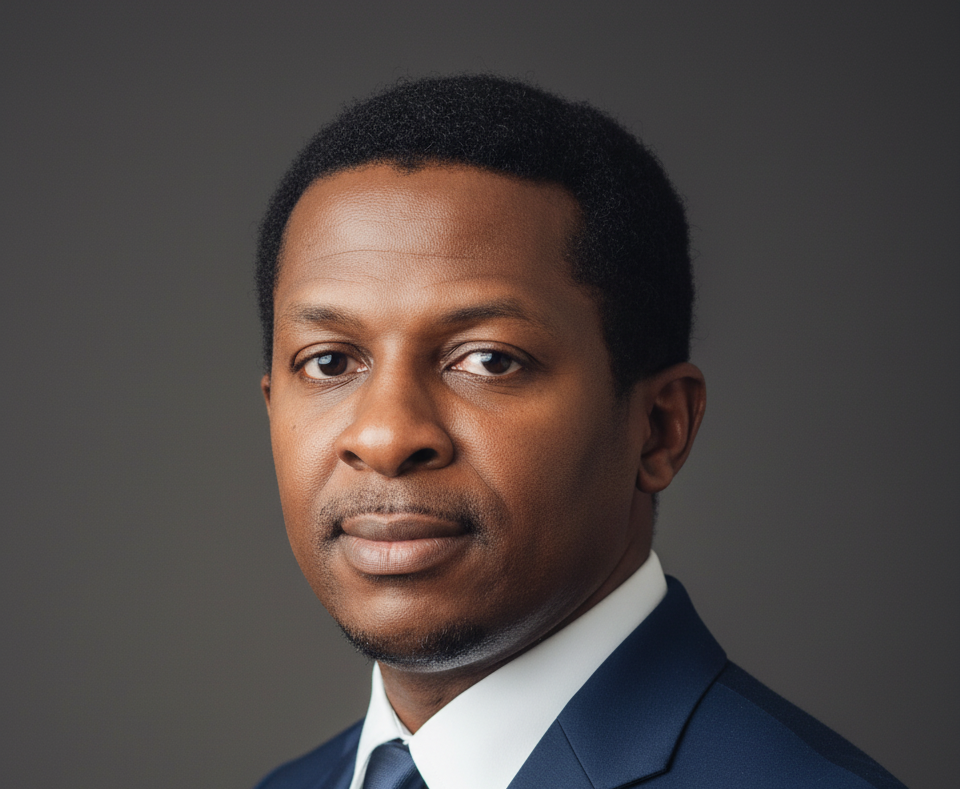
*Ifeanyi ANIAGOH is the country director at GECC.