Home » AI Translation Adoption Hits 79%, But Governance is Lagging
AI Translation Adoption Hits 79%, But Governance is Lagging
A new 2026 survey of 400+ professionals responsible for translation shows AI translation has become business-critical infrastructure, however, quality and consistency are struggling to keep up.
Translation quality is “mission-critical” for 96% of companies, but only 57% say their brand voice is consistent across languages.
AI translation has moved into core enterprise infrastructure, with 79% saying it’s now part of broader AI transformation led by IT.
Despite rapid AI adoption, enterprises aren’t letting go of humans: only 1.8% ship raw AI translations without review.
Vendor sprawl is hurting results: 34% report quality issues and 31% report communication breakdowns across multiple translation providers.
AI translation ROI is split down the middle, with 48% see speed and cost gains, while 52% say the benefits still aren’t there.
Translation is no longer a back-office task: 69% say it now sits at the heart of customer support.
Translation has become a growth lever, not just an accessibility tool, with 53% linking it directly to revenue and market expansion.
Ray-Ban Smart Glasses
AI Translation is Now Business-Critical, But most companies admit quality isn’t keeping up
AI translation has quietly crossed a threshold inside global organizations. What was once treated as a support function or experimental efficiency tool is now embedded in core business operations, spanning IT, customer support, product, and revenue teams.
But a 2026 survey suggests adoption has outpaced execution.
According to new data from more than 400 translation decision-makers, conducted by Zogby Analytics on behalf of LILT, an AI-powered translation and localization platform, nearly all organizations now view translation quality as mission-critical, yet only about half believe they are delivering consistent multilingual output.
The result is a growing gap between how essential translation has become and how confidently companies can scale it.
Subscribe to our Telegram channel for the latest updates.
Follow the latest developments with instant alerts on breaking news, top stories, and trending headlines.
Quality Is Non-Negotiable, Yet Consistency Is Elusive
The survey found that 96% of respondents say translation quality is mission-critical, underscoring how closely language accuracy is tied to brand credibility, trust, and performance in global markets. Quality also ranked higher than speed and cost across roles, particularly within IT and technology teams.
However, when asked whether their current translation process maintains a consistent brand voice across languages, only 57% said yes.
This disconnect reveals a structural issue rather than a lack of intent. Organizations overwhelmingly want high-quality translation, but many lack the governance, workflows, or oversight required to achieve it at scale.
“What this data shows is that translation has moved into the same category as security, infrastructure, and reliability,” says Spence Green, CEO of LILT. “Teams understand the risk of getting it wrong, but many are still relying on fragmented tools and processes that weren’t designed for enterprise-scale quality.”
AI Translation Has Moved Into the Core AI Stack
AI is no longer being tested on the margins of translation workflows. The survey found that 79% of organizations say AI translation is part of their broader AI transformation, led primarily by IT and technology teams rather than marketing or localization departments.
Half of respondents expect their use of AI translation to increase significantly over the next one to two years, signaling that translation has become a long-term infrastructure decision rather than a short-term experiment.
This shift reflects a broader trend in enterprise AI adoption, where leaders are prioritizing systems that reduce time-to-market, support global operations, and integrate across existing platforms.
“Translation is no longer a back-office task,” Green explains. “It’s a growth enabler. When teams can launch products, support customers, and communicate internally across languages without friction, it directly affects speed, revenue, and competitiveness.”
Humans Remain Central to Translation Quality
Despite rising AI adoption, organizations are not removing human oversight from translation workflows. In fact, the opposite is true.
The survey found that 79% of respondents plan to keep a human-in-the-loop, and 52% rely on in-house linguists for post-editing AI output. Only 1.8% reported using raw AI translations without any quality checks.
These findings suggest that enterprises see AI as a productivity engine – not a substitute for accountability, nuance, or cultural understanding.
“AI is excellent at scale and speed, but it still needs guidance,” says Green. “Human expertise is what protects brand voice, tone, and intent. The organizations getting this right are treating AI and humans as a system, not as replacements.”
Vendor Sprawl Is Undermining Results
One of the most consistent pain points uncovered by the survey is vendor complexity. Nearly 70% of respondents use multiple translation vendors, often alongside general-purpose tools such as large language models.
Among those organizations:
34% report quality issues
31% struggle with communication
More than half cite increased administrative burden and delivery challenges
Rather than improving outcomes, fragmented vendor ecosystems are creating silos, inconsistencies, and operational drag, especially as translation volumes increase.
“When translation is spread across too many tools and providers, no one owns quality end-to-end,” Green says. “That’s where inconsistencies and delays creep in, even when the underlying technology is strong.”
Translation Is Now Tied Directly to Revenue and Customer Support
The survey also highlights how translation has moved beyond compliance or accessibility into core business performance.
69% of respondents say translation is central to customer support
53% directly attribute revenue growth and market expansion to translation efforts
52% say translation is essential for internal and external communication
For many organizations, multilingual communication is now inseparable from customer experience, retention, and global growth strategies.
“If customers can’t understand you, they can’t trust you,” Green notes. “Translation has become one of the clearest links between operational efficiency and customer loyalty.”
Peter Oluka (@peterolukai), editor of Techeconomy, is a multi-award winner practicing Journalist. Peter’s media practice cuts across Media Relations | Marketing| Advertising, other Communications interests.
Contact: peter.oluka@techeconomy.ng
The Techeconomy Podcast is a thought-leadership show exploring the powerful intersection of technology, business, and the economy, with a strong focus on Africa’s fast-evolving digital landscape.
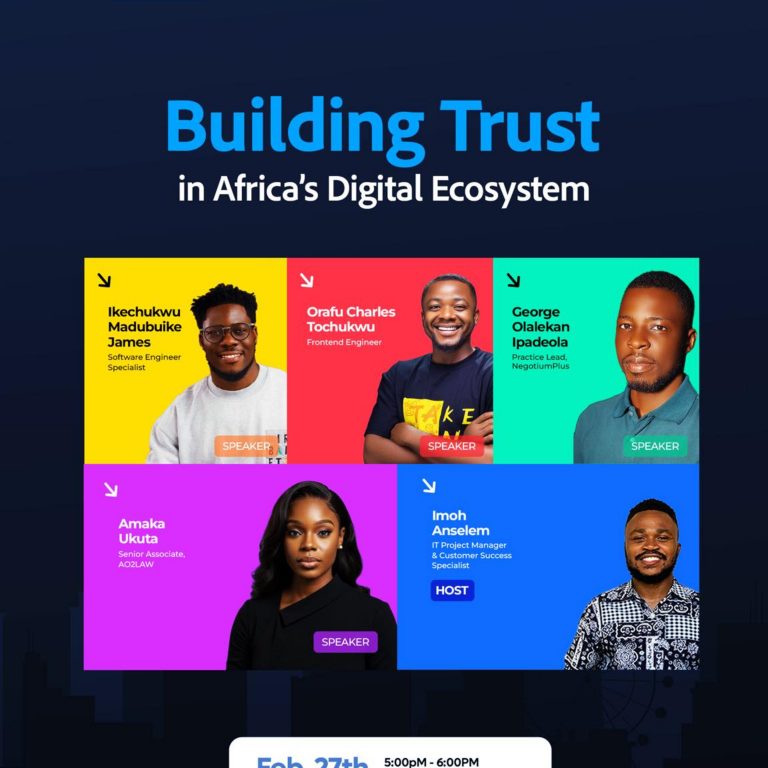
BUILDING TRUST IN AFRICA ECOSYSTEM
byTecheconomy
Africa’s digital economy is growing fast, but growth without trust cannot last.Join us for the February Edition of the Techeconomy Business Series as industry experts explore how trust, security, innovation, and user experience are shaping Africa’s evolving digital ecosystem.