



| By: Ojo Ariyo
The Almajiri-to-Tech Foundation recorded a major milestone on Wednesday as it celebrated the graduation of 21 pioneer beneficiaries of its technology empowerment programme during a historic graduation and prize-giving ceremony held in Abuja.
The event showcased the transformation of 21 former Almajiri children (male and female) into skilled technology technicians and entrepreneurs after six months of intensive ICT, entrepreneurship, and moral training.

The ceremony attracted government officials, education stakeholders, development partners, ICT professionals, community leaders, religious leaders, members of the diplomatic corps, media representatives, and supporters of youth empowerment initiatives.
Mr Tim Akano, founder of the initiative, described the programme as a practical solution to the challenges of out-of-school children, youth unemployment, and rising insecurity.
In his remarks, he noted that the project was conceived to demonstrate that children often regarded as disadvantaged can become productive members of society when given the opportunity and access to quality education, an enabling environment, mentorship, and the right tools, as the Almajiri-to-Tech Foundation has done.
He also noted that technology remains one of the most effective tools for social transformation and economic empowerment.
Mr Akano, who is also the CEO of New Horizons Nigeria, said the graduates received practical training in computer assembly and repair, laptop maintenance, mobile phone repair, power bank repair, electronics troubleshooting, drone assembly, projector repair, and entrepreneurship development.

His advice to the graduands:
“Your beginning does not determine your ending. A skill is a dignity no one can repossess. These tools are a beginning, not a finish line. Nations are built by those who show up the next morning.
“Your debt is not to us; it is to the next child still on the street.”
Muhammed Dikko Abubakar, chairman of the occasion and former Inspector General of Police commended the Foundation for pioneering an innovative model capable of addressing poverty and social exclusion through technology.
He described the programme as a strategic investment in human capacity development and urged government agencies, corporate organisations, development partners, and philanthropists to support its expansion across Nigeria.
The chairman further stressed that empowering vulnerable children with employable skills contributes significantly to national development, peace, and economic growth.
Graduation Presentations and Demonstrations
One of the major highlights of the ceremony was the practical demonstrations by the graduating students.

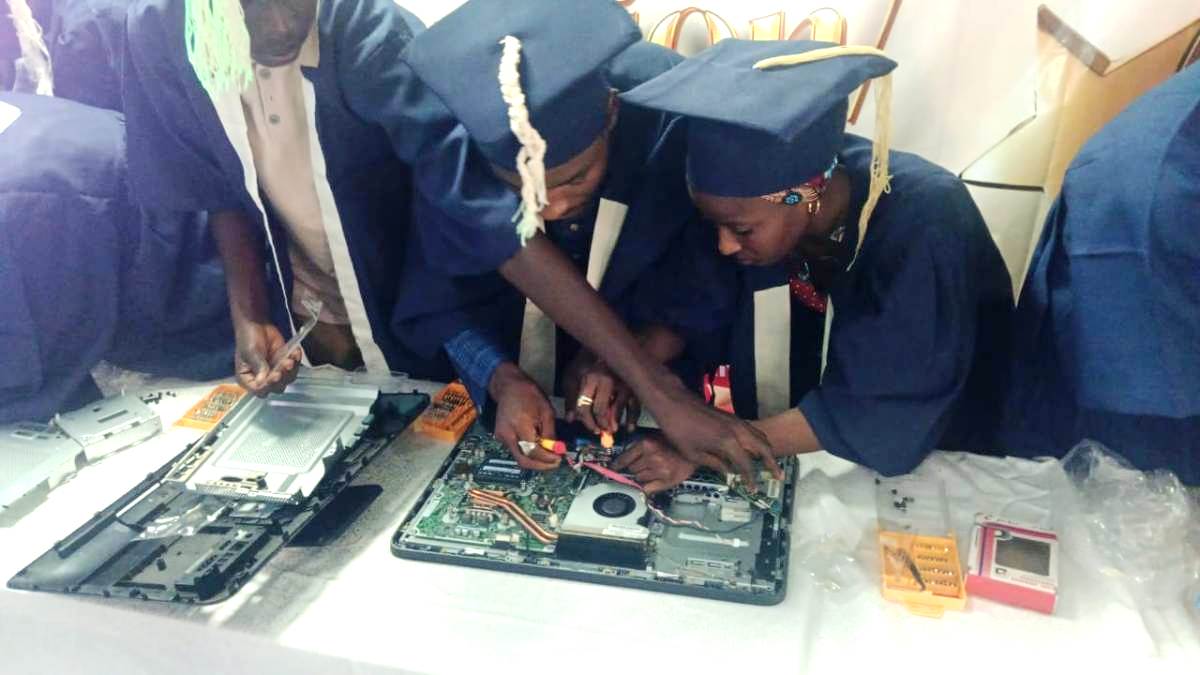
The graduands confidently assembled computers in a competition involving five groups. They also assembled and showcased two drones, demonstrated a robot they had built, carried out phone and projector repairs, and displayed other newly acquired technical competencies before guests.
The presentations drew applause from attendees and served as evidence of the effectiveness of the training programme.
The graduates also shared testimonials detailing their journeys from street life and informal education to becoming certified technology technicians and aspiring entrepreneurs.
The keynote speaker described technology education as a powerful catalyst for social mobility and economic empowerment.
He noted that Nigeria’s future depends largely on its ability to equip young people with relevant digital skills and entrepreneurial capabilities. The speaker praised the Almajiri-to-Tech Foundation for transforming vulnerable youths into productive citizens and called for stronger public-private partnerships to scale similar initiatives nationwide.
The keynote address emphasised the need for:
- Inclusive access to technology education;
- Digital skills for job creation;
- Entrepreneurship as a pathway to self-reliance;
- Community-driven solutions to social challenges, and
- Sustainable youth empowerment strategies.
Several dignitaries delivered goodwill messages, congratulating the graduands and applauding the Foundation’s vision.
Speakers from government agencies, educational institutions, private-sector organisations, and development partners pledged support for programmes that provide opportunities for disadvantaged children.
They described the initiative as a model worthy of replication across Nigeria and Africa because of its potential impact on education, security, and economic development.
Prize-Giving Ceremony
The prize-giving segment recognised outstanding participants who distinguished themselves during the training programme.
Awards were presented in categories such as Best Graduating Student, Most Innovative Student, Best Technical Performance, Best Entrepreneurial Potential, Most Disciplined Student, Outstanding Female Participant, and Excellence in Practical Projects.
Recipients received certificates, tools, equipment, and other support packages aimed at helping them establish careers and businesses in the technology sector.
Presentation of Certificates
The graduands were formally presented with certificates in recognition of their successful completion of the programme.
Parents, guardians, mentors, and invited guests joined in celebrating the achievements of the graduates, many of whom had never previously had access to formal technical education.
In the closing remarks, the organisers expressed gratitude to sponsors, partners, volunteers, instructors, and supporters who contributed to the success of the programme.
The Foundation reiterated its commitment to expanding the initiative and reaching more vulnerable children across Nigeria while calling on stakeholders to join efforts aimed at transforming lives through technology and education.



