

ADVERTISEMENT
Saturday, June 6, 2026
Tech | Business | Economy
No Result
View All Result
  • Technology
    • Trends
    • Telecoms
      • Broadband
    • ConsumerTech
      • Gadgets and Appliances
      • Apps
      • Accessories
      • Reviews
      • Unboxing
    • EnterpriseTECH
    • Security & Data Protection
    • How To
  • Business
    • Company News
    • StartUPs
      • Founder’s Story
      • Funding
    • Deals
    • People & Moves
    • SME & Entrepreneur Focus
    • BUSINESS SENSE FOR SMEs
    • Competition & Market Positioning
    • Commerce & Mobility
    • Travel
    • WomenPreneurs
  • Economy
    • Macroeconomic Trends
      • Macro Monday
      • TE Insights
    • Finance
      • Banks
      • Fintech
      • Insurance
      • Digital Assets
      • Personal Finance
    • Policies
      • Tech & Society
    • Market Analysis
    • Jobs & Workforce Economy
  • Features
    • Guest Writer
      • Chidiverse
      • Digital Assets
      • GameTech
    • EventDIARY
    • IndustryINFLUENCERS
    • MarkTECH
    • TBS
    • NewsEXTRA
  • Editorial
  • Brand Content
  • TECHECONOMY TV
Saturday, June 6, 2026
Tech | Business | Economy
No Result
View All Result
Tech | Business | Economy
No Result
View All Result

Home » ALTON Credits NCC Tariff Reforms, ₦300bn USSD Debt Resolution for Sector Survival

ALTON Credits NCC Tariff Reforms, ₦300bn USSD Debt Resolution for Sector Survival

Telecom Sector Survival | How NCC’s Double-Barrel Reforms Resolved a 13-Year Pricing Freeze and ₦300bn Debt Crisis

Peter Oluka by Peter Oluka
February 20, 2026
in Telecoms
Reading Time: 4 mins read
0
ALTON Credits NCC Tariff Reforms | meets Chairman of NCC Board - Photo by PETER oluka and Techeconomy

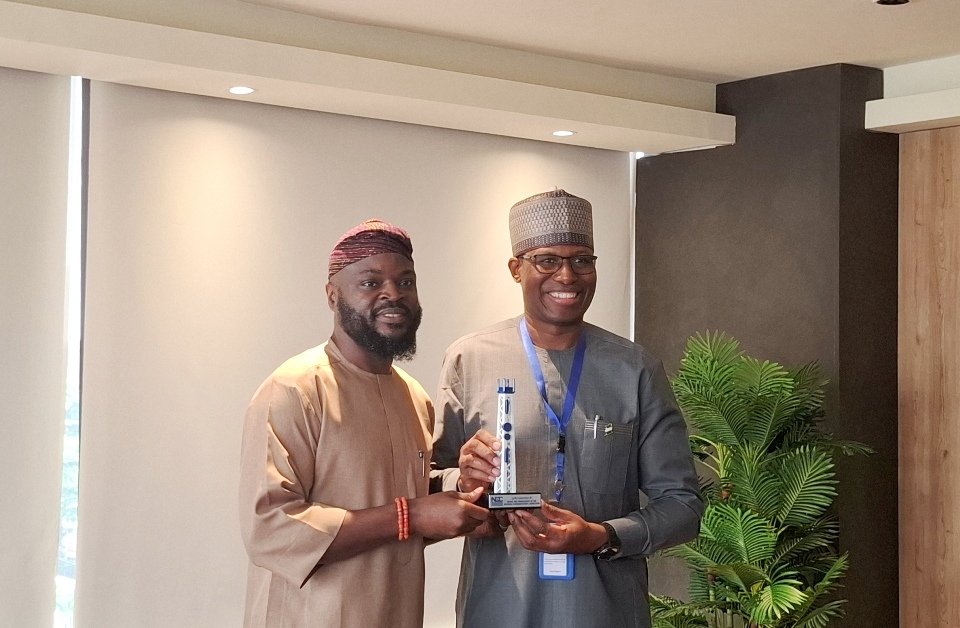
L-r: Idris Olorunnimbe, chairman of the NCC Board presents appreciation plaque to Engr. Gbenga Adebayo, ALTON chairman (PHOTO: Techeconomy/PETEROLUKA)

The Nigerian telecommunications industry is currently undergoing a radical financial recalibration.

This follows a decade of systemic risks that nearly pushed major operators to the brink of insolvency.

During a congratulatory visit to Dr. Idris Ibikunle Olorunnimbe, the recently appointed board chairman of the Nigerian Communications Commission (NCC), on February 19, 2026, the Chairman of the Association of Licensed Telecommunications Operators of Nigeria (ALTON), Engr. Gbenga Adebayo, laid bare the high-stakes history of the sector’s recent recovery.

At the heart of this survival story are two critical milestones: the end of a 13-year tariff freeze and the final resolution of a toxic ₦300 billion USSD debt.

The 13-Year Pricing Freeze: From Stagnation to Cost-Reflective Reality

For over a decade, Nigeria’s telecom tariffs were frozen in time. While the cost of diesel, foreign exchange, and infrastructure maintenance skyrocketed, call and data rates remained pegged to 2013 economic realities.

Subscribe to our Telegram channel for the latest updates.

Follow the latest developments with instant alerts on breaking news, top stories, and trending headlines.

Join Channel

The Background

Until early 2025, operators were largely operating on a cost study conducted over 10 years prior.

By 2024, with inflation crossing 30% and the Naira devalued by over 200%, the industry reached a service rationing warning stage.

Operators like MTN Nigeria reported record losses (over ₦514 billion) primarily due to forex exposure and static pricing.

In January 2025, the NCC, under Dr. Aminu Maida, executive vice chairman approved a 50% tariff adjustment.
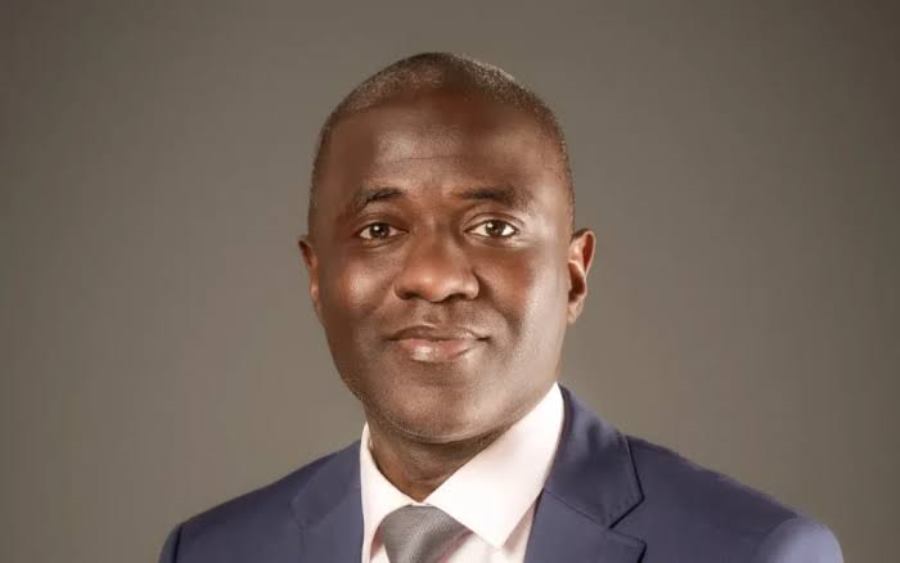
Aminu Maida | NCC } Telecoms Tariff adjustment | USPF | e-Health Project | Authorisation | Telecom | Swedfund | 2025 | 2026 | Fines
Dr. Aminu Maida, EVC/CEO of NCC

While operators had clamored for a 100% increase, the 50% sustainability intervention raised voice call floors from roughly ₦6.40 to ₦9.60 per minute, providing the necessary liquidity to resume capital expenditure (CAPEX).

The USSD Debt Saga: Resolving the ₦300 Billion Systemic Risk

Perhaps the most contentious battle in the history of Nigerian fintech was the USSD debt dispute between Mobile Network Operators (MNOs) and Deposit Money Banks (DMBs).

What began as a ₦42 billion disagreement in 2021 ballooned into a ₦300 billion crisis by early 2026.

The History of the Dispute:

Phase 1 marked by standoff: Banks refused to remit USSD service fees to telcos, arguing that the service should be billed to consumers differently.

Phase 2 marked by regulatory deadlock: Previous attempts at resolution saw the debt rise from ₦120 billion to ₦250 billion as both parties waited for a definitive regulatory hammer.

Phase 3 marked the final settlement): In late 2024 and throughout 2025, a joint directive from the NCC and the Central Bank of Nigeria (CBN) mandated a structured repayment plan.

Banks were ordered to clear 60-85% of outstanding invoices as a final settlement.

By February 2026, Engr. Adebayo confirmed that the banks had successfully cleared the nearly ₦300 billion debt, effectively de-risking the digital financial ecosystem.

The Shift to End-User Billing (EUB)

The resolution of the USSD debt paved the way for a permanent structural change: End-User Billing.

Under this new framework, the middleman friction has been eliminated. Instead of banks collecting fees and (potentially) failing to remit them to telcos, charges are now deducted directly from the user’s airtime at the point of the USSD session (currently ₦6.98 per 120 seconds).

Why EUB Matters:

Users see exactly what they are paying for in real-time, telcos receive their revenue instantly, preventing future debt accumulation, and it secures the platform that millions of unbanked Nigerians rely on for basic transfers and balance inquiries.

The Road Ahead: Protecting the Gains

While Engr. Adebayo celebrated these victories, he warned that the industry’s recovery remains fragile.

The focus has now shifted to Infrastructure Protection. Despite the Critical National Information Infrastructure (CNII) status, operators still face daily fibre cuts by road contractors and multiple taxation by sub-national governments.

Industry analysts believe that the successful resolution of the USSD debt and the tariff review marks a reset for Nigeria’s digital economy.

For years, the telecom sector was the shock absorber for the economy’s inefficiencies. By allowing cost-reflective pricing and enforcing debt settlement, the NCC has signaled to global investors that Nigeria is ready to move away from subsidized consumption toward a more sustainable, investment-driven model.

The next battle for the NCC Board will be ensuring this new revenue is actually funneled back into network quality, as subscribers now expect Gold Standard service for their higher payments.

0Shares
Previous Post

FAAN, MTN Nigeria Launch Free Airport WiFi in Lagos and Abuja

Next Post

EXCLUSIVE: Smartphone Prices in Nigeria to Rise 20% as Global Chip Shortage Hits Major Markets

Peter Oluka

Peter Oluka

Peter Oluka (@peterolukai), editor of Techeconomy, is a multi-award winner practicing Journalist. Peter’s media practice cuts across Media Relations | Marketing| Advertising, other Communications interests. Contact: peter.oluka@techeconomy.ng

Related Posts

MTN Data on Trial

‘Data On Trial’: MTN Explains How Streaming, Auto-play, Hotspot Sharing Features Cause Data Depletion

June 6, 2026
Nigeria Telecom Foreign Investment Falls to 4-Year Low

Nigeria Telecom Foreign Investment Falls to 4-Year Low Despite $10.37bn Capital Surge

June 4, 2026

NCC Moves to Curb Anti-Competitive Practices by Telcos in MVNO Market

June 4, 2026
Load More
Next Post
Global Smartphone Shipments to Fall 2.1% in 2026 | Prices

EXCLUSIVE: Smartphone Prices in Nigeria to Rise 20% as Global Chip Shortage Hits Major Markets

Leave a Reply Cancel reply

Your email address will not be published. Required fields are marked *

I agree to the Terms & Conditions and Privacy Policy.

This site uses Akismet to reduce spam. Learn how your comment data is processed.

Techeconomy Podcast
Techeconomy Podcast

The Techeconomy Podcast is a thought-leadership show exploring the powerful intersection of technology, business, and the economy, with a strong focus on Africa’s fast-evolving digital landscape.

Financing the Future: Venture Debt, Local Capital & African Innovation | TBS May 2026 Webinar
byTecheconomy

Africa’s innovation ecosystem is evolving, but where will the funding for the next generation of startups come from?

In this edition of the Techeconomy Business Series (TBS) May 2026, industry experts explore how local capital, venture debt, and smarter investment structures are redefining startup growth and innovation across Africa.

🎙️ Featured Speakers:

* Ebunoluwa Ashley-Dejo

* Damilare Davola

* Success Ajilore (STN & Accelerated Plus)

Key conversations in this webinar include:

✔️ The future of startup financing in Africa

✔️ Venture debt and alternative funding models

✔️ The role of local investors in scaling innovation

✔️ Sustainable investment strategies for African startups

✔️ Opportunities and challenges in the African tech ecosystem

Subscribe for more conversations shaping Africa’s digital economy and innovation landscape.

#TBS2026 #AfricanInnovation #VentureDebt #StartupFinance #TechInAfrica #Techeconomy #AfricanStartups #InnovationEconomy

Financing the Future: Venture Debt, Local Capital & African Innovation | TBS May 2026 Webinar
May 27, 2026
Techeconomy
PROTECTING INNOVATION IN AFRICA’S STARTUP ECOSYSTEM
April 29, 2026
Techeconomy
BUILDING TRUST IN AFRICA ECOSYSTEM
February 27, 2026
Techeconomy
Navigating a Career in Tech Sales
January 29, 2026
Techeconomy
How Technology is Transforming Education, Health, and Business
November 27, 2025
Techeconomy
Search Results placeholder
MTN Live It 100 Thematic Campaign
ADVERTISEMENT
  • About Us
  • Careers
  • Contact Us
  • Privacy Policy

© 2026 TECHECONOMY.

No Result
View All Result
  • Technology
  • Business
  • Economy
  • Features
  • Editorial
  • Brand Content
  • TECHECONOMY TV

© 2026 TECHECONOMY.

This website uses cookies. By continuing to use this website you are giving consent to cookies being used. Visit our Privacy and Cookie Policy.


