


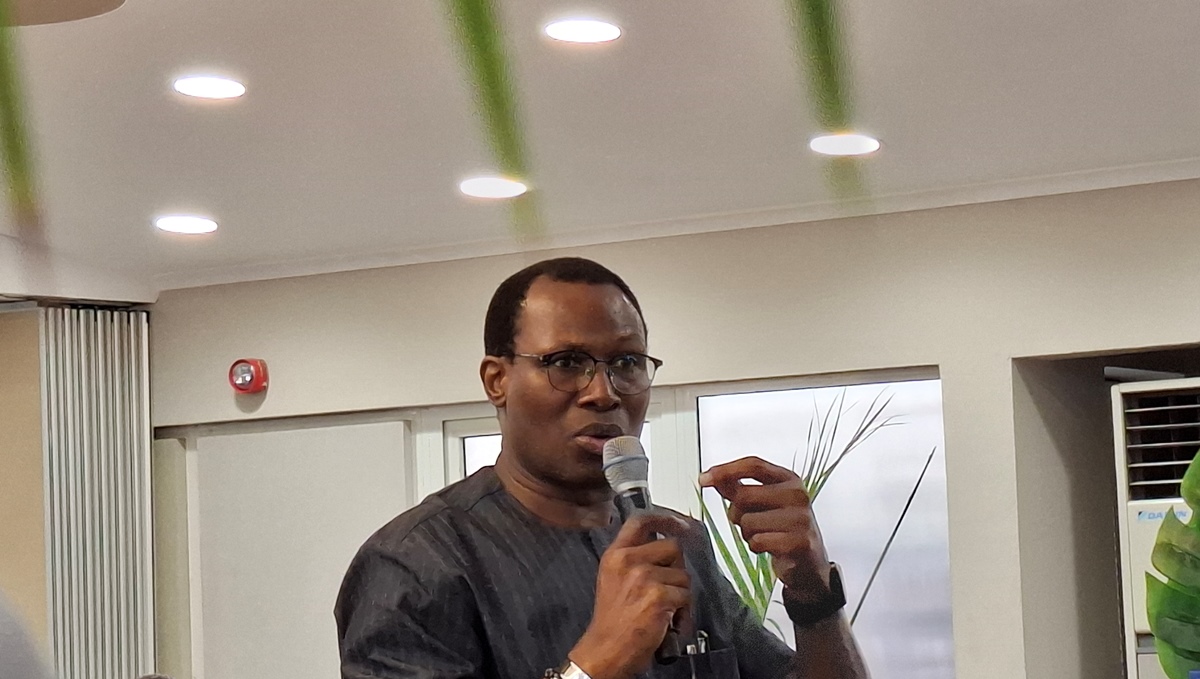
Gbenga Adebayo, the chairman of the Association of Licensed Telecommunications Operators of Nigeria has described Nigeria’s telecommunications sector as the backbone of the country’s digital economy, urging government, regulators, security agencies and citizens to intensify efforts to protect critical telecom infrastructure.
Speaking at the Nigeria Information Technology Reporters Association (NITRA) Innovative Conference 2026, Adebayo said the industry has evolved from fewer than 500,000 connected telephone lines before GSM liberalisation in 2001 to more than 200 million active subscriptions, transforming communication, commerce, education, healthcare and governance across the country.
He noted that telecommunications now powers virtually every aspect of Nigeria’s digital ecosystem, including banking, online learning, telemedicine, e-government services and emergency response, making resilient network infrastructure essential to national development.
According to him, operators have invested billions of dollars over the past 25 years in mobile networks, fibre-optic infrastructure, international connectivity, cloud platforms, renewable energy systems and emerging technologies such as 5G, significantly expanding broadband access and accelerating financial inclusion.
Despite these achievements, Adebayo identified multiple taxation, inconsistent Right-of-Way policies, vandalism of telecom facilities, rising energy costs, foreign exchange volatility and regulatory uncertainty as major threats to continued investment and service quality.
He welcomed the implementation of the Critical National Information Infrastructure (CNII) framework, describing it as a milestone that recognises telecommunications infrastructure as strategic national assets requiring stronger protection.
The ALTON chairman also commended President Bola Ahmed Tinubu’s administration and the Nigerian Communications Commission (NCC), led by Dr. Aminu Maida, for adopting a consultative regulatory approach that has improved investor confidence and helped resolve long-standing industry issues, including the USSD debt dispute.
Adebayo stressed that improving Quality of Service requires more than regulatory sanctions, noting that poor electricity supply, fibre cuts caused by road construction, insecurity, infrastructure theft and deployment restrictions continue to affect network performance.
He urged Nigerians to take ownership of telecom infrastructure by reporting acts of vandalism and supporting efforts to keep networks operational.
“The journey towards universal digital inclusion is not yet complete,” he said, adding that sustained collaboration between government, regulators, operators and communities remains essential for Nigeria to emerge as one of the world’s leading digital economies.



