


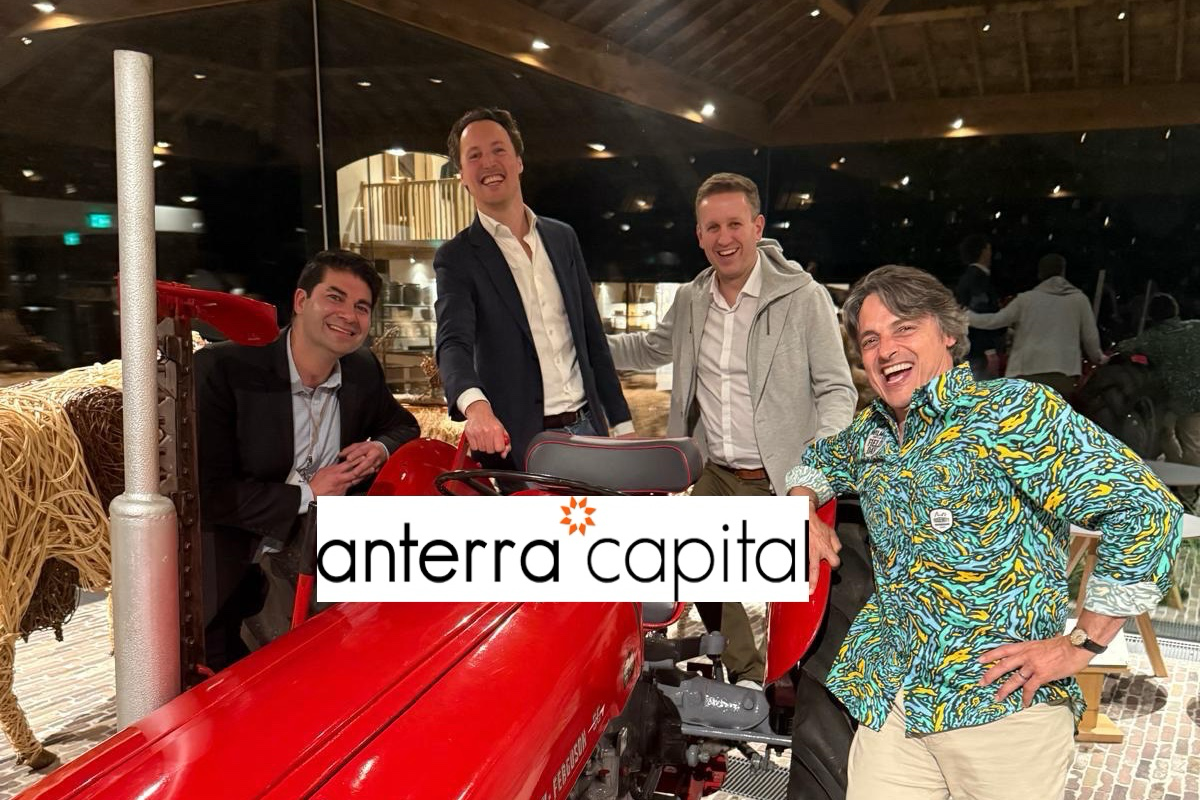
Anterra Capital has raised the first $100 million of its third fund, setting out a $200 million target as it places more focus on food and agriculture technology.
The Amsterdam and Boston-based investor said Fund III marks another step in its long-term drive into a sector it describes as the world’s largest, worth about $10 trillion and employing roughly 1.3 billion people.
Food and agriculture have also seen strong swings in investment over the past decade. Funding in the sector peaked at nearly $52 billion in 2021 before dropping back to about $16 billion, close to 2016 levels.
Many large investments during the boom found it difficult to scale, including indoor farming, plant-based meat alternatives and ultra-fast grocery delivery models.
Anterra said it avoided that cycle by focusing on companies with transparent unit economics and stronger links to existing supply chains.
“The firm has now successfully navigated two capital cycles in food and agriculture,” said Maarten Goossens, Partner at Anterra Capital.
“Each one rewarded the same discipline: backing companies that deliver real returns for their customers and to their investors. What’s different this time is that the real-world industries we operate in, large, complex and historically resistant to change, are now ready to be rewired, and the tools to do it have arrived.”
The firm said structural challenges across the sector are now more visible. These include volatile margins, climate and water stress, tough regulation and concerns over health outcomes linked to food systems.
Investors pulled back after the 2021 peak, but Anterra argues that this reset has created space for more specialised funds.
The company also pointed to artificial intelligence as a new driver of change across agriculture and food production.
AI tools, Anterra said, are starting to digitise fragmented operations in an industry still heavily reliant on manual processes. It also noted progress in biology, where AI is shortening research timelines and reducing the cost of developing new products.
Anterra said these shifts are making it possible to back companies that were previously too slow or too expensive to build.
The firm’s track record includes exits across veterinary medicine, a Nasdaq listing and several trade sales to large industry buyers. One of its early creations, Enko Chem, works on crop protection products and has partnered with firms including Syngenta and Bayer Crop Science.
Another company, Invetx, which applies biological research from human health to animal health, was later sold to Dechra Pharmaceuticals for more than $500 million.
The firm also highlighted its investor base, which includes large financial institutions, sovereign wealth funds and operators involved directly in farming and food production.
These partners, it said, support the same investment approach across regions including North America, Europe and Asia-Pacific.
“The vote of confidence from our investor base is what gives this close its weight,” said Adam Anders, partner at Anterra Capital. “The combination of leading global asset managers, the institutions that know our sector backwards and the operators who farm millions of acres all backing the same thesis is an unrivalled force supporting the Anterra portfolio”.
Fund III has already made early investments. These include Anchr, an AI-focused platform aimed at modernising back-office systems in food distribution, and Animerra, a veterinary biologics company built internally by Anterra.
“We’ve spent twelve years and two funds proving you can build category-defining companies in food and agriculture, and generate real returns doing it,” said Brett Wong, partner at Anterra Capital.
“What’s changed is that the world has finally caught up to that thesis. The technology is here, the valuations make sense, and the founders building in this sector are the best we’ve ever seen. This is the most exciting moment in our firm’s history, and Fund III is how we intend to make the most of it.”



