

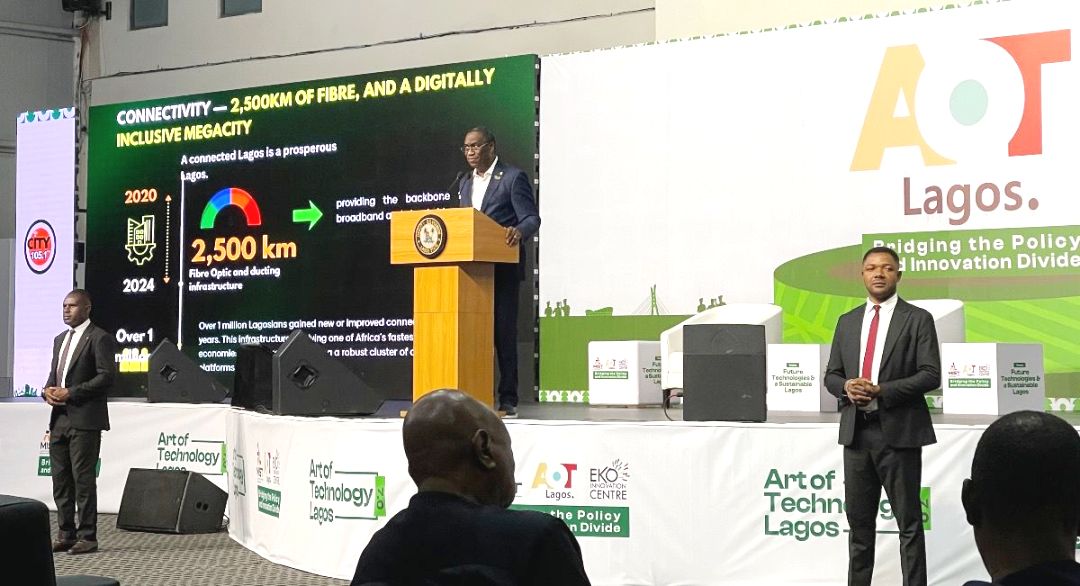
Lagos Deputy Governor Obafemi Hamzat says the state’s initiatives to make Lagos a connected, secure, and sustainable city are yielding commendable results.
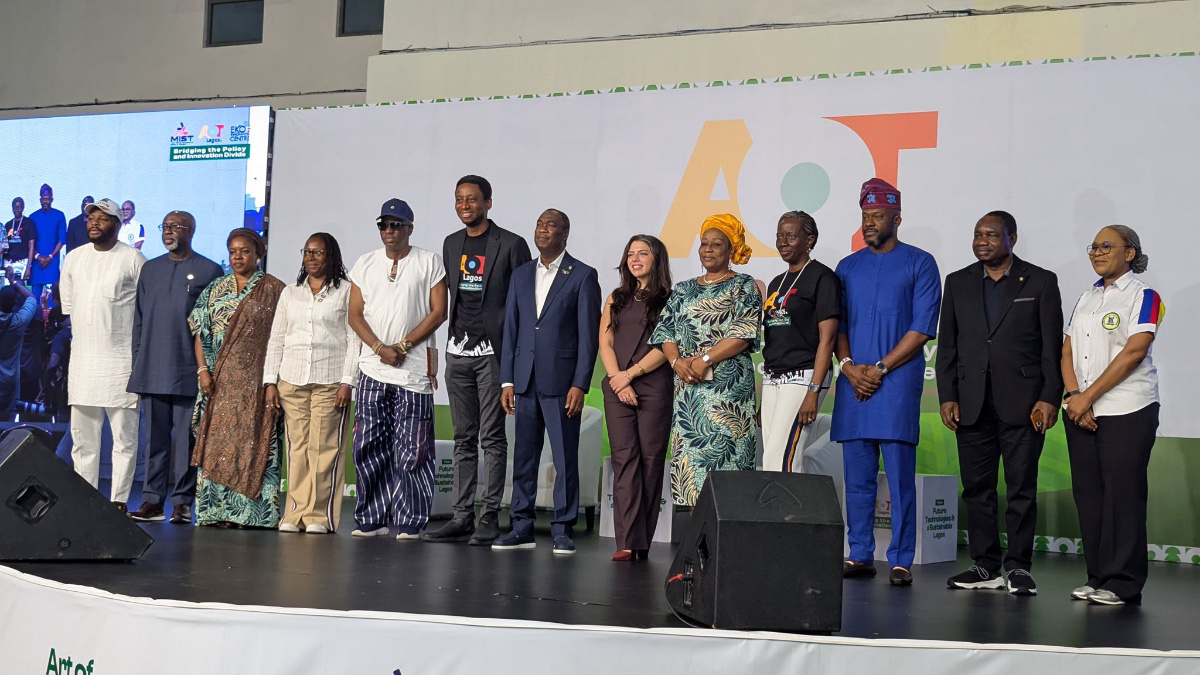
Speaking at the opening of Art of Technology (AOT) 7.0 today, Thursday December 4, at the Landmark Event Centre, the Deputy Governor noted that this year’s theme, “Future Technologies & a Sustainable Lagos,” aligns with the state’s goal of building a mega-city that is digital, resilient, inclusive and competitive on a global scale.
While addressing innovators, policymakers, and partners, Hamzat shed light on measurable results from ongoing smart-city projects.
The intelligent transport system and automated traffic enforcement have reduced traffic violations by around 30%. “With the safe-city intelligent video surveillance network, the Nigerian Police has achieved over 10 major operational successes in security, criminal investigation and traffic management,” he said, describing the impact of real-time monitoring.
Connectivity has expanded quickly. Between 2020 and 2024, the government deployed 2,500 kilometres of fibre optics, providing low-cost broadband and cloud infrastructure.
Over 1 million homes and businesses gained new or improved connectivity in that period, supporting one of Africa’s fastest-growing data economies.
Digital governance is also evolving. More than 16 ministries, departments and agencies now offer citizen-facing services such as licensing, tax processing, permits and public records through a single portal, which receives about 10,000 daily visitors.
Hamzat said the portal is moving toward a unified platform to make government interaction faster and more transparent.

On research and innovation, Hamzat spoke of the Lagos State Science Research and Innovation Council (LASRIC), which has committed nearly ₦2 billion to fund innovators, researchers, and startups.
Over 75 ventures across sectors including agritech, climate tech, construction tech and edtech have received grants or support. “That pipeline of ideas and talent is the engine of our long-term competitiveness,” he said.
Data security is also a priority. The Lagos State Cyber Security Council, the first sub-national body of its kind in Nigeria, has been commissioned to develop a cybersecurity framework for government systems, businesses and citizens.
Its members include private-sector experts, tech company leaders, regulators and researchers. Hamzat emphasised: “We are not just building technology. We must also secure it.”
Speaking further, the Deputy Governor discussed the Lagos Innovation Bill. Once passed, it will make innovation a permanent part of the state’s economic strategy, strengthening intellectual property protection, expanding funding for research, and fostering collaboration between government, academia, and industry. Stakeholders are encouraged to contribute through innovationbill.lagosstate.gov.ng.
At AOT Lagos 7.0, Hamzat also pointed to plans for artificial intelligence in predictive governance, healthcare, traffic optimisation, water management, flood monitoring, waste management, and other areas of environmental sustainability.
He said the state is deploying smart mobility solutions to address congestion in a city that occupies less than 0.4% of Nigeria’s land but hosts 10% of its population.
He concluded by inviting all stakeholders, including investors, researchers, private companies and citizens, to partner with the government in building a “smarter, safer, greener mega-city, a data economy that creates jobs and prosperity.”
Through these initiatives, Lagos aims to set a global example for how technology, governance and sustainability can combine to improve lives and strengthen the local economy.