



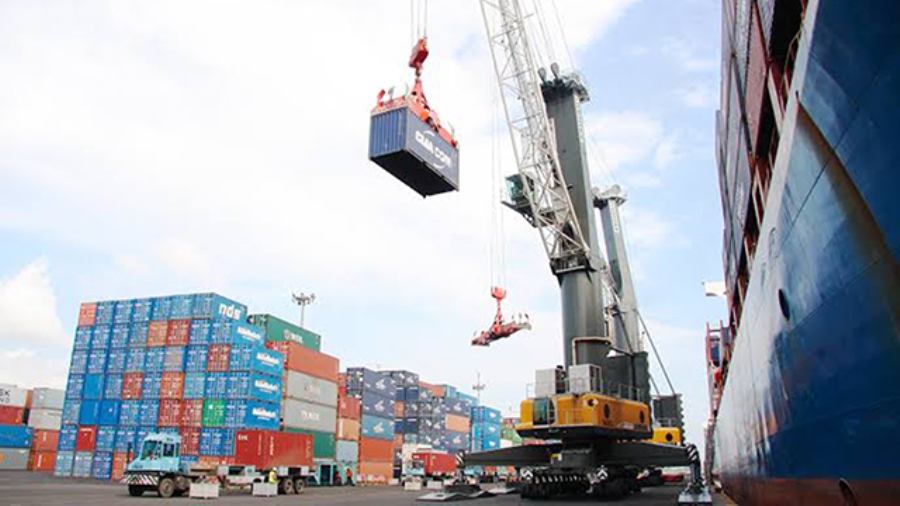
The Federal Government says work on the long-delayed rehabilitation of Apapa and Tin Can Island ports will begin in the second quarter of 2026.
The project, expected to run for 48 months, follows the conclusion of a £746 million export finance agreement with the United Kingdom.
Speaking on Channels Television, Bolaji Akinola, special adviser to the Minister of Marine and Blue Economy, said the main obstacle, funding, has now been cleared.
The agreement involves Citibank and UK Export Finance (UKEF), clearing the way for construction to start within weeks.
“Now that the financing has been resolved and the agreement signed with Citibank and UK Export Finance, I am optimistic that work will begin in the next quarter,” Akinola said.
He added that once construction starts, delivery is expected within four years.
The port upgrade is part of a bilateral arrangement between Nigeria and the UK.
Under the terms of the deal, British Steel will supply about 120,000 tonnes of high-grade steel, valued at £70 million, for quay reinforcement and related works.

At least 20% of the project components will come from the UK, with an estimated £236 million expected to go to British suppliers.
The government says the agreement fits into its broader plan to attract large-scale investment into infrastructure, industry and energy.
Akinola said the upgrade will allow much larger vessels to berth at Nigerian ports. Ships carrying over 10,000 twenty-foot equivalent units (TEUs), and in some cases up to 20,000 TEUs, are expected to be accommodated when the project is completed.
A key part of the work is dredging the channels. At present, Lagos ports operate at a maximum draft of about 13 metres, which limits the size of vessels that can dock. The plan is to deepen this to at least 16 metres.
This change is expected to open the ports to larger container ships and reduce the need for cargo to be diverted to neighbouring countries with deeper and more modern facilities.
Industry operators say the project is overdue. Boma Alabi, chairman of the Shipping Association of Nigeria (SAN), said Apapa and Tin Can ports have not seen major upgrades in more than 15 years, despite growth in trade and population.
“We have lost a lot by not upgrading our infrastructure,” she said, noting that neighbouring countries have gained traffic Nigeria could have handled.
The government believes the rehabilitation will cut shipping costs, reduce cargo clearance time and improve overall efficiency at the ports.
If the Q2 2026 timeline is met, officials say the maritime sector could boost economic growth, in line with the government’s blue economy agenda.