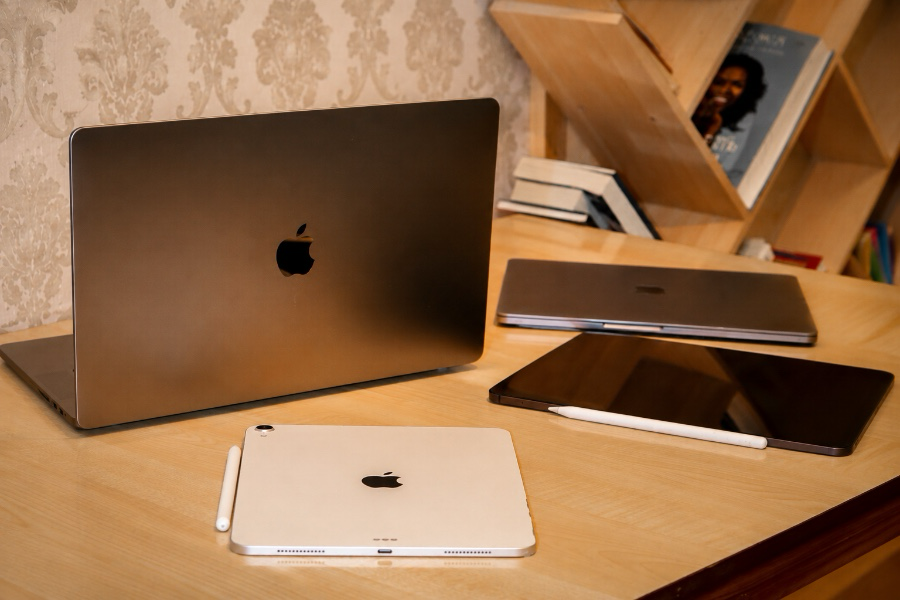
Apple has increased the prices of several iPad, MacBook and smart home products after a surge in memory chip costs, saying it can no longer absorb the impact of an industry-wide supply squeeze driven by growing investment in AI data centres.
The price changes do not affect the iPhone, but they push the entry-level MacBook Neo to $699 from its launch price of $599. Apple said skyrocketing memory and storage chip costs forced the company to review prices across parts of its product range.
“We have never seen a component price increase this much, this quickly. We have shielded our customers from these increases so far, but we have now reached a point where we need to begin raising prices on a number of products, including today’s increases for iPad and Mac,” the company said in a statement.
The biggest increases affect some of Apple’s higher-spec devices. The MacBook Air with 512GB of storage now starts at $1,299, up from $1,099, while the 1TB MacBook Pro now costs $1,999 instead of $1,699.
Apple also raised the price of the 11-inch iPad Air with 128GB of storage to $749 from $599. The 11-inch iPad Pro with 256GB of storage now sells for $1,199, up from $999.
Beyond its computers and tablets, Apple also increased prices for the HomePod, HomePod Mini and Apple TV set-top box.
Following the announcement, Apple’s shares fell nearly 5%, while Dell dropped by more than 8% as analysts warned that other PC makers could soon face similar pressure.
Analysts say Apple’s strong relationships with suppliers have helped it delay price increases longer than many competitors. Even so, they believe other manufacturers could be forced to make even steeper adjustments.
Ben Bajarin, CEO of Creative Strategies, said: “The memory environment is tough and remains structurally tough for the foreseeable future.”
The pressure comes as memory manufacturers focus on supplying chips for AI infrastructure instead of consumer electronics.
Companies building AI data centres, including Nvidia and other technology firms, have signed long-term supply agreements worth billions of dollars to secure memory chips, leaving fewer components available for smartphones, tablets and personal computers.
Micron recently said it had secured $22 billion in long-term customer commitments for memory supply, reflecting the strong demand from the AI market.
Apple had already warned investors that higher memory costs would begin affecting its business this year. During an earnings call in April, Chief Executive Tim Cook said: “We expect significantly higher memory costs.”
He added: “Where we don’t give color beyond June, I can tell you that beyond the June quarter, we believe memory costs will drive an increasing impact on our business.”
Apple has not disclosed what other measures it is taking to manage high component costs. However, the company acknowledged that customers would not welcome the latest increases.
“We know this is not welcome news, and we are working tirelessly to find solutions,” Apple said.
Research firm IDC believes the latest increases could influence buying decisions, especially with the launch of new iPhones expected later this year.
Nabila Popal, Senior Research Director at IDC, said: “The iPhone isn’t spared, its hike is coming. It was incredibly strategic for Apple to make the price hike announcements prior to the iPhone fall launch, so the headlines at launch is not the price hikes but the value the new phones bring.”
Market tracker TrendForce reported that prices of dynamic random access memory (DRAM), used in almost every modern electronic device, rose by as much as 98% in the first quarter of 2026. It expects prices to increase by another 58 to 63% during the current quarter.
The surge has already changed the competitive landscape. At $699, the MacBook Neo no longer holds its $100 price advantage over Dell’s XPS 13. It is also now more expensive than some Chromebook models from Lenovo and Asus.
IDC forecasts global smartphone shipments will fall by almost 14% in 2026, while PC shipments are expected to decline by 11.3% as manufacturers pass high costs on to buyers.