

ADVERTISEMENT
Saturday, June 6, 2026
Tech | Business | Economy
No Result
View All Result
  • Technology
    • Trends
    • Telecoms
      • Broadband
    • ConsumerTech
      • Gadgets and Appliances
      • Apps
      • Accessories
      • Reviews
      • Unboxing
    • EnterpriseTECH
    • Security & Data Protection
    • How To
  • Business
    • Company News
    • StartUPs
      • Founder’s Story
      • Funding
    • Deals
    • People & Moves
    • SME & Entrepreneur Focus
    • BUSINESS SENSE FOR SMEs
    • Competition & Market Positioning
    • Commerce & Mobility
    • Travel
    • WomenPreneurs
  • Economy
    • Macroeconomic Trends
      • Macro Monday
      • TE Insights
    • Finance
      • Banks
      • Fintech
      • Insurance
      • Digital Assets
      • Personal Finance
    • Policies
      • Tech & Society
    • Market Analysis
    • Jobs & Workforce Economy
  • Features
    • Guest Writer
      • Chidiverse
      • Digital Assets
      • GameTech
    • EventDIARY
    • IndustryINFLUENCERS
    • MarkTECH
    • TBS
    • NewsEXTRA
  • Editorial
  • Brand Content
  • TECHECONOMY TV
Saturday, June 6, 2026
Tech | Business | Economy
No Result
View All Result
Tech | Business | Economy
No Result
View All Result

Home » Before Tinubu’s Regime, CBN Spent $1.5B Monthly to Maintain Naira’s Value

Before Tinubu’s Regime, CBN Spent $1.5B Monthly to Maintain Naira’s Value

Joan Aimuengheuwa by Joan Aimuengheuwa
June 17, 2024
in Finance
Reading Time: 2 mins read
0
Tax, Before Tinubu’s Regime, CBN Spent $1.5B Monthly to Maintain the Naira’s Value, Budget - Bayo Onanuga,

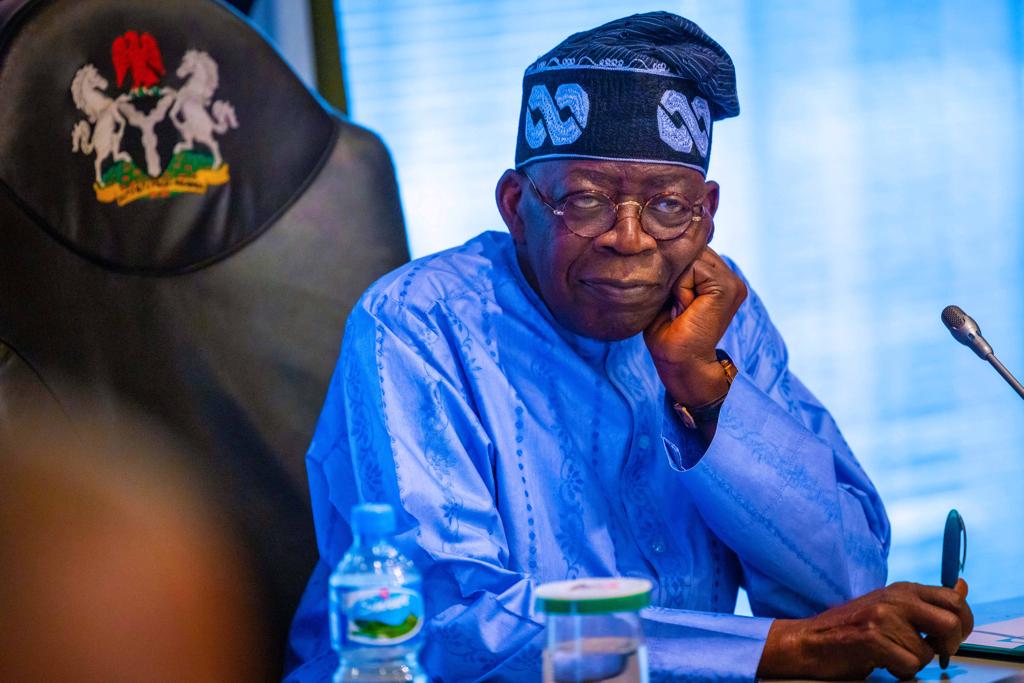
President Bola Tinubu

Bayo Onanuga, the special adviser to President Bola Tinubu on Information and Strategy, recently addressed Nigeria’s current economic situation, explaining the reforms undertaken by the administration since June 2023. 

Onanuga’s comments were in response to a New York Times article which portrayed the Nigerian economy as deteriorating under Tinubu’s leadership. 

He noted that the economic difficulties were inherited and not a direct result of the president’s policies.

Bayo Onanuga pointed out that before Tinubu’s administration, Nigeria’s economy was already in an unstable state. The previous government had heavily subsidized both fuel and the exchange rate, with the Central Bank of Nigeria (CBN) spending approximately $1.5 billion monthly to maintain the naira’s value. 

This approach led to widespread arbitrage, where over 5,000 Bureau de Change (BDC) operators exploited the difference between the official and parallel market rates.

Subscribe to our Telegram channel for the latest updates.

Follow the latest developments with instant alerts on breaking news, top stories, and trending headlines.

Join Channel

The Tinubu administration quickly recognized the unsustainable nature of these subsidies. One of the initial moves was to eliminate the fuel subsidy, a decision necessitated by the absence of budgetary provisions beyond June 2023. 

This step was essential in addressing the ‘cancer of public finance,’ which had seen 97% of revenue directed towards debt servicing under the previous government.

Simultaneously, the government floated the naira, allowing market forces to determine its value. This policy was aimed at curbing the rampant arbitrage and restoring investor confidence, which had waned due to inconsistent exchange rates and unmet remittance obligations to foreign businesses.

Despite initial turbulence, including the naira plunging to an all-time low of N1,900 to the dollar, Onanuga reported that stability is returning to the foreign exchange market. 

The naira has appreciated and now trades below N1,500/$, with optimistic projections suggesting it could strengthen further to between N1,000 and N1,200 by the year’s end.

In addition to stabilizing the currency, Nigeria recorded a trade surplus of N6.52 trillion in the first quarter of 2024, a turnaround from the N1.4 trillion deficit in the previous quarter. This positive trend, according to Onanuga, shows the initial success of Tinubu’s economic reforms.

Onanuga acknowledged the persistent challenge of inflation, particularly in food prices. He highlighted endless actions by both federal and state governments to boost agricultural production and reduce food costs. 

Initiatives include extensive investments in dry-season farming, distribution of fertilizers, and setting up retail shops in states like Lagos and Akwa Ibom to sell food at reduced prices.

The economic reforms have begun to restore international confidence in Nigeria’s financial stability. Notable indicators include the World Bank’s $2.25 billion loan and additional financial support from the African Development Bank (AfDB) and the African Export-Import Bank (Afreximbank). 

Through decisive policies and sustained reform efforts, the government aims to stabilize the economy and ensure a sustainable future growth.

0Shares
Previous Post

States’ Emergency Declaration on Education and the Buni Vision | By Hassan Gimba

Next Post

FBNH FY 2023 and Q1 2024 Results Rebound Looks Promising as Net Profit Rises +124.14%

Joan Aimuengheuwa

Joan Aimuengheuwa

Joan thrives at helping individuals and businesses scale via storytelling...

Related Posts

Flutterwave and Tempo

Flutterwave Taps Tempo to Deepen Stablecoin Infrastructure in Africa after Turnkey Deal

June 5, 2026
IMTOs naira settlement accounts | FX Exchange Market | Parallel | Black | CBN naira-only remittance | Dollar to

Dollar to Naira Exchange Rate Today, June 5, 2026

June 5, 2026

Dollar to Naira Exchange Rate Today, June 4, 2026

June 4, 2026
Load More
Next Post
FBNH

FBNH FY 2023 and Q1 2024 Results Rebound Looks Promising as Net Profit Rises +124.14%

Leave a Reply Cancel reply

Your email address will not be published. Required fields are marked *

I agree to the Terms & Conditions and Privacy Policy.

This site uses Akismet to reduce spam. Learn how your comment data is processed.

Techeconomy Podcast
Techeconomy Podcast

The Techeconomy Podcast is a thought-leadership show exploring the powerful intersection of technology, business, and the economy, with a strong focus on Africa’s fast-evolving digital landscape.

Financing the Future: Venture Debt, Local Capital & African Innovation | TBS May 2026 Webinar
byTecheconomy

Africa’s innovation ecosystem is evolving, but where will the funding for the next generation of startups come from?

In this edition of the Techeconomy Business Series (TBS) May 2026, industry experts explore how local capital, venture debt, and smarter investment structures are redefining startup growth and innovation across Africa.

🎙️ Featured Speakers:

* Ebunoluwa Ashley-Dejo

* Damilare Davola

* Success Ajilore (STN & Accelerated Plus)

Key conversations in this webinar include:

✔️ The future of startup financing in Africa

✔️ Venture debt and alternative funding models

✔️ The role of local investors in scaling innovation

✔️ Sustainable investment strategies for African startups

✔️ Opportunities and challenges in the African tech ecosystem

Subscribe for more conversations shaping Africa’s digital economy and innovation landscape.

#TBS2026 #AfricanInnovation #VentureDebt #StartupFinance #TechInAfrica #Techeconomy #AfricanStartups #InnovationEconomy

Financing the Future: Venture Debt, Local Capital & African Innovation | TBS May 2026 Webinar
May 27, 2026
Techeconomy
PROTECTING INNOVATION IN AFRICA’S STARTUP ECOSYSTEM
April 29, 2026
Techeconomy
BUILDING TRUST IN AFRICA ECOSYSTEM
February 27, 2026
Techeconomy
Navigating a Career in Tech Sales
January 29, 2026
Techeconomy
How Technology is Transforming Education, Health, and Business
November 27, 2025
Techeconomy
Search Results placeholder
MTN Live It 100 Thematic Campaign
ADVERTISEMENT
  • About Us
  • Careers
  • Contact Us
  • Privacy Policy

© 2026 TECHECONOMY.

No Result
View All Result
  • Technology
  • Business
  • Economy
  • Features
  • Editorial
  • Brand Content
  • TECHECONOMY TV

© 2026 TECHECONOMY.

This website uses cookies. By continuing to use this website you are giving consent to cookies being used. Visit our Privacy and Cookie Policy.

