



In Nigeria’s current economic climate, food security is no longer just a policy talking point, it’s a data-driven emergency.
With food inflation hitting record highs and post-harvest losses gutting agricultural margins, the “rhetoric of sustainability” is finally meeting the “reality of execution.”
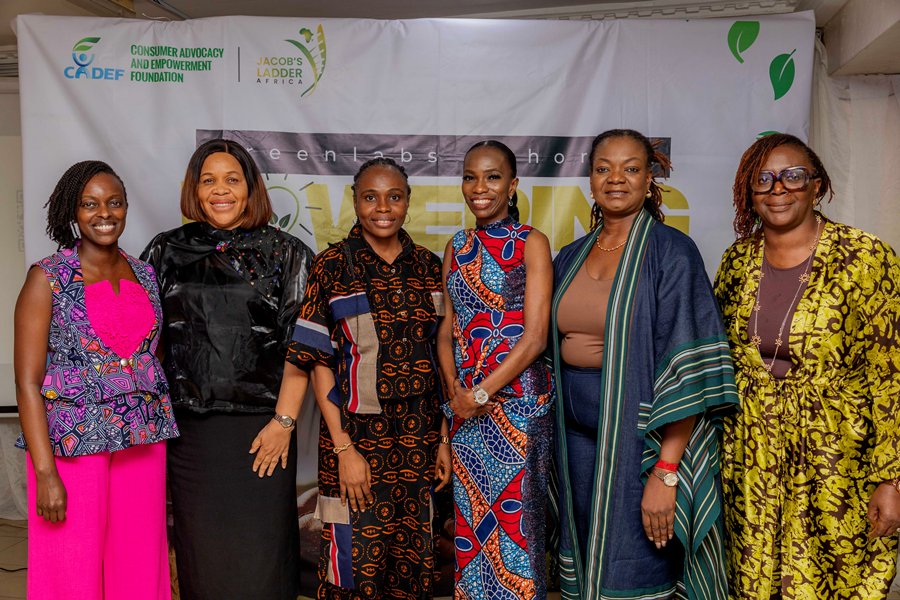
On Friday, the Greenlabs Incubation Programme, powered by the Consumer Advocacy and Empowerment Foundation (CADEF) and Jacobs Ladder Africa (JLA), hosted its Cohort 2 “Powering Food Systems” Demo Day.
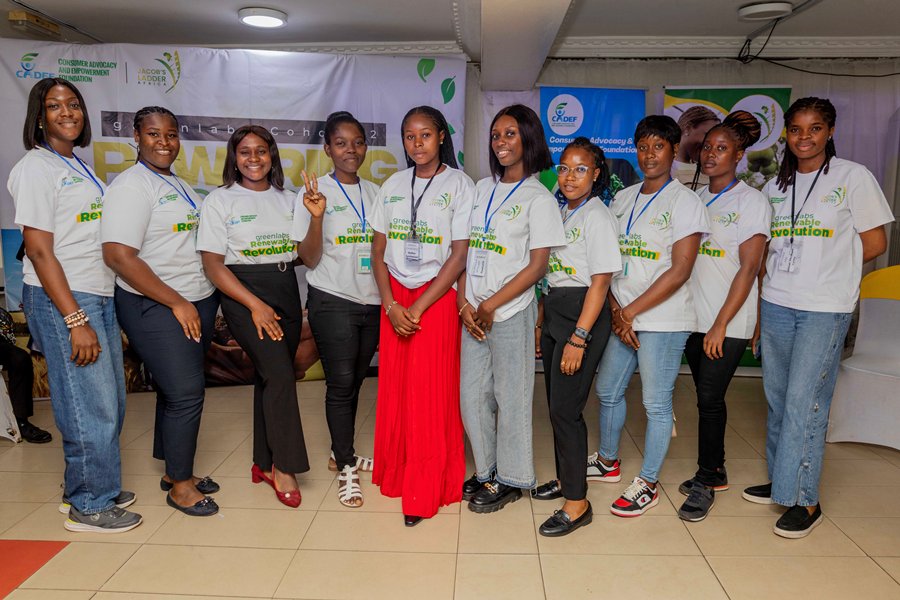
The event wasn’t just a showcase of ideas; it was a strategic unveiling of 16 youth-led ventures aiming to fix the broken intersections of energy, technology, and agriculture.
The Finalists: From Prototype to Pre-Seed
Following an intensive mentor-guided sprint that began in January 2026, the challenge narrowed its pool to 16 innovators. In an ecosystem where scalability is the ultimate filter, three startups; Geocycle, Ecobag Mart, and Agricool Logistics, secured top honours and the pre-seed funding necessary to move from lab to marketplace.
These winners, alongside fellow finalists Leovia Farms and Dry Heat Solutions, are now entering a nine-month high-touch incubation phase. The goal? To transform “green ideas” into “green enterprises” that can survive the Nigerian business lifecycle.

Intersectionality: Energy meets Food
The core thesis of Cohort 2 was a deliberate push toward Agro-Energy. In sectors like poultry and aquaculture, the lack of reliable cooling and processing infrastructure is a primary driver of value-chain collapse.
“Funding is only the beginning,” said Karen Chelang’at, chief innovation officer at Jacobs Ladder Africa. “The real success will be market-ready businesses that create jobs and deliver measurable community impact.” JLA’s approach pushes innovators to solve practical failures, such as cold-chain gaps, using renewable energy to strengthen yields.
Institutional Alignment: The Policy Tailwinds
The event signaled a rare moment of institutional alignment. Representing the Permanent Secretary of the Federal Ministry of Agriculture and Food Systems, Emmanuel Audu Fatai declared that innovation is no longer a luxury for Africa’s food future.
“Today’s innovators are rewriting tomorrow’s food economy,” Fatai stated. This sentiment was echoed by the Lagos State Government, which highlighted its own “Agri-Innovation” and “Agrithon” programs as proof that the state is ready to absorb and scale these youth-powered solutions.
Building Founders, Not Just Pitchers
For the organizers, the Demo Day served as a bridge between “invention” and “enterprise.” In Nigeria’s volatile market, a great prototype is nothing without a disciplined founder.
“Beyond pitching, we are building founders who can create jobs and scale responsibly,” noted Prof. Chiso Ndukwe-Okafor, executive director of CADEF. The incubation framework is designed to bake financial discipline and “lifecycle knowledge” into the startups’ DNA, essential traits for companies operating in the circular economy.
The Bottom Line
As Nigeria targets a $1 trillion economy, the agricultural sector cannot remain a low-tech, high-loss industry.
The Greenlabs Cohort 2 Demo Day suggests that the solution won’t come from government action alone, but from a cross-sector “execution play” powered by young founders who view climate change as a market opportunity rather than just a crisis.