


Every generation is expected to leave the world better than it found it. That responsibility, however, does not begin in adulthood.
It begins much earlier, when children learn to ask difficult questions, pay attention to the world around them and think seriously about how everyday problems can be solved.
Those habits matter more today than they did a decade ago. Technology is changing how people learn, work and live, but progress still depends on people who can think clearly, weigh evidence and explain their ideas. Those qualities do not appear overnight. They grow when young people are given reasons to think beyond the classroom and engage with issues that affect society.
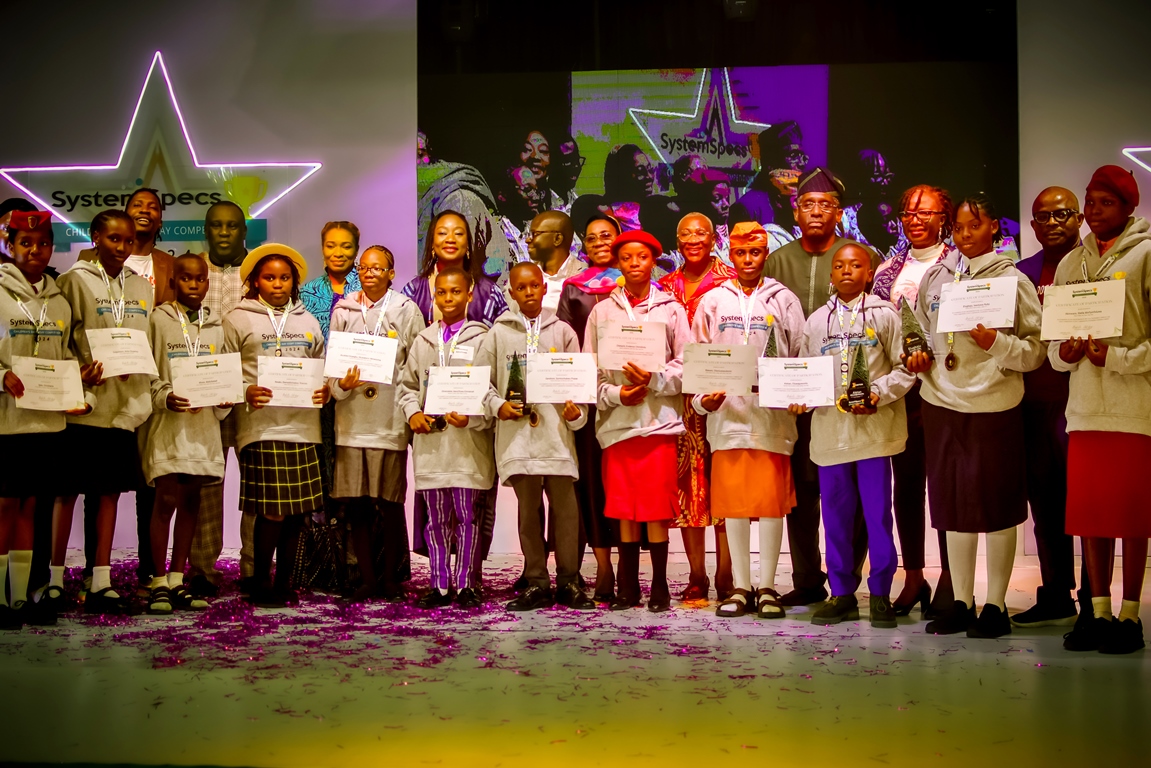
For the past seven years, the SystemSpecs Children’s Day Essay Competition, CDEC, has invited young Nigerians aged 9 to 16 to take on issues of national importance and think through how technology might improve lives and strengthen communities.
Since its launch in 2020, it has drawn more than 20,000 entries from across Nigeria’s six geopolitical zones, with female participation growing by 36.5 per cent over the past three years.
Numbers like these are easy to recite and just as easy to forget. What actually shows whether an initiative like this works is what happens to the people who took part, long after the certificates have been handed out. Seven years in, three stories make a reasonably strong case, starting with the most recent.
Jemimah Akande, a Grade 11 student, took part in the 2026 edition. She did not finish among the prize winners, but the experience stayed with her well past the result.
Writing about it afterwards on LinkedIn, Jemimah described how researching the role of data in optimising transportation systems pulled her into logistics, urban planning and predictive analysis all at once. What struck her most was how much of the infrastructure people rely on daily runs on data that most people never think about.
Although Jemimah had not taken home the top prize, she called the essay “an incredible learning experience” that sharpened her interest in data analysis, adding that “the journey of learning never stops.”
That same thread runs through several alumni of the initiative including Agiounime Agianpuye. He finished among the Top 10 finalists in CDEC’s first edition, back in 2020, and looking back now, says what stayed with him longest had nothing to do with prizes.
“Of everything SystemSpecs’ Children Day Essay Competition gave me,” he says, “the one thing money simply cannot buy is the confidence that I earned. There is a real difference between being told that you are capable and proving it to yourself.”
That confidence went further than self-belief. The discipline of researching a position, questioning his own assumptions and building an argument that could survive scrutiny changed how he works through problems generally.
“Writing for CDEC taught me to argue with myself first: to challenge my own assumptions and build a case strong enough to survive critique.”
Today, that habit of mind runs through his work in healthcare management, and feeds a growing interest in health informatics and data-driven care. He no longer describes the essay as a competition entry. He calls it “a personal manifesto.” What his story shows is simpler than a grand claim about talent: encouragement, well timed, tends to compound.
For Toluwase Shoniran, who placed third in the senior category of that same 2020 edition, the competition marked the start of something specific rather than something abstract.
He has since moved through computer engineering, data science and artificial intelligence, one step following fairly directly from the last. The tablet he won as a prize became the machine on which he taught himself Python straight after secondary school. That early habit carried him into machine learning, into datathon wins, and eventually into founding Clariphi, a startup applying artificial intelligence to organisational knowledge management.
On their own, these are just three good stories. Put next to each other, they start to look like a pattern rather than a coincidence. A data enthusiast who found her subject earlier than most. A future health systems specialist who learned to interrogate his own thinking before anyone else got the chance to.
A founder who turned one well-timed device into a career. None of them set out with the same destination in mind, but each was pushed, at roughly the same age, to stop taking the world in front of them at face value.
This may be the most durable value in an initiative like CDEC. The essays get judged within weeks. The habits behind them, curiosity, the willingness to research properly, the discipline of building an argument, tend to stay with a person for years after the certificate is filed away.
Technology alone will not solve very much on its own. It still takes someone asking the right question, testing an idea against evidence and pushing a solution through to something workable, wherever they end up working.
Building those habits while a child is still working out what interests them is not something that pays off immediately. It is closer to an investment that compounds quietly, for a long time, before anyone notices the return.
That is really what SystemSpecs’ Children Day Essay Competition is doing, past the ceremony each June. Every essay is a chance for a young Nigerian to think seriously about a real problem and come away believing their own ideas are worth building on.
Most participants will not become software engineers, data scientists or founders. They will become doctors, teachers, lawyers, civil servants, and people running businesses that have nothing to do with technology. What they are more likely to carry with them, whatever they end up doing, is a habit of asking a real question before accepting the first answer they are given.
Years from now, many people will not remember who won the 2026 edition of this competition.
They may, however, benefit from a generation of problem solvers who first found their curiosity and their confidence here, because someone asked them, while they were still young enough to be shaped by the question, to think seriously about the future they wanted to help build.



