



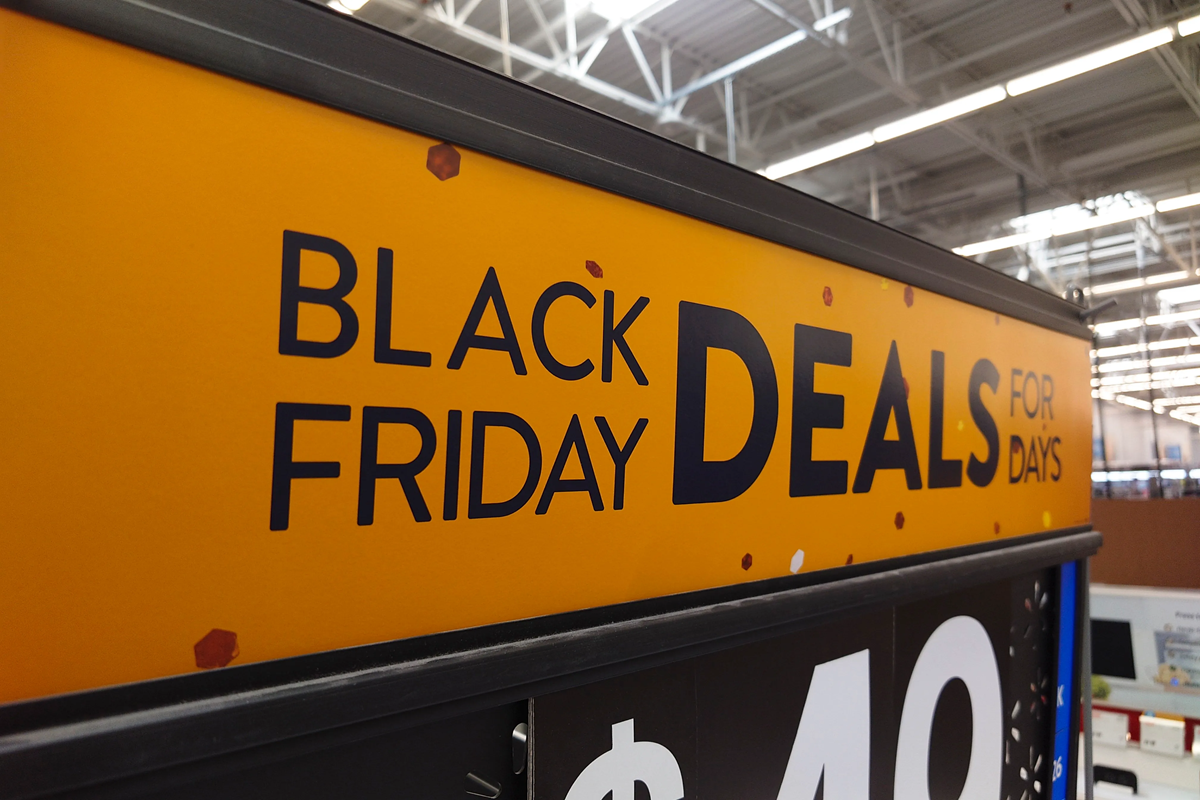
What started out as a promotional import from the United States has become a defining moment in the festive season economy.
The four-day Black Friday-Cyber Monday (BF-CM) event generates 20-30% of holiday spending, consistently outperforming the broader November-to-December retail period in both transaction volume and revenue.
It is now a clear competitor to the festive season with sales up 3.5% year-on-year as of November 2025 and this narrow four-day period has become one of the most concentrated and commercially decisive retail experiences of the year.
Building on this momentum in 2026 requires that online rethink its strategy, and instore maintain its focus on wedding discounts to experiences.
BF-CM has moved past a year-end promotion designed to clear stock and generate noise to a stress test for how well a retailer understands pricing, fulfilment, inventory, digital performance, store execution and customer intent.
Within a holiday retail season that runs for nearly eight weeks, BF-CM consistently generates roughly a tenth of total transactions and revenue, making it one of the most strategically important moments in the retail calendar.
In 2025, the Ecentric Black Friday Index found that BF-CM accounted for 9.08% of online holiday transaction volume and 10.6% of online holiday revenue, compared with 9.61% of online transaction volume and 11.29% of online holiday revenue in 2024.
While online share softened slightly year-on-year, the window still captured a disproportionate portion of festive activity in just four days.
Physical retail showed the opposite trend. In-store transaction share increased from 10.64% of holiday transactions in 2024 to 10.75% in 2025, while in-store revenue share rose from 11.3% to 11.52% over the same period.
Revenue share grew faster than transaction share, which suggests either bigger baskets, stronger product mix or more effective conversion of high-value purchases in-store.
It points specifically to categories such as appliances, electronics and fashion, where consumers still want to see, touch or try products before committing.
Physical retail is not outperforming digital because consumers have turned away from ecommerce. It is outperforming when retailers give shoppers a compelling reason to show up.
South African shoppers still value tactile, experiential instore shopping when the trip feels worthwhile. Instore gains are likely linked to the retail sector prioritising events, exclusives, demonstrations and merchandising that turn stores into destinations rather than just transaction points.
This is a crucial strategic insight for 2026 because the question is moving away from how deep the discount towards what kind of engagement actually drives profitable conversion.


Retailers can’t rely on price cuts alone as they’re training customers to wait for the markdown. Moving forward, store-led urgency, exclusivity and theatre are creating reasons to buy now, in person and at potentially higher basket values.
Online, the execution looks different. Digital has to win on precision – a move away from blanket percentage discounts towards tiered offers, bundles and add-ons and buy-more-save-more structures that rebuild average order value.
Sharper segmentation with promotions tailored to new customers, returning customers, high-value segments and lapsed shoppers will offer deeper potential rewards rather than channel-wide discounting that dilutes margin for minimal gain.
This reflects a broader strategic change in retail where the strongest operators are directing the right offer to the right customer at the right moment, with the least friction possible.
That friction point is increasingly important as well. Consumers are moving between online and instore environments fluidly.
They’re using digital to research and compare but still converting in physical locations for high-consideration purchases or where exclusives make the trip worthwhile.
Retailers shouldn’t rely on one channel to heavily as it will leave them exposed, instead synchronise inventory, pricing, fulfilment and promotions across both.
Stores can also become omnichannel hubs for click-and-collect, returns and service interactions that create upsell opportunities.
BF_CM is much more than a shopping event. It is a test of whether a retailer can align customer experience with commercial discipline under pressure.
The data in the report shows that the market is still growing. Festive-period online transactions rose 13.4%, online revenue rose 5.7%, in-store transactions increased 6.0% and in-store revenue rose by 5.2%.
This event has become a strategy test for South African retail, concentrating demand, exposing operational weakness, punishing lazy discounting and rewarding retailers that understand the economics of engagement.
In 2026, retailers will thrive if they use data to build better experiences, more interesting offers and stronger conversions across every touchpoint.
*The Ecentric Black Friday Index measures the proportion of total holiday retail activity that takes place during the four-day Black Friday to Cyber Monday window, using transaction data processed through the Ecentric payment gateway across both online and in-store retail channels.
The index compares this activity against the full holiday trading period from 1 November to 24 December to determine how concentrated spending becomes during the BF-CM event.