

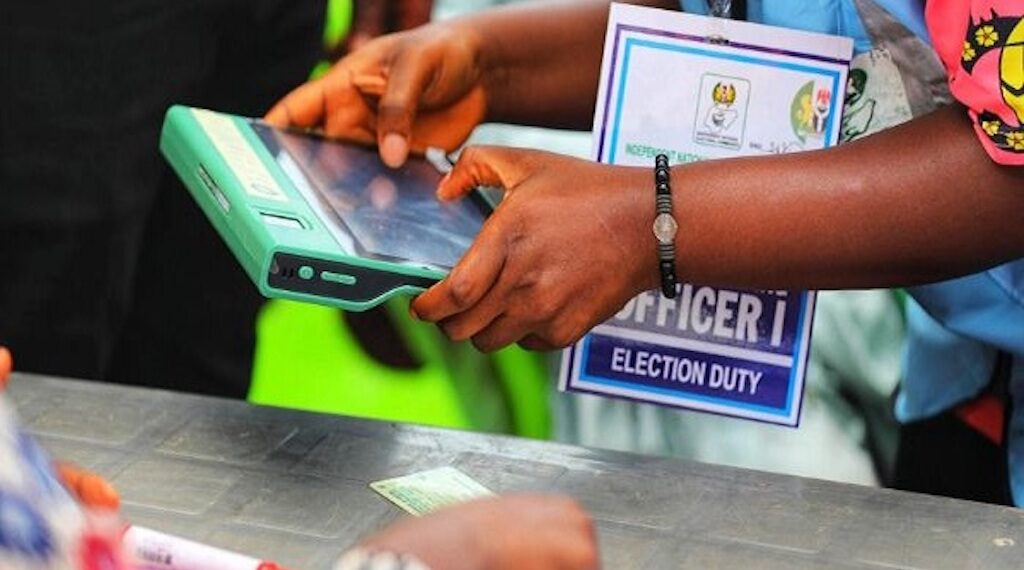
Despite the billions of Naira invested in the Bimodal Voter Accreditation System (BVAS) and the INEC Result Viewing Portal (IReV), a crisis of confidence continues to plague Nigeria’s electoral process.
In a high-stakes X Space hosted by the Stakeholders in Blockchain Technology Association of Nigeria (SiBAN), industry experts argued that the next logical step for Nigeria is not just digital transmission, but immutable transmission via blockchain.
The consensus? Blockchain isn’t a magic wand for politics, but it is a technical shield for data integrity.
The Confidence Infrastructure
Oluwaseun Dania, CEO of Alpha-Geek Technologies, hit the nail on the head regarding the root cause of voter apathy: the fear that votes disappear in the black box between polling units and collation centers.
“The real opportunity is actually much simpler. Blockchain is not there to change how Nigerians vote, but to technically protect the integrity of the votes that are cast. People will be more confident knowing that as they are casting their votes, the results are being recorded on the blockchain, visible to everybody all over the world,” Dania explained.
Dania isn’t calling for a 100% e-voting overhaul overnight, which would be a hard sell given Nigeria’s internet penetration gaps. Instead, he proposes a hybrid model:
- On-Chain Registers: Moving National Identification Numbers (NIN) and voter registers to a blockchain to prevent ghost voting.
- Immutable Transmission: Using blockchain specifically for the audit trail of results, ensuring no data is doctored during transit.
Solving the Gas Fee and Technical Bottleneck
A common critique of blockchain is the cost of transactions (gas fees) and technical complexity. Harry Ugorji, CEO of Egoras Technology, proposed a localized infrastructure where polling agents don’t need to be crypto-experts or pay for gas.

“They have to scan the EC8A form. Once they scan and upload, there should be an AI-based layer that extracts that information and transmits it to the smart contracts. This data can be saved using IPFS (InterPlanetary File System) so that at every point in time, everybody can verify that data,” Ugorji stated.
By using IPFS for decentralized storage and an AI-layer for data extraction, the process removes human error and ensures that the uploaded image of a result matches the data on the ledger permanently.
INEC’s Tech Evolution: The Pre-Registration Play
Representing INEC Lagos, Mr. Taiwo Gbadegesin (via Mr. Ayopo Lawal) shifted the focus to the foundation of elections: the Continuous Voter Registration (CVR). INEC is already leaning into digital efficiency to solve the fatigue problem that often leads to data errors.
“This system allows Nigerians, including those currently abroad, to initiate their registration, request card transfers to closer polling units, or update personal details like marital name changes from their mobile devices,” Lawal explained.
By allowing users to handle their own data entry, INEC aims for 100% accuracy. The goal is to reduce the physical visit to a mere five-minute biometric capture:
“This streamlined approach reduces the time spent at the center to under five minutes, significantly easing the burden on both the public and INEC officials while ensuring the electoral roll remains robust and up-to-date.”
A Sandbox Approach
The biggest takeaway from the SiBAN session is the call for Micro-Testing. Before deploying blockchain for a Presidential election, the experts suggest using it for:
- University Student Union (SUG) Elections.
- Secondary School Representative Polls.
- Political Party Primaries.
The bottom line is that technology is ready; the hurdle is political and regulatory will. For blockchain to fix Nigeria’s elections, the government must be willing to embrace a system where data, once recorded, is beyond the reach of any central authority to alter.
Until the Black Box of collation is replaced by a Transparent Ledger, voter apathy may remain Nigeria’s biggest electoral opponent.