

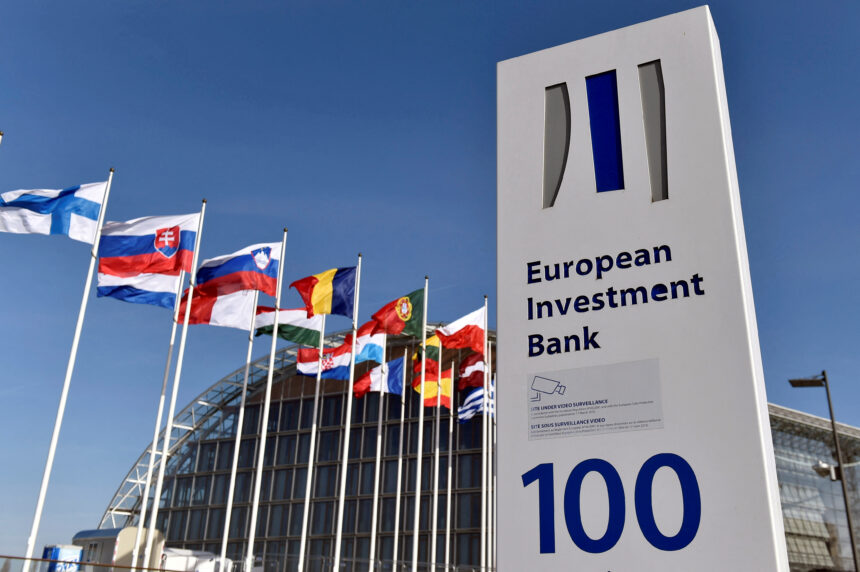
EIB Global, the development arm of the European Investment Bank, stated that it had invested €2.3 billion since the start of its activities in Nigeria in 1978, supporting impactful and transformative investments in crucial areas for the country, such as sustainable urban transport, climate adaptation, innovation and digitalisation, agribusiness logistics and small and medium enterprises (SMEs), and Midcaps financing (Start Reading from Here).
EIB Global and BoI also signed an €85 million agreement to boost the development of Nigeria’s agricultural value chains and support private sector companies across the agricultural value chains, including cooperatives, and MSMEs.
It said at least 70 per cent of the loans will target cocoa and dairy value chains.
The operation will focus on the agriculture sector in compliance with Environmental and Social Standards (ESS).
The project, supported by the EU Global Gateway initiative, is aligned with Nigeria’s development objectives in sustainable agriculture and financial inclusion.
In a joint statement, EIB and BoI explained that the financing was fully dedicated to strengthening agricultural value chains with a focus on sustainable cocoa production and dairy supply management.
Through its partnership with BoI, EIB Global will support increased value addition, improved productivity and stronger linkages across value chains, while enhancing incomes and livelihoods for processors and agribusinesses.
Furthermore, the project will support the sustainable transformation of Nigeria’s targeted value chains and ensure compliance with the EIB’s Public environmental and social standards, EU Regulation on Deforestation (EUDR) and EU standards.
It will also foster biodiversity conservation and reduce environmental externalities, while supporting inclusive rural development in line with the EIB Climate Roadmap and the EU Green Deal.
Olusi said,
“This agreement reinforces the Bank of Industry’s commitment to unlocking long-term, affordable finance for priority sectors that drive inclusive growth.
“By partnering with EIB Global, BoI is scaling support for sustainable agriculture, strengthening critical value chains and enabling Nigerian agribusinesses to grow competitively while meeting international environmental and social standards.”
Fayolle said,
“I am delighted that EIB is financing this project with the Bank of Industry (BoI) for the development of agricultural value chains in Nigeria, including sustainable cocoa. Such investment is important for the country in terms of employment, health, and economy, with real impact on local population. Our ambition is to support and accompany the sustainable transformation of Nigeria’s targeted value chains, in line with EU Global Gateway Initiative of which EIB, as the EU bank, is a key actor and partner in Africa.”
Alongside the credit line, EIB is providing technical assistance to support BoI’s climate action strategy and to support capacity building of the agriculture sector in managing environmental and social risks.
Meanwhile, European officials at the summit said the seven new investment operations demonstrated a renewed political commitment to deepen cooperation between both partners while supporting Nigeria’s development priorities.
“In the current geopolitical context, the European Union is keen to enhance its partnership with Nigeria,” Kallas said. “Bringing more EU investment to Nigeria, aligning with the Renewed Hope agenda for the Nigerian Federal Government is a key priority for both sides,” he added.
EU Commissioner for International Partnerships, Jozef Síkela, said the investments were designed to support long-term economic growth while strengthening critical sectors.
“Together with Nigeria, we are investing in the modernisation of the digital sector, a stronger health system and in the development of agriculture,” Síkela said.
He added,
“These Global Gateway investments create quality infrastructure, sustainable jobs and long-term economic opportunities that benefit the Nigerian people while also creating new opportunities for Europe.”
The digital sector received the largest share of the investment package, with €131 million earmarked for improving connectivity, expanding digital services and strengthening digital skills.
Under the programme, EU will support the rollout of approximately 90,000 kilometres of fibre-optic cable across Nigeria in partnership with European Bank for Reconstruction and Development.
The project aims to deliver secure and affordable internet access to an estimated 33 million Nigerians who currently lack reliable connectivity.


It will also support the development of secure and interoperable digital public infrastructure and contribute to Nigeria’s technical talent development initiative aimed at training millions of digital professionals.
Alongside the broader investment package, the development arm of European Investment Bank, EIB Global, signed a €50 million financing agreement with BoI to boost healthcare manufacturing in Nigeria.
The facility will support local companies producing pharmaceuticals, vaccines, diagnostic products and other medical devices through a dedicated credit line aimed at addressing financing gaps in the sector.
The agreement was announced in the presence of senior officials, including Olusi; Minister of Budget and Economic Planning, Abubakar Atiku Bagudu; and EU Ambassador to Nigeria and ECOWAS, Gautier Mignot.
Olusi said the initiative represented a major step towards building Nigeria’s domestic pharmaceutical and medical manufacturing capacity.
“This partnership marks a pivotal step in Nigeria’s journey from being a major importer of essential health commodities to becoming a competitive producer within regional and global value chains,” he said.
“By mobilising long-term patient capital into local pharmaceutical, vaccine and diagnostics manufacturing, we are not only strengthening health security but also catalysing industrial growth, skills development and high-quality job creation.”
The initiative is financed under the Human Development Accelerator programme backed by the European Commission and implemented by the European Investment Bank in partnership with the Bill & Melinda Gates Foundation.
Vice President of the European Investment Bank, Ambroise Fayolle, said the partnership demonstrated the EU’s commitment to strengthening health systems across Africa.
“By financing the development and local manufacture of essential medicinal and nutritional products, we enhance access to affordable, safe and high-quality treatments for diseases while improving the resilience of supply chains,” Fayolle said.
The EU investment package also includes €86 million to support agricultural development, particularly in Nigeria’s cocoa and dairy value chains.
The financing will provide easier access to credit for smallholder farmers and agribusiness companies through the Bank of Industry while supporting climate-smart agriculture policies and sustainable production.
Officials said the initiative aligned with Nigeria’s ambition to expand dairy production and strengthen cocoa exports to European markets.
Another €16 million will support migration management programmes, including reintegration support for returning migrants and efforts to combat human trafficking networks.
The funding will provide social, economic and psychological assistance for voluntary returnees while strengthening Nigeria’s capacity to tackle smuggling and trafficking networks.
The latest commitments build on earlier EU investments in Nigeria in sectors, including urban transportation in Lagos, renewable energy, democratic governance and programmes to combat gender-based violence.
With the new package, total Team Europe commitments to Nigeria since 2025 reached €962.5 million.
Officials said the growing portfolio highlighted EU’s intention to deepen economic cooperation with Nigeria while promoting sustainable development, industrialisation and private sector growth.
European Investment Bank alone had invested more than €2.3 billion in Nigeria since beginning operations in the country in 1978, supporting projects in infrastructure, climate resilience, innovation, agribusiness and small business financing.
European officials said the new investments were expected to strengthen Nigeria’s capacity to build resilient industries, create jobs, and expand opportunities for regional trade across West Africa.