


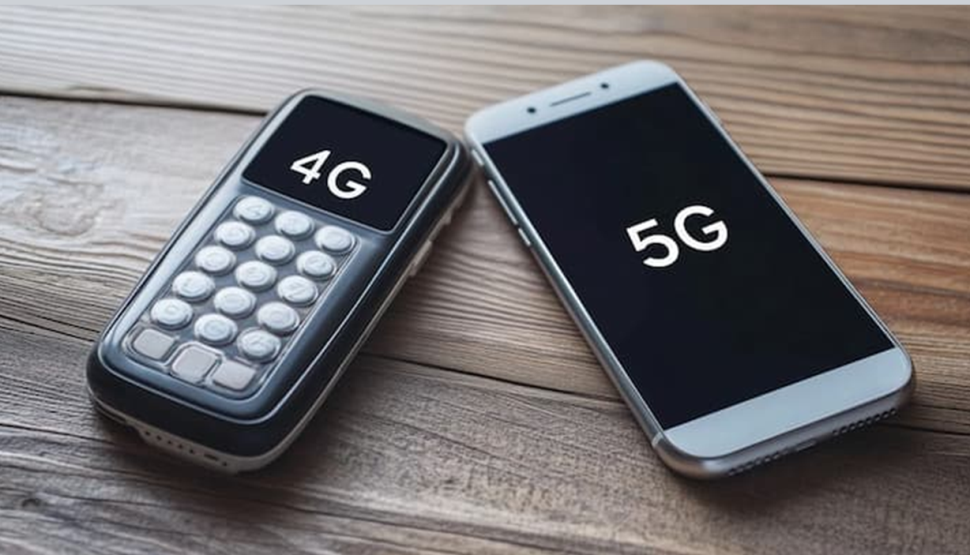
Nigeria’s journey toward universal broadband access is currently a tale of two technologies: the overwhelming dominance of 4G LTE and the slow, capital-intensive crawl of 5G.
Despite aggressive marketing by major Tier-1 telcos, the latest market data for December 2025 reveals that the country is still far from its high-speed targets.
The Tech Mix: 4G is the Workhorse, 2G the Survivor
As of late 2025, 4G LTE has firmly established itself as the backbone of the Nigerian digital economy.
It now accounts for 52.95% of the total technology generation share. This dominance is fueled by the rapid migration of urban users from older 3G networks to 4G-enabled smartphones and the expansion of LTE infrastructure by MTN and Airtel.
Surprisingly, 2G technology, often written off as a relic, refuses to die, maintaining a significant 37.37% share of the market.
This highlights a persistent “device gap” in rural Nigeria, where millions of subscribers still rely on basic feature phones for voice calls and text-based services.
The 5G Reality Check: Growth at a Snail’s Pace
While 5G was heralded as a game-changer for the Nigerian tech ecosystem, its penetration remains modest. By December 2025, 5G technology penetration stood at just 3.77%.
The slow growth of 5G can be attributed to several macroeconomic and structural factors:
Hardware Costs: The average cost of a 5G-compatible smartphone remains prohibitively high for the majority of Nigerians, especially given the inflationary pressure on disposable income.

Infrastructure Capex: Expanding 5G requires significant capital expenditure (Capex) in a high-interest-rate environment. Telcos are prioritizing the optimization of 4G, which offers better immediate returns on investment.
Limited Use Cases: Beyond high-speed streaming and gaming in a few upscale neighborhoods in Lagos and Abuja, the enterprise-grade “killer apps” for 5G are yet to go mainstream.
Broadband Penetration Crosses 51% in December 2025 | Subscriptions Top 112 Million
Nigeria’s broadband market has crossed a significant milestone, with total subscriptions surpassing 112 million in December 2025, pushing internet penetration to 51.97%.
This marks the first time more than half of the country’s population had active broadband connections, reflecting steady growth in the sector over the past year.
Data from the Nigerian Communications Commission (NCC) shows that broadband subscriptions have grown consistently throughout 2025, rising from 91.5 million in October 2024 to 112.6 million by December 2025.
While the month-on-month growth has been gradual, averaging around 2-3 million new subscriptions per month, the overall trend highlights sustained demand for digital connectivity across urban and rural areas.
Interestingly, broadband penetration figures have followed a slightly different pattern than subscription growth.
The penetration rate, representing the percentage of the population with broadband access, climbed from 42.2% in October 2024 to just under 52% in December 2025.
Despite subscription increases, penetration growth slowed at mid-year, hovering around 48% from June to August 2025, suggesting that population growth and uneven distribution across regions may be moderating the pace at which Nigerians gain access to high-speed internet.