


ADVERTISEMENT
Thursday, March 19, 2026
  • Login
Tech | Business | Economy
No Result
View All Result
NEWSLETTER
  • News
  • Tech
    • DisruptiveTECH
    • ConsumerTech
    • How To
    • TechTAINMENT
  • Business
    • BUSINESS SENSE FOR SMEs
    • Telecoms
    • Commerce & Mobility
    • Environment
    • Travel
    • StartUPs
      • Chidiverse
    • TE Insights
    • Security
  • Partners
  • Economy
    • Finance
    • Fintech
    • Digital Assets
    • Personal Finance
    • Insurance
  • Features
    • IndustryINFLUENCERS
    • Guest Writer
    • EventDIARY
    • Editorial
    • Appointment
    • Chidiverse
  • TECHECONOMY TV
  • Apply
  • TBS
  • Advertise
  • News
  • Tech
    • DisruptiveTECH
    • ConsumerTech
    • How To
    • TechTAINMENT
  • Business
    • BUSINESS SENSE FOR SMEs
    • Telecoms
    • Commerce & Mobility
    • Environment
    • Travel
    • StartUPs
      • Chidiverse
    • TE Insights
    • Security
  • Partners
  • Economy
    • Finance
    • Fintech
    • Digital Assets
    • Personal Finance
    • Insurance
  • Features
    • IndustryINFLUENCERS
    • Guest Writer
    • EventDIARY
    • Editorial
    • Appointment
    • Chidiverse
  • TECHECONOMY TV
  • Apply
  • TBS
  • Advertise
No Result
View All Result
Tech | Business | Economy
No Result
View All Result
  • News
  • Tech
  • Business
  • Partners
  • Economy
  • Features
  • TECHECONOMY TV
  • Apply
  • TBS
  • Advertise

Home » CBN: Nigeria’s Balance of Payments Falls 38.1% in 2025

CBN: Nigeria’s Balance of Payments Falls 38.1% in 2025

| By: Chris Emenike

Techeconomy by Techeconomy
March 19, 2026
in Finance
Reading Time: 3 mins read
0
CBN Cuts Benchmark Rate to 26.5% | Nigeria's Balance of Payments

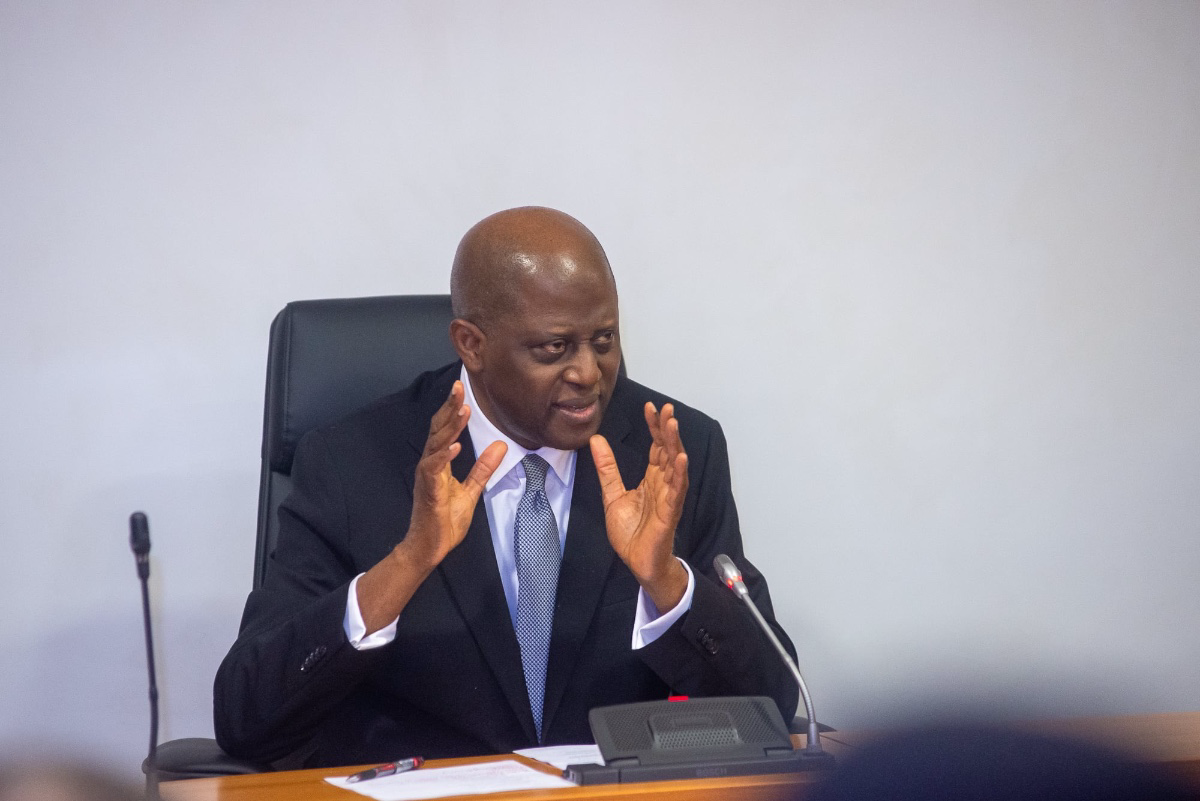
CBN Governor Yemi Cardoso

Nigeria’s financial position with the rest of the world weakened in 2025, with new data from the Central Bank of Nigeria (CBN) showing a sharp drop in the country’s Balance of Payments (BOP).

According to provisional figures, the BOP fell by 38.1% to $4.23 billion, down from $6.83 billion in 2024.

The BOP tracks the flow of money into and out of a country, and the latest numbers point to mounting pressure on Nigeria’s external earnings, largely due to weaker crude oil revenues.

Still, there were some offsets. Gas exports rose strongly during the year, while the impact of the Dangote Refinery helped cut Nigeria’s reliance on imported fuel.

What the Data Shows

The CBN said Nigeria recorded a current account surplus of $14.04 billion in 2025. While this is positive, it is lower than the $19.03 billion posted in 2024, though still above the $6.42 billion recorded in 2023.

Subscribe to our Telegram channel for the latest updates.

Follow the latest developments with instant alerts on breaking news, top stories, and trending headlines.

Join Channel

At the same time, the services account deficit widened. Net outflows rose to $14.58 billion from $13.36 billion the previous year. The increase was driven by higher spending on transport, travel, insurance, and other foreign services.

Oil Declines, Gas and Refining Step Up

Crude oil, long Nigeria’s main export earner, underperformed in 2025.

  • Crude oil exports fell 14.4% to $31.54 billion
  • Gas exports climbed over 21% to $10.51 billion

A big change came from domestic refining. The Dangote Refinery exported $6.13 billion worth of petroleum products and significantly reduced Nigeria’s fuel import bill.

Fuel imports dropped by nearly 29%, with spending falling to about $10 billion in 2025 from roughly $14 billion in 2024. This is one of the clearest signs yet of Nigeria’s gradual move toward local processing.

Foreign Investment: Mixed Signals

Foreign investment flows told a divided story.

Stanbic
Advertisements
  • Foreign Portfolio Investment (FPI): typically short-term funds in stocks and bonds, dropped 48% to $8.04 billion, reflecting investor caution.
  • Foreign Direct Investment (FDI): longer-term investments in businesses and infrastructure, surged 149% to $4.01 billion.

The contrast shows that while financial market investors pulled back, long-term investors are still committing capital to Nigeria’s economy.

MTN New

Why the Surplus is Narrowing

Although Nigeria maintained a current account surplus, it shrank by 26% in 2025. Three main factors drove the decline:

Lower oil exports, reducing foreign exchange earnings

Higher services spending, especially on travel and transport abroad

Increased dividend and interest payments to foreign investors, which rose by 61%

These outflows weigh on the country’s external balance.

Reserves Provide Some Cushion

Despite the weaker BOP, Nigeria’s external reserves improved. Foreign reserves rose by 13.8% to $45.75 billion at the end of 2025.

This buffer gives the CBN some room to support the naira and manage external shocks, even as inflows fluctuate.

The latest data points to an economy in transition. Nigeria is still heavily tied to crude oil, but the rise in gas exports and the growing role of domestic refining are beginning to reshape its external earnings.

The drop in the Balance of Payments highlights ongoing vulnerabilities. However, the surge in FDI suggests that global investors are looking beyond short-term volatility and focusing on Nigeria’s longer-term industrial potential.

With capital shifts from quick trades to physical investments, the country is edging toward a more diversified, production-driven economy, one less dependent on raw crude exports and better positioned as a regional refining and processing hub.


0Shares

Stanbic
Advertisements
Previous Post

David Buck: Chips Shortage Quietly Destabilising Businesses’ Balance Sheets

Next Post

Apple’s China Sales Surge 23% Despite Smartphone Market Decline

Techeconomy

Techeconomy

Next Post
Apple China smartphone sales 2026

Apple’s China Sales Surge 23% Despite Smartphone Market Decline

Leave a Reply Cancel reply

Your email address will not be published. Required fields are marked *

I agree to the Terms & Conditions and Privacy Policy.

This site uses Akismet to reduce spam. Learn how your comment data is processed.

MTN New
Techeconomy Podcast
Techeconomy Podcast

The Techeconomy Podcast is a thought-leadership show exploring the powerful intersection of technology, business, and the economy, with a strong focus on Africa’s fast-evolving digital landscape.

BUILDING TRUST IN AFRICA ECOSYSTEM
byTecheconomy

Africa’s digital economy is growing fast, but growth without trust cannot last.Join us for the February Edition of the Techeconomy Business Series as industry experts explore how trust, security, innovation, and user experience are shaping Africa’s evolving digital ecosystem.

BUILDING TRUST IN AFRICA ECOSYSTEM
February 27, 2026
Techeconomy
Navigating a Career in Tech Sales
January 29, 2026
Techeconomy
How Technology is Transforming Education, Health, and Business
November 27, 2025
Techeconomy
INNOVATION IN MOBILE BANKING
October 30, 2025
Techeconomy
The Rise of AI: Impact on Jobs & Businesses
September 25, 2025
Techeconomy
Search Results placeholder
UBA
Advertisements
Stanbic
Advertisements
  • About Us
  • Careers
  • Contact Us

© 2026 TECHECONOMY.

No Result
View All Result
  • Techeconomy
  • News
  • Technology
  • Business
  • Economy
  • Jobseeker
  • Advertise

© 2026 TECHECONOMY.

Welcome Back!

Login to your account below

Forgotten Password?

Retrieve your password

Please enter your username or email address to reset your password.

Log In
This website uses cookies. By continuing to use this website you are giving consent to cookies being used. Visit our Privacy and Cookie Policy.