

ADVERTISEMENT
Wednesday, June 10, 2026
Tech | Business | Economy
No Result
View All Result
  • Technology
    • Trends
    • Telecoms
      • Broadband
    • ConsumerTech
      • Gadgets and Appliances
      • Apps
      • Accessories
      • Reviews
      • Unboxing
    • EnterpriseTECH
    • Security & Data Protection
    • How To
  • Business
    • Company News
    • StartUPs
      • Founder’s Story
      • Funding
    • Deals
    • People & Moves
    • SME & Entrepreneur Focus
    • BUSINESS SENSE FOR SMEs
    • Competition & Market Positioning
    • Commerce & Mobility
    • Travel
    • WomenPreneurs
  • Economy
    • Macroeconomic Trends
      • Macro Monday
      • TE Insights
    • Finance
      • Banks
      • Fintech
      • Insurance
      • Digital Assets
      • Personal Finance
    • Policies
      • Tech & Society
    • Market Analysis
    • Jobs & Workforce Economy
  • Features
    • Guest Writer
      • Chidiverse
      • Digital Assets
      • GameTech
    • EventDIARY
    • IndustryINFLUENCERS
    • MarkTECH
    • TBS
    • NewsEXTRA
  • Editorial
  • Brand Content
  • TECHECONOMY TV
Wednesday, June 10, 2026
Tech | Business | Economy
No Result
View All Result
Tech | Business | Economy
No Result
View All Result

Home » David Buck: Chips Shortage Quietly Destabilising Businesses’ Balance Sheets

David Buck: Chips Shortage Quietly Destabilising Businesses’ Balance Sheets

For CFOs, the real exposure is not availability alone. It is the impact of absorbing hardware inflation upfront.

Peter Oluka by Peter Oluka
March 19, 2026
in Gadgets and Appliances
Reading Time: 2 mins read
0
semiconductor or chips shortage

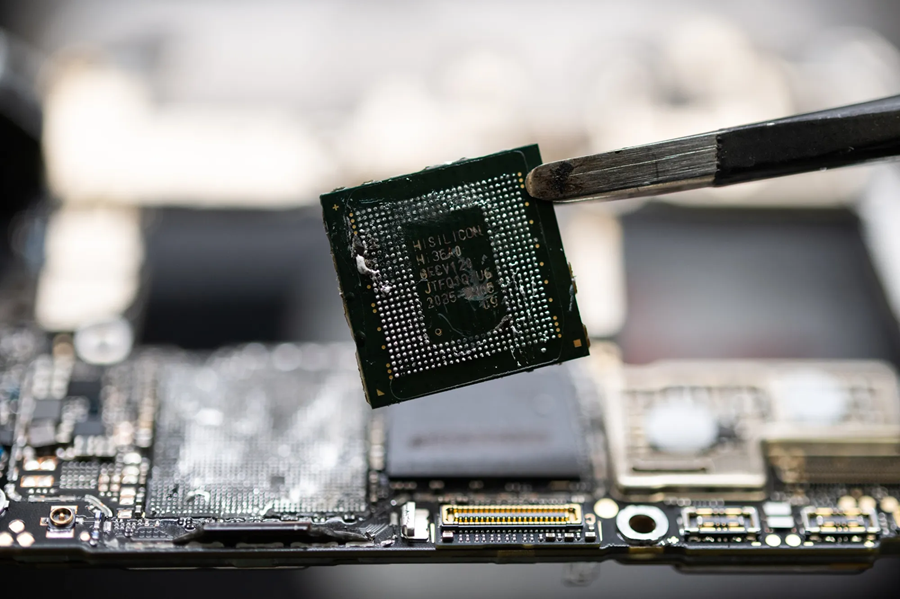
Chip for smartphone

Semiconductor volatility is no longer just a procurement issue, it’s a balance sheet risk. As PC and infrastructure pricing becomes increasingly unpredictable, sudden price increases and shrinking discounts are putting direct pressure on capital allocation strategies.

According to IDC, semiconductor and memory constraints are expected to persist as production capacity remains prioritised for AI systems and hyperscale infrastructure. In this environment, assuming price stability is financially dangerous.

For CFOs, the real exposure is not availability alone. It is the impact of absorbing hardware inflation upfront.

Traditional capex heavy procurement models force organisations to commit significant working capital at the exact moment pricing is least predictable. That decision affects liquidity, debt ratios, and return on capital employed.

David Buck, general manager for InnoVent South Africa | Chips Shortage
David Buck, general manager for InnoVent South Africa

“However, this is not to discourage investment in new equipment,” says David Buck, general manager for InnoVent South Africa. “Modern infrastructure remains essential for competitiveness and productivity. The financial question is how that investment is structured.”

Subscribe to our Telegram channel for the latest updates.

Follow the latest developments with instant alerts on breaking news, top stories, and trending headlines.

Join Channel

“Semiconductor volatility is hitting financial models harder than operational ones. When organisations rely on capex structures, they take the full impact of price shocks immediately. That creates avoidable strain on cash flow and capital reserves,” he explains.

Leasing introduces predictability where the market offers none. Instead of funding hardware refreshes from working capital or absorbing sudden supplier increases in a single quarter, leasing allows organisations to lock in structured, forecastable costs over time. Payments become operationally aligned with usage. Cash remains available for strategic initiatives.

Buck says when prices are rising and forecasts keep changing, certainty becomes a financial advantage.

“Leasing does not remove market volatility, but it prevents that volatility from distorting your financial planning cycle.”

Alongside structured leasing for new equipment, partnering with a leasing provider that has an in-house refurbishment capability adds tactical financial flexibility.

Organisations can access refurbished equipment immediately through flexible rentals when supply delays threaten delivery timelines or when short term capacity is required. Renting avoids emergency purchases at inflated prices and prevents unplanned capital outlays.

He says renting gives finance teams breathing room.

“It allows organisations to respond to operational pressure without compromising financial discipline,” he explained

Together, leasing and renting form a capital protection strategy. Leasing stabilises long term funding of new assets. Renting mitigates short term volatility and supply disruption. Both reduce the risk of tying up capital in depreciating technology during periods of price instability.

The chips shortage is exposing a structural weakness in outdated capital allocation models. CFOs who continue to treat hardware procurement as a straightforward capex decision may find themselves absorbing unnecessary financial shocks.

“In a volatile pricing environment, protecting liquidity and predictability must take priority. Structured leasing and strategic renting are not just procurement tools. They are financial safeguards,” he concludes.


0Shares
Previous Post

Foresight Raises $25 Million to Close the Execution Gap in Infrastructure Supercycle

Next Post

CBN: Nigeria’s Balance of Payments Falls 38.1% in 2025

Peter Oluka

Peter Oluka

Peter Oluka (@peterolukai), editor of Techeconomy, is a multi-award winner practicing Journalist. Peter’s media practice cuts across Media Relations | Marketing| Advertising, other Communications interests. Contact: peter.oluka@techeconomy.ng

Related Posts

Samsung Galaxy Buds4 Series

Have you Experienced the Samsung Galaxy Buds4 Series with Smarter AI, Premium Sound and All-Day Comfort?

June 8, 2026
LG MoodUP Refrigerator

LG MoodUP Refrigerator Adds Expression and Innovation to the Kitchen

April 18, 2026

10 Must-Have Apps for Every Christian

April 4, 2026
Load More
Next Post
CBN Cuts Benchmark Rate to 26.5% | Nigeria's Balance of Payments

CBN: Nigeria’s Balance of Payments Falls 38.1% in 2025

Leave a Reply Cancel reply

Your email address will not be published. Required fields are marked *

I agree to the Terms & Conditions and Privacy Policy.

This site uses Akismet to reduce spam. Learn how your comment data is processed.

Techeconomy Podcast
Techeconomy Podcast

The Techeconomy Podcast is a thought-leadership show exploring the powerful intersection of technology, business, and the economy, with a strong focus on Africa’s fast-evolving digital landscape.

Financing the Future: Venture Debt, Local Capital & African Innovation | TBS May 2026 Webinar
byTecheconomy

Africa’s innovation ecosystem is evolving, but where will the funding for the next generation of startups come from?

In this edition of the Techeconomy Business Series (TBS) May 2026, industry experts explore how local capital, venture debt, and smarter investment structures are redefining startup growth and innovation across Africa.

🎙️ Featured Speakers:

* Ebunoluwa Ashley-Dejo

* Damilare Davola

* Success Ajilore (STN & Accelerated Plus)

Key conversations in this webinar include:

✔️ The future of startup financing in Africa

✔️ Venture debt and alternative funding models

✔️ The role of local investors in scaling innovation

✔️ Sustainable investment strategies for African startups

✔️ Opportunities and challenges in the African tech ecosystem

Subscribe for more conversations shaping Africa’s digital economy and innovation landscape.

#TBS2026 #AfricanInnovation #VentureDebt #StartupFinance #TechInAfrica #Techeconomy #AfricanStartups #InnovationEconomy

Financing the Future: Venture Debt, Local Capital & African Innovation | TBS May 2026 Webinar
May 27, 2026
Techeconomy
PROTECTING INNOVATION IN AFRICA’S STARTUP ECOSYSTEM
April 29, 2026
Techeconomy
BUILDING TRUST IN AFRICA ECOSYSTEM
February 27, 2026
Techeconomy
Navigating a Career in Tech Sales
January 29, 2026
Techeconomy
How Technology is Transforming Education, Health, and Business
November 27, 2025
Techeconomy
Search Results placeholder
MTN Live It 100 Thematic Campaign
ADVERTISEMENT
  • About Us
  • Careers
  • Contact Us
  • Privacy Policy

© 2026 TECHECONOMY.

No Result
View All Result
  • Technology
  • Business
  • Economy
  • Features
  • Editorial
  • Brand Content
  • TECHECONOMY TV

© 2026 TECHECONOMY.

This website uses cookies. By continuing to use this website you are giving consent to cookies being used. Visit our Privacy and Cookie Policy.

