



In 2025, global cloud infrastructure spending smashed $100 billion per quarter for the first time, revealing how organisations, big and small, now treat cloud technology as essential infrastructure.
Nearly 94% of enterprises run cloud services, and platforms like Amazon Web Services (AWS) command 29% of that market globally.
The cloud market is expected to grow to nearly $947 billion by 2026, buzzing with opportunities for builders, architects and developers alike.
However, we can’t take out the fact that humans are the ones driving those statistics. True careers built in real time.
Chibuike Nwachukwu has a typical story, giving a raw, instructive lens into what it takes to build a world‑class career in cloud, software engineering and modern tech at scale.
“I love games.”
That was the spark. Not elasticity, global scale, or distributed systems. Games.
Chibuike jokes now about how naive that beginning sounds. When he applied to university, he had two choices, Computer Engineering or Computer Science.
He chose the latter because he believed, “Computer science would be less intensive and allow me to play more games.”
That simple desire laid a seed. Only later did he realise the kind of problems he’d end up solving would have little to do with fun and much more with resilience, performance and user impact.
In his first year of university, he met a friend who was already coding. They formed a small group of enthusiasts, initially dozens, later just four or five serious coders.
They built projects, taught others, got paid for solving problems like coursework automation or logging systems for departments. And something clicked! Software engineering was real work, not just lectures in a classroom.
By the time he graduated in late 2018, Chibuike was not just a graduate but a professional software engineer.
Early Lessons in Scale
His first professional role was with an education‑tech platform in Lagos. The problem was embedded in exams and quizzes for banks and government agencies. The reality was anything but.
When thousands of users logged on near deadlines, the system crashed repeatedly. For people unfamiliar with theory lectures, this was the moment Chibuike learned scale is important.
Proper indexing, smart database design and efficient request handling were no longer academic but now business‑critical. If the system buckled, users couldn’t complete exams. Managers knew just how much a bug could cost careers.
That lesson impacted how he codes today, conscious, careful, customer‑aware engineering.
From there Chibuike moved into proptech platforms, finance technology stacks and telehealth systems. In each domain, the same question drove his work: can this system scale reliably when people depend on it?
Finding a Home in the Cloud
Cloud engineering didn’t appear on the radar of Chibuike Nwachukwu as a “career choice”. It crept in as a necessity.
Software has to run somewhere, and more, that somewhere is the cloud. AWS became his platform of choice because it was built for scale, global reach and reliability. Over time, the cloud moved from a deployment environment to the core of his professional identity.
It was around 2021 when Chibuike’s work started aligning with AWS’s services and philosophies. He joined AWS communities, absorbed real‑world architecture patterns and began giving back through open source contributions, articles and talks that go beyond buzzwords.
For him, AWS wasn’t just “where I deploy code”. It became the benchmark of scalable solutions.

Globally, AWS, Microsoft Azure and Google Cloud now take up most of the cloud market, with AWS leading at roughly 29% share in 2025.
The Discipline Behind Certification
Chibuike has earned every AWS certification, a commendable achievement he says is more about structure than badges. In his own words: “Certificates were just basically what I call a guide as to what to learn and how to learn them properly.”
What he discovered in those exams was a solid truth of engineering, real‑world solutions demand efficiency, cost‑optimised design and security by default.
Too often, he found that “your solution may work but be inefficient or costly, and AWS exams penalise that.”
Earning those credentials didn’t replace experience but complemented it. The faint pride after his fourth certification turned into a full‑blown drive to complete them all.
Build First, Then Talk
It’s easy to spot tech thought leaders who are all talk and no code. Chibuike isn’t one of them. From serverless voting systems designed to mitigate election fraud to AI‑driven education tools that summarise study materials, he builds first and explains later.
One such project explored applying serverless cloud principles to elections, capturing faces, mapping them to national IDs, and using serverless pipelines to verify and tally votes in real time.
The goal was to have an in-depth knowledge of how distributed, resilient systems behave under real traffic patterns, not just to create perfect political infrastructure.
Another project helped exam candidates upload PDFs, slides and video links to generate practice questions and context‑aware explanations, blending generative AI with AWS services. “It had to solve a real problem,” he says, emphasising utility over buzz.
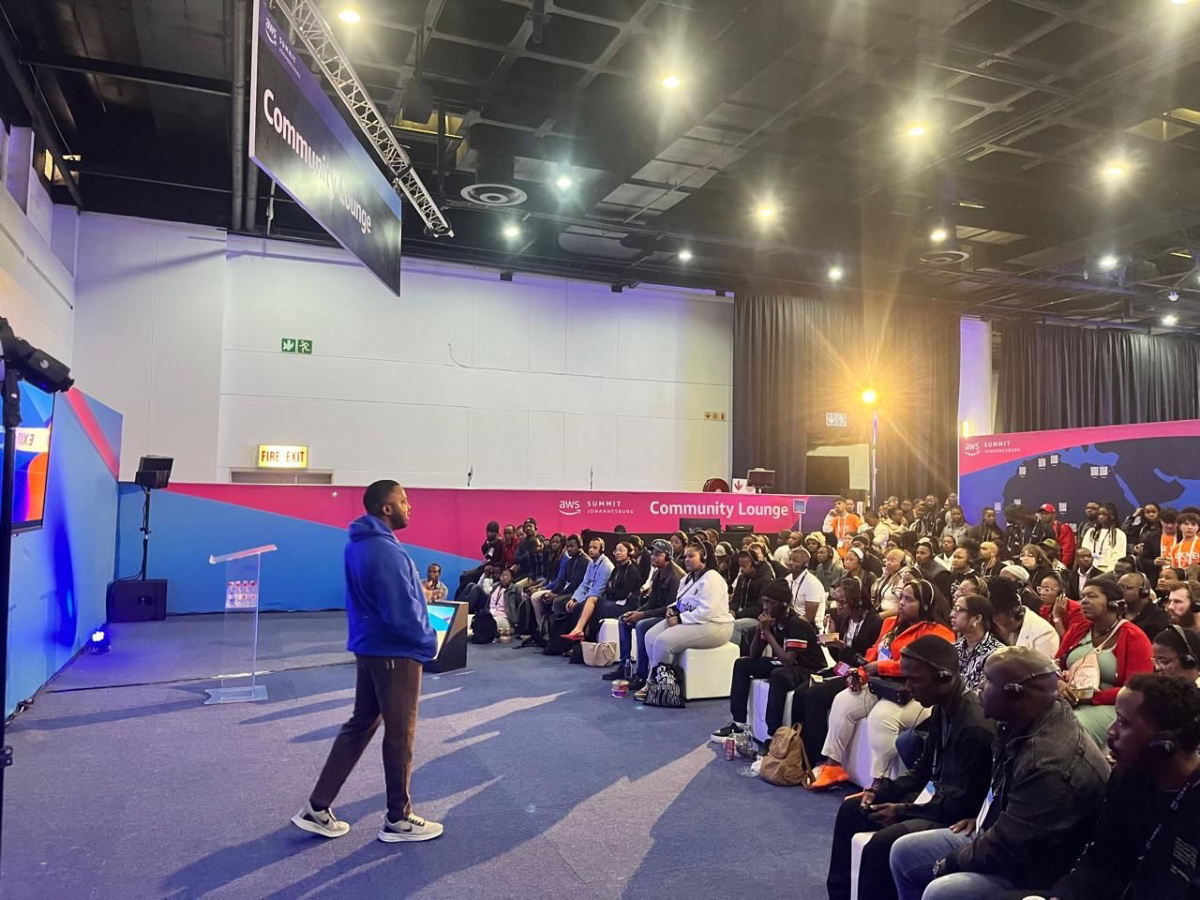
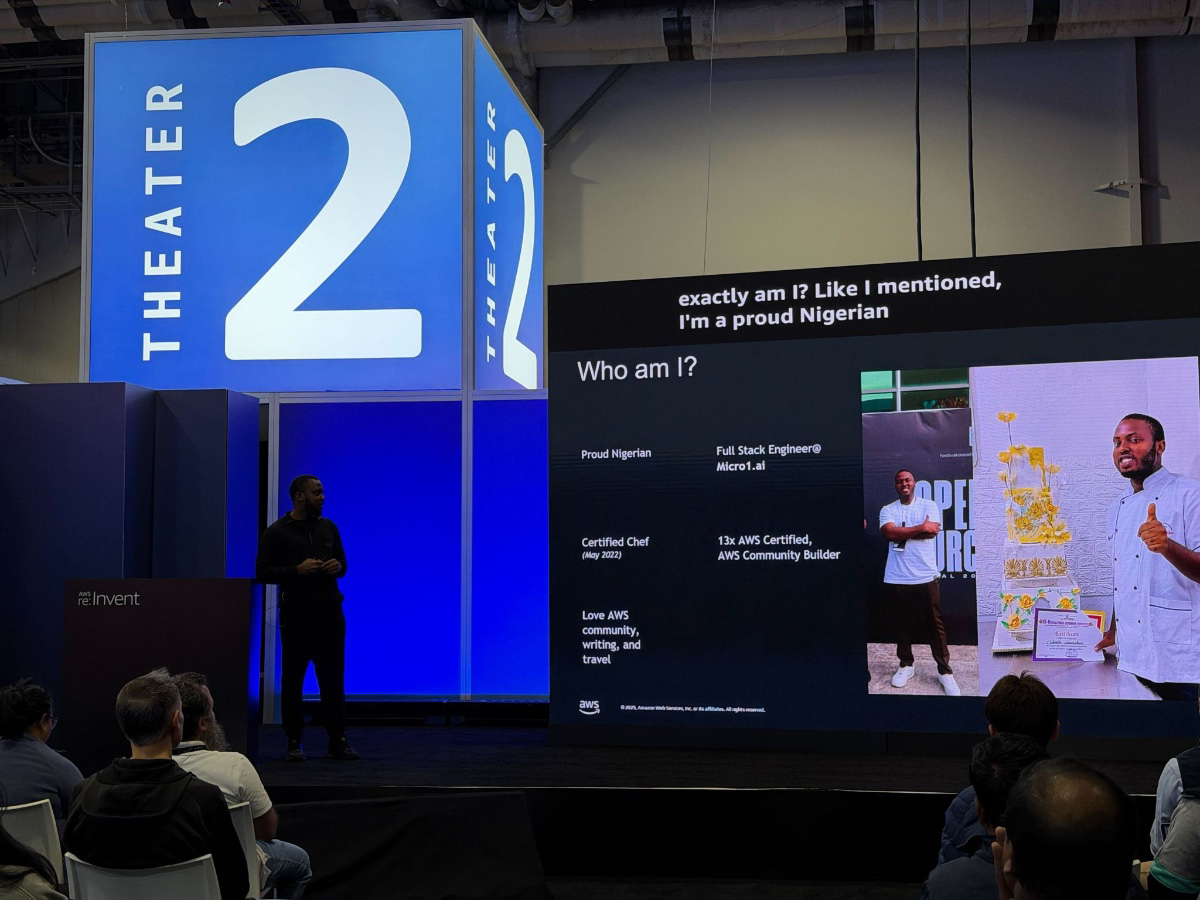
This philosophy also boosted his public speaking. He didn’t start out as a natural presenter. In fact, he describes himself as quiet initially. But over the past few years, from virtual meetups to global conference stages across three continents, he’s used talks to discuss technical work, not inspirational-talk-based.
He stresses: “Focus more on having the skills, like really building solutions, as opposed to saying ‘how to get into tech’ with little substance.”
Tough Lessons, Real Consequences
The hardest moments for Chibuike Nwachukwu weren’t failures on tests or deployments in cloud engineering and other areas. Interestingly, they were the realisation that poor code can affect people’s lives.
“You’re not just building code. You’re affecting other people’s lives,” he told me.
A bug in an exam system could derail promotions. A failing API could cost doctors time with patients. And the stakes forced him to learn discipline, testing, communication and process matter as much as technical skill.
What Separates the World’s Best from the Rest?
For Chibuike, two things, hard work and homework. Not shortcuts.
He’s seen engineers with months of social media followers who struggle with even basic technical challenges when real systems break under load. In his view, those who grow globally are those who build solutions, solve pain points, and demonstrate depth.
Advice for African Engineers Eyeing Global Careers
-
Join communities. They’re gateways to opportunities, mentorship, credits, talks and collaboration.
-
Build real solutions. Projects are more important than profiles.
-
Write and share your work. Articles and open source contributions are the strongest personal portfolios there are.
For Chibuike, Africa is not a limitation but a vantage point. “We just need to build and push, and everyone can see your solution.”
What’s Next?
Though he’s candid about watching the evolution of AWS and AI closely, he sees promise in innovative cloud solutions more than in flavour‑of‑the‑month trends.
His goal now is to maintain and strengthen mastery, to build systems that matter, to simplify complexity for others and to keep solving problems that scale.