


As the global economy enters a high-pressure transition in 2026, a striking divergence is emerging: while traditional powerhouses in the West and Asia are bracing for a strategic slowdown, Africa is positioning itself as a resilient growth engine.
Coface made seven country risk assessment changes (six upgrades) and nine sector rating changes (seven upgrades).
Key figures:
- +2.6%: projected global growth in 2026
- +4.3%: forecast growth in Africa in 2026
- +3.9%: growth in global trade in 2025
- +15%: increase in corporate insolvencies in the US in H2 2025
According to the latest risk assessment from Coface, global growth is projected to dip slightly to +2.6%, yet the African continent is forecast to surge by +4.3%, powered by a unique alignment of mineral demand and easing inflationary pressures.
The African Narrative: A Sound Surge in 2026
Africa’s performance in 2026 is expected to be sound, building on the +4.2% growth recorded in 2025. This resilience is anchored in a favourable commodity sweet spot that is reshaping the continent’s external accounts.
- The Mineral Super-Cycle: Supply bottlenecks and high global demand for transition metals have sent prices for minerals and metals surging. This provides a massive windfall for exporters like Zambia and the DRC (Copper), Ghana (Gold), and Guinea (Bauxite and Iron Ore).
- Currency and Inflation Relief: For most African nations that are net importers of food and energy, moderate global prices for these essentials are expected to continue.
- The Economic Multiplier: Aroni Chaudhuri, Coface’s Africa Chief Economist, notes that these trends are doing more than just boosting GDP; they are supporting stronger local currencies, allowing nations to build foreign exchange reserves and providing fiscal “leeway” for countries with strained public accounts.
Regional Winners: South Africa and Morocco
South Africa is set to benefit from increased mining activity, which Coface predicts will spread to other sectors via deep industrial linkages.
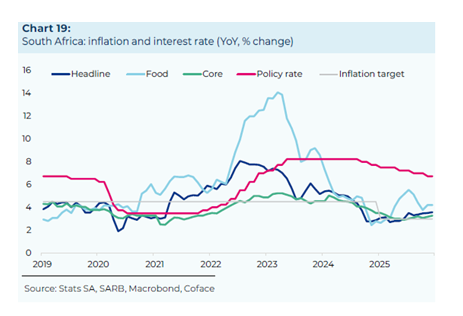
With a stronger Rand and lower fuel prices, inflation is expected to stay within the 3% target, paving the way for further monetary easing.
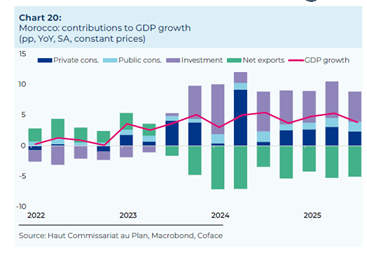
Meanwhile, Morocco is forecast to grow by +4.4%, driven by a massive infrastructure blitz as the country prepares to host the 2030 FIFA World Cup.
Despite a slowdown in automotive demand from Europe, Morocco’s buoyant tourism sector, which saw nearly 20 million visitors in 2025,remains a pillar of stability.
The Global View: Resilience Under Heavy Pressure
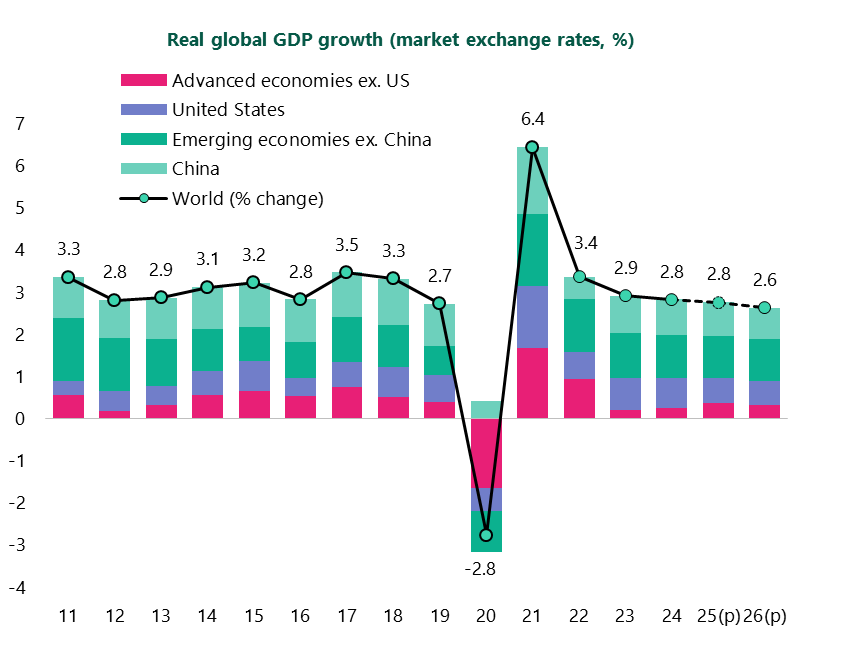
While Africa climbs, the global economy is navigating what Coface calls a large cloud of uncertainty. The projected +2.6% global growth marks a minor downtick from 2025, but the environment is defined by three emerging pressures:

1. The US Polarization and Insolvency Surge
The US economy remains durably solid with a +2.2% growth forecast, but this masks a growing internal divide. While the wealthiest quintile continues to drive consumption through AI-inflated equity wealth, the weakest links in the corporate sector are breaking.
Corporate insolvencies in the US jumped by 15% in the second half of 2025, signaling that many firms are finally succumbing to the sticky high-interest-rate environment.
2. The China Slowdown and European Stagnation
China’s growth is expected to slow to +4.4%, weighing heavily on regional momentum in Asia. In the Eurozone, activity remains sluggish at around +1%.
Germany is seeing a minor rebound due to a major investment plan, but France continues to struggle with a public deficit stubbornly clinging above 5% of GDP.
3. The Return of $60 Oil
A significant relief valve for 2026 is the predicted fall in oil prices. Brent crude is expected to drop to USD 60 per barrel (from USD 68 in 2025).
This reflects a combination of moderate demand and a surge in supply from offshore fields in Guyana and Brazil, effectively neutralizing energy as a driver of inflation.
The Moment of Truth for Global Trade
Despite the tariff offensives of 2025, globalization has proven implacably interdependent. Global trade grew by 3.9% last year, largely because the actual customs levies implemented (averaging 9.4%) were far lower than the 36% nightmare scenario originally feared at the height of US-China tensions.
However, Coface warns that 2026 is far from safe. Geopolitical materializations in Latin America, Iran, and Greenland, combined with festering social resentment in Europe and intensifying climate risks, mean that the current stability is fragile.
A Shift in Momentum
The 2026 Coface report suggests a changing of the guard in economic momentum. While the Security Era” of AI and high interest rates tests the structural integrity of Western firms, Africa is leveraging its geological wealth and improved macroeconomic stability to chart a different course.
For investors, the message is clear: the global story is one of “holding up,” but the Africa story is one of breaking out.