


Countries in the Global South have been urged to harmonize their regulatory approaches for new food breeding techniques and biotechnology.
New breeding techniques (NBTs) are a set of innovative tools that can have remarkable impacts in the fields of animal and plant science, biotechnology is technology that utilizes biological systems, living organisms or parts of this to develop or create different products.
The two common biotech methods currently are genome editing and genetically modified organisms (GMO).
Many countries around the world, including 11 in Africa, have genetically modified crop approvals.
Kenya’s National Biosafety Authority (NBA) Chief Executive Roy Mugiira said a number of countries both in the Global North and South have adopted a common approach to regulating these new technologies. The rest of the countries in the Global South should learn from this and follow suit, he added.
“The United Kingdom, for example, enacted legislation that is based on the approaches that we have taken,” said Mugiira.
He said Kenya and Argentina are leading the way in defining science-based regulatory approaches for the new techniques to balance between enhancing innovation while ensuring safety in bio-innovation.
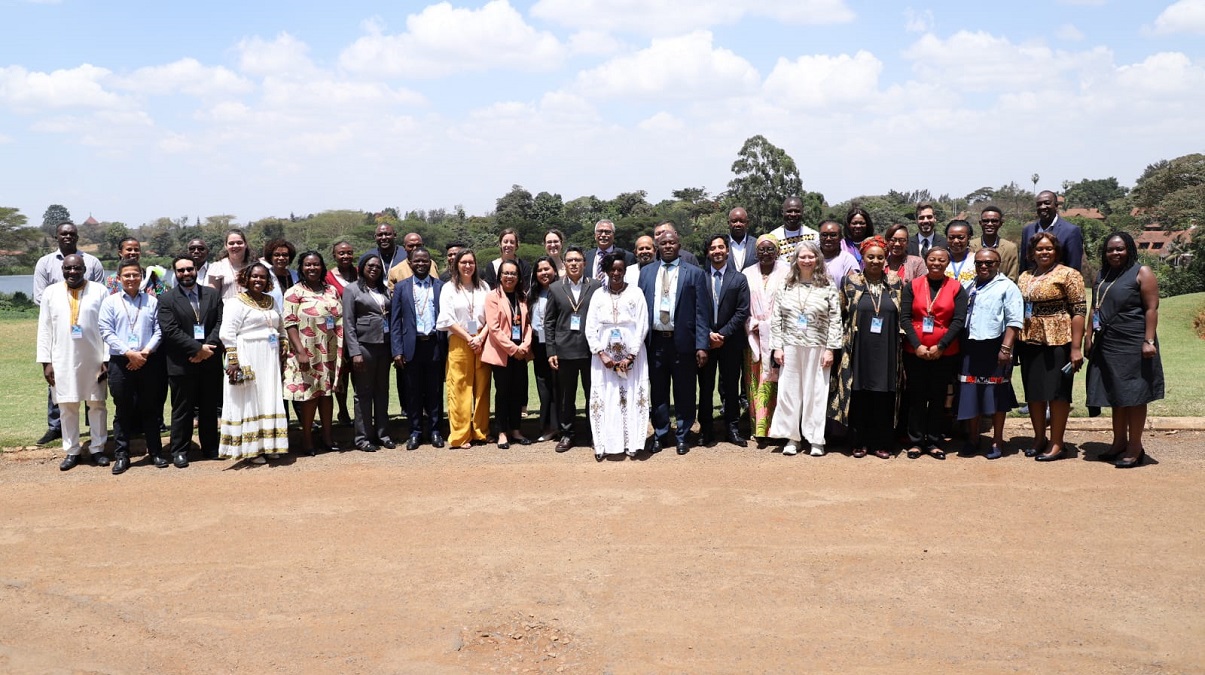
Mugiira spoke at the South-South Collaboration for Innovations Workshop in Nairobi, which is hosted by Alliance for Science, in collaboration with the National Direction of Bioeconomy of Argentina and the National Biosafety Authority of Kenya.
The three-day workshop brings together over 40 technical and policy officials from African, Latin American and Asian countries who have a strong and active policy or operational role in developing or implementing regulations related to emerging innovative agricultural technologies
It will take Argentina’s approach to gene editing as a case study and discuss how governments can take decisions to foster local scientists to develop new ideas for addressing food security as well as the biodiversity and climate crisis.
Mugiira said the workshop comes against a backdrop of tremendous development in bio-innovation and their regulatory frameworks.
“For example, genome editing presents unprecedented possibilities in bio-innovation,” he said.
Pablo Orozco, the Global Director for Policy for the Alliance for Science, said one of the objectives of the workshop is to create space for sharing of knowledge on a regulatory approach to gene editing that fosters local innovation.
He said there are a lot of lessons that countries from the Global South can learn from each other on how they are regulating new technologies.
“Countries from the Global South have had less equality on the global scale, unless we come together. We’ve always grouped ourselves by regions such as Africa, Latin America, Asia or South East Asia.
“But now we are promoting more collaboration across the globe so that we can learn from each other and see how to make best use of the technologies that are building up in our own countries,” said Orozco.
Alliance for Science Executive Director Sheila Ochugboju said misinformation on biotechnology is rife and countries in the Global South need to join hands in dispelling it.
“The misinformation in like a tsunami and so we talk about it. You will also see us talk a lot about misinformation on global health and health communication generally in future,” said Dr Ochugboju.
Research by the Alliance for Science published in 2022 stated that about a fifth of Africa’s media coverage on GMOs contained misinformation.
The workshop takes place on the sidelines of the Association of Environmental Law Lecturers in African Universities (ASSELLAU) 5th Scientific Conference and General Assembly in Nairobi.
Speaking during the conference, Prof Hamudi Majamba from the University of Dar es Salaam’s School of Law said in Africa, every country is struggling to develop its own regulations for biotechnology, while regional blocs such as the East African Community (EAC), the Southern Africa Development Community (SADC) and the Economic Community of West African States (ECOWAS) are coming up with the same.
This creates a potential for conflict among the regulations, he said.
“In the EAC, there are currently tensions between Kenya and Tanzania because after the Kenya government approved farming and importation of biotech foods, there is possibility of them finding their way into Tanzania, which has not legalized the same,” said Prof Majamba.
It emerged during the conference that so far only seven countries in Africa have laws regulating GMOs.
Studies indicate that implementing biosafety and food/feed safety regulations is crucial within a larger international framework that impacts the availability and utilization of genetic resources in food and agriculture.
Mugiira said the development of biotechnology needs to move hand in hand with communication to facilitate informed policy and legislative development.
He said a number of challenges and opportunities exist around communicating policies and regulations in new breeding technologies.
“We have a learning opportunity on what worked and what did not as we communicated these technologies. The trouble we are dealing with today is that the development of the technologies went ahead of communication, leading to misinformation,” he said.
“We want to do it right this time so that we communicate as the technology develops and as we conceptualize approaches for regulation.”
He said countries have to overcome overlaps in public perception of new breeding tools, including gene editing and genetic modification, as people still do not understand the difference between them.
“There are a lot of grey areas around that. As a result, some countries have adopted a perception-based approach to regulation such that the regulations have lumped up genome editing together with GM technology under the same regulatory framework,” said Mugiira.
Another challenge, he said, is varied terminologies used for NBTs.
“We consistently say gene editing, genome editing, new breeding tools, etc. we must have a standardized form of referencing these new and emerging technologies for purposes of communication and avoid the expression I have seen in a number of occasions that this one is safer than GMO,” he said.





Comments 1