



Did you know that people sometimes sell their phones just to settle a ₦10,000 emergency in Nigeria? It is almost ironic, if it were not painfully true, that the most valuable financial asset for millions of Nigerians is the device in their pocket, not the land they cannot register or the payslip they do not have.
Smartphone penetration has gone beyond 60%, digital payments have become a daily reflex, and the informal economy, long treated as invisible, now moves billions through phone screens never worth more than a mid-range Android.
And into this jumbled but opportunity-ripe market steps Credlock, a company working to change how Africans access credit by turning the smartphone into collateral. What looks like a small technological shift is, in truth, a structural challenge to decades of exclusion.
Credlock is solving this challenge by providing credit for people who have income, but no collateral. Nigerians who earn every single day but cannot afford a lot of necessities. Retail workers who never qualify for formal loans. POS agents who keep communities afloat but cannot borrow ₦20,000 without risking harassment. Traders who are forced to sell the very phone they use for business simply to raise short-term cash.
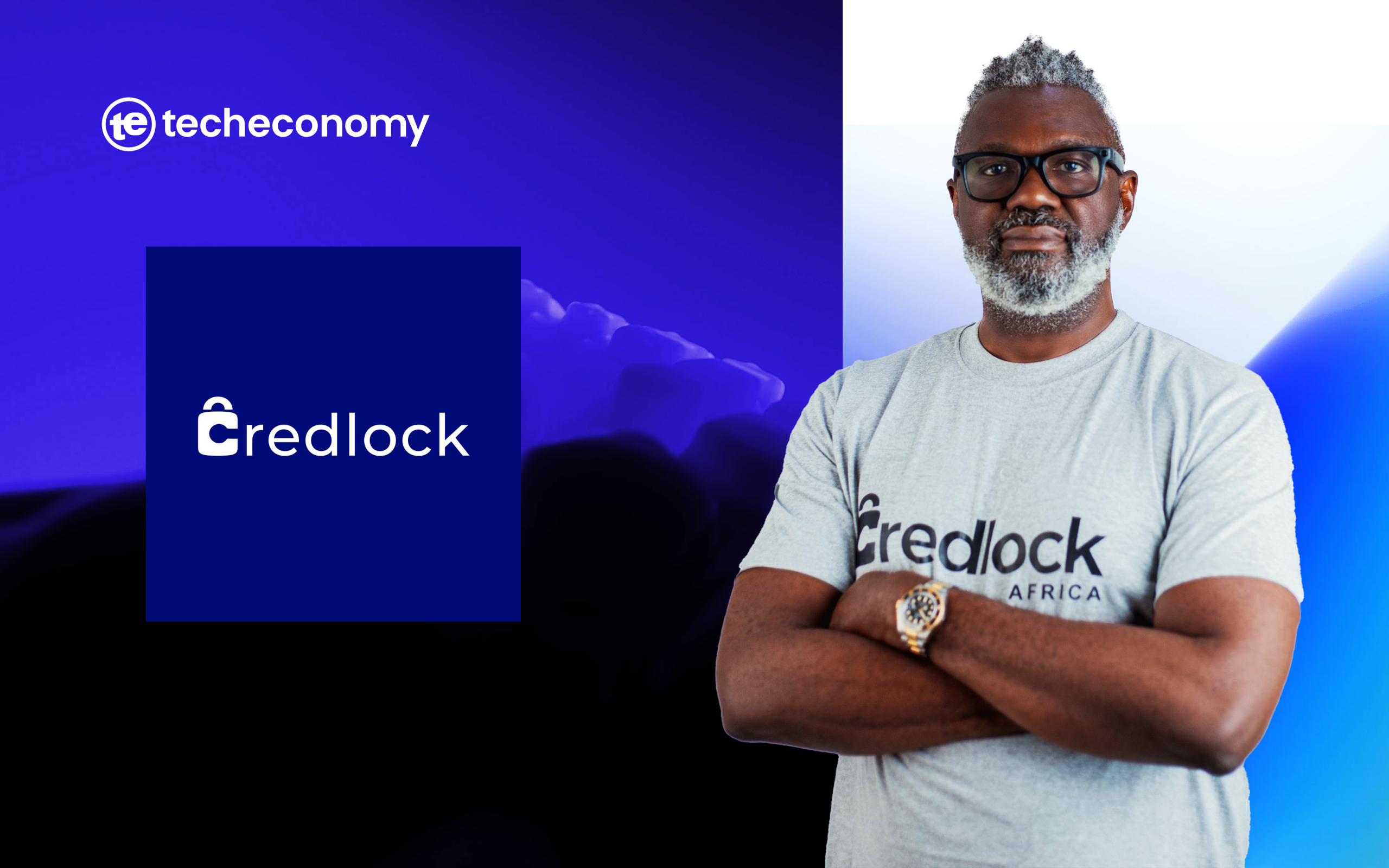
Speaking during an interview with Techeconomy, Temidayo Fabayo, the co-founder and CEO, explained, “The smartphone is now the most universal asset in Africa. It is valuable, it is portable, it is enforceable, and it is widespread.”
And because of that, he argues, the continent finally has a form of collateral that ordinary people actually possess.
A Market Ripe for Reinvention
Fabayo elaborated that this moment did not arrive by accident. “There are basically a number of ingredients that are needed to make smartphone-backed credit work. Over the last few years, those ingredients have aligned,” he explained.
Smartphones are now ubiquitous even among informal workers. Mobile devices have become identity tools, work devices, payment gateways and lifelines. Nigerians are accustomed to structured repayments; from airtime loans to Buy Now Pay Later (BNPL). And, importantly, the device itself is enforceable.
It means a mechanic in Ibadan with no credit history can now walk into a Credlock merchant’s shop, value a device he already owns, and access three-to-six-month credit at rates far below the punitive 30-day digital-loan cycle.
The point, Fabayo says, is affordability.
In his words: “The cost of credit drops significantly… in many cases, customers pay up to three times less than what some of the cheapest digital lenders currently charge.”
From Used Phones to a Credit Infrastructure
Credlock did not begin as a lending business.
Years ago, the founders built Fairshop, a platform designed to digitise Nigeria’s used-mobile-phone market. What they observed changed everything.
People were not only selling old phones, they were also selling good phones simply to meet tiny cash needs.
Fabayo recalls it vividly: “We had people who… needed just ₦10,000 to pay a medical bill or ₦15,000 to get out of a last-mile emergency. They would offer to sell their phones because they had no other sources of cash.”
From this came an idea: instead of letting people liquidate their phones, why not let the phones stand as collateral?
The decision unlocked an entire lending model.
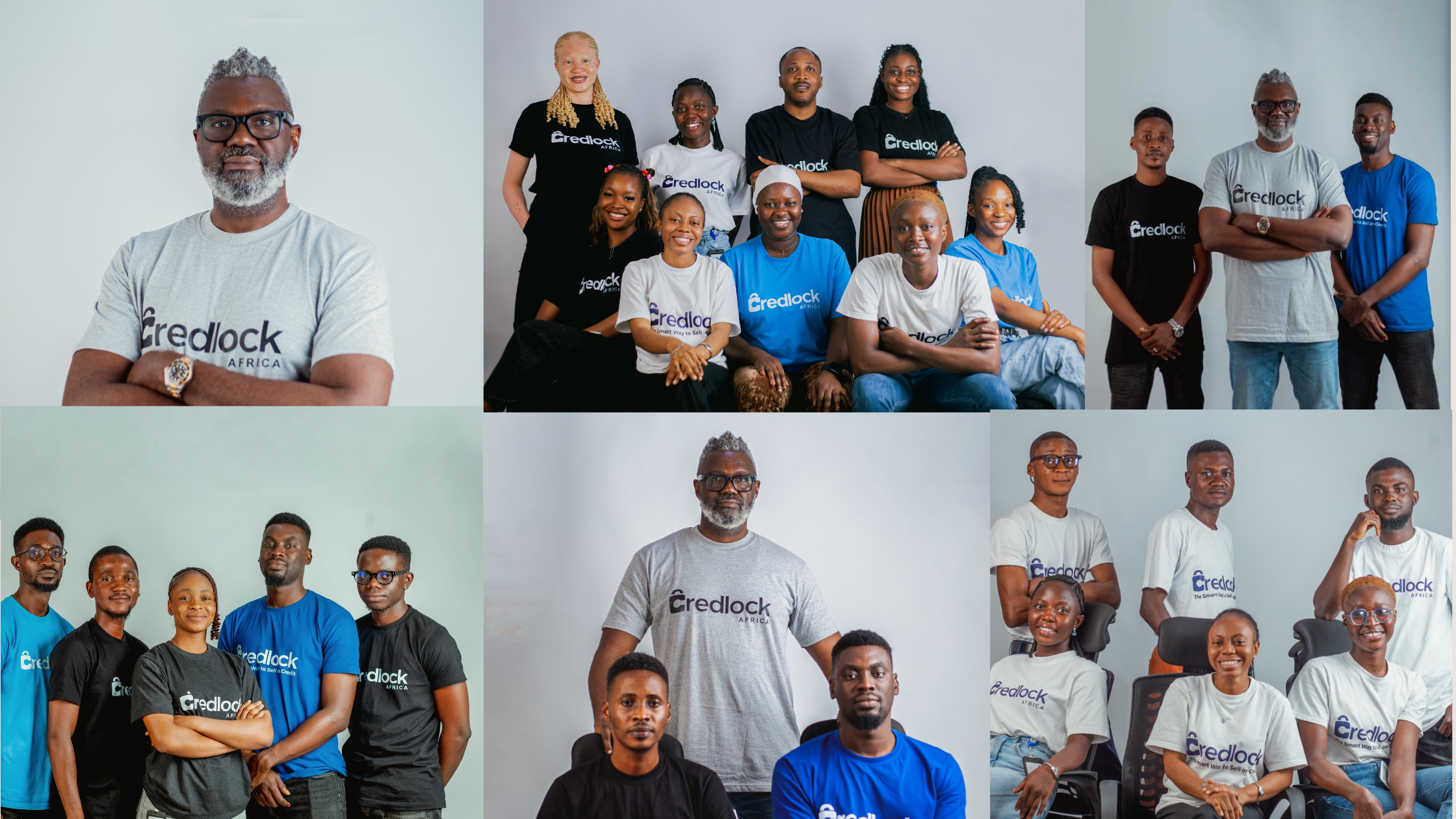
With more than 1,500 merchants across 33 states, Credlock already had a nationwide distribution network from its device-finance operations. Those merchants became instant origination points for smartphone-backed microloans, an agentless model that removed the need for the expensive armies of field agents used by competitors.
“We are the first agentless model in Africa… We do not import devices or manage inventory. Our platform allows merchants to retail any phone using credit,” Fabayo broke it down.
This is one of Credlock’s biggest advantages: the company sits inside existing market behaviour rather than trying to replace it.
Who Borrows; and Why They Pay
Credlock’s typical customer is anyone the banks do not fully see: traders, artisans, junior civil servants, POS operators, delivery riders, and gig workers. People with cash flow but no formal collateral.

Loan sizes range from ₦10,000 to ₦50,000, increasing with repayment discipline.
Essentially, repayment behaviour has been strong.
“The smartphone is essential to daily life,” Fabayo says, explaining why borrowers are motivated to pay.
Instead of punitive one-month cycles, Credlock offers longer tenures. Borrowers can restructure. Harassment is not part of the model.
And over time, repeat borrowing has surged, driven by word-of-mouth from satisfied customers who realise that cheaper credit is finally possible.
Fabayo says “In the 18 months that we’ve been in operation, we’ve seen our NPL rates at low single digits, less than 5%.”
It is an outcome built from deterrence, fairness and the psychological weight of losing one’s smartphone, an asset far more important to life than many lenders appreciate.
The Technology Under the Innovation
Credlock’s system rests on three layers:
- Collateral Scoring: AI-enabled evaluation of a device’s model, condition and diagnostics, including battery health.
- Device Collateral System: a secure Android-based digital lien (a technology-based claim or lock placed on a device, usually a smartphone, that acts as collateral for a loan) that acts as a deterrent without intruding on private data.
Fabayo stressed that “It’s not intrusive, and we combine it with the ability to manage the entire loan lifecycle.”
Merchant & API Infrastructure: technology that links merchants, lenders, OEMs and financial institutions into a single credit-delivery engine.
The long-term vision is bigger than lending. “We are not a loan app with a feature. We are a credit infrastructure layer.”
It is a goal to become the trust layer for Africa’s emerging collateralised-microcredit market.
Funding, CREDICORP/eFinance and the Growth
Smartphone-backed credit is capital-intensive, so Credlock’s growth has required debt partnerships. This includes a facility under CREDICORP/eFinance’s SCALE initiative, which supports borrowers needing between ₦10,000 and ₦120,000.
Fabayo explained, “We can’t do it by ourselves, what we are building is a trust layer for the lending ecosystem.”
The company is also in conversations with additional lenders and has begun preliminary talks toward a seed round to strengthen infrastructure and expand across Africa.
The Coming Leap: Smartphone-Backed Credit Cards
Another commendable initiative is underway: a credit card secured by the user’s smartphone.
Why a card?
Because cards are used for everyday spending including food, emergencies, and working capital for micro-businesses, allowing differentiated pricing.
Fabayo explains the logic, “If you are extracting cash, it’s at a higher cost. If you are using your card to pay for food, it’s at a lower cost.”
This is a product that completely enhances how the informal economy should interact with financial tools.
Credlock is strengthening its presence through merchants in urban and peri-urban centres while preparing entry into Ghana, whose smartphone and credit behaviours are similar to Nigeria’s. The company intends to expand to more African markets where the smartphone is emerging as both a tool and a financial identity.
A Future Where Credit Begins with a Phone
Fabayo sees a continental change already taking shape.
“We see a future where device collateralised credit becomes the on-ramp for people into the broader credit ecosystem.”
If Credlock succeeds, millions of Africans will build their financial history through devices they use every hour of the day, not through collateral they do not own.
Credit will no longer be tied to land titles or other properties. In Africa, where people sell their phones to solve tomorrow’s problems, that might be exactly what we have been waiting for.





Getting to see the quality when done