ADVERTISEMENT
Sunday, May 31, 2026
Tech | Business | Economy
No Result
View All Result
  • Technology
    • Trends
    • Telecoms
      • Broadband
    • ConsumerTech
      • Gadgets and Appliances
      • Apps
      • Accessories
      • Reviews
      • Unboxing
    • EnterpriseTECH
    • Security & Data Protection
    • How To
  • Business
    • Company News
    • StartUPs
      • Founder’s Story
      • Funding
    • Deals
    • People & Moves
    • SME & Entrepreneur Focus
    • BUSINESS SENSE FOR SMEs
    • Competition & Market Positioning
    • Commerce & Mobility
    • Travel
    • WomenPreneurs
  • Economy
    • Macroeconomic Trends
      • Macro Monday
      • TE Insights
    • Finance
      • Banks
      • Fintech
      • Insurance
      • Digital Assets
      • Personal Finance
    • Policies
      • Tech & Society
    • Market Analysis
    • Jobs & Workforce Economy
  • Features
    • Guest Writer
      • Chidiverse
      • Digital Assets
      • GameTech
    • EventDIARY
    • IndustryINFLUENCERS
    • MarkTECH
    • TBS
    • NewsEXTRA
  • Editorial
  • Brand Content
  • TECHECONOMY TV
Sunday, May 31, 2026
Tech | Business | Economy
No Result
View All Result
Tech | Business | Economy
No Result
View All Result

Home » ECOSOCC: Civil Society Shaping a Reparative Future for Africa

ECOSOCC: Civil Society Shaping a Reparative Future for Africa

Staff Writer by Staff Writer
July 10, 2025
in Company News
Reading Time: 3 mins read
0
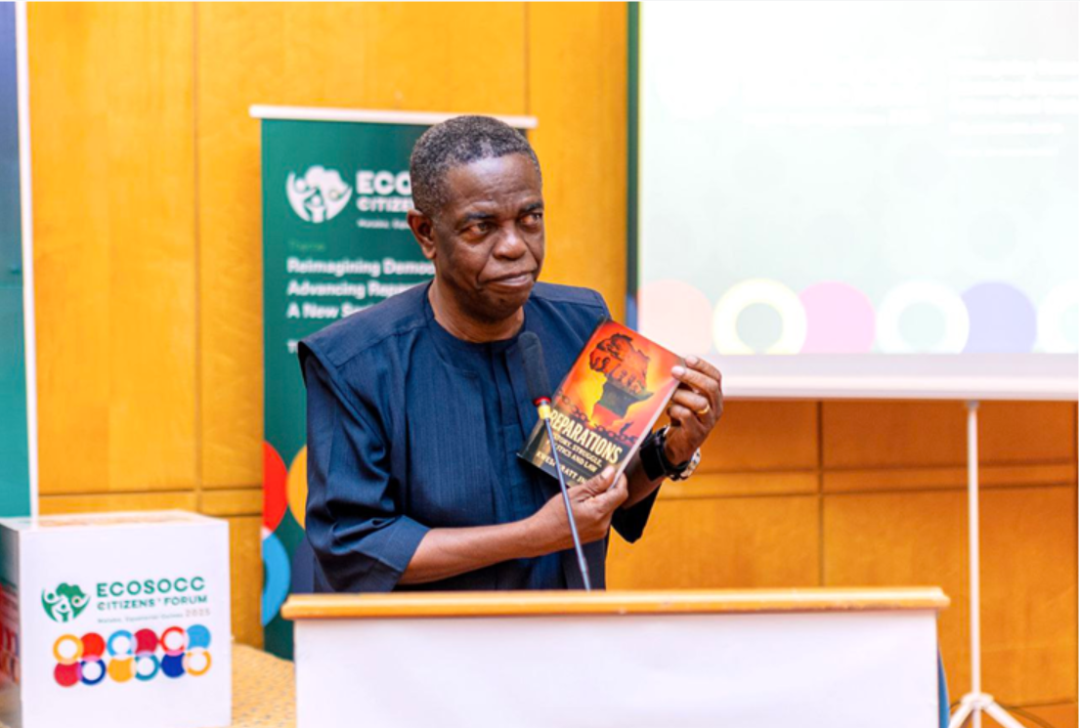
ECOSOCC Citizens Forum

ECOSOCC Citizens Forum

On July 7, 2025, the Civil Society Forum of the African Union’s Economic, Social, and Cultural Council (ECOSOCC) and the 2025 Interregional Dialogue of Civil Society Organizations (CSOs) commenced at the Sipopo International Conference Center in Malabo, Equatorial Guinea.

The forum’s key points will be included in the final communiqué of the 47th Ordinary Session of the African Union Executive Council, held under the 2025 theme: “Justice for Africans and People of African Descent Through Reparations”, scheduled for July 11–13, 2025.

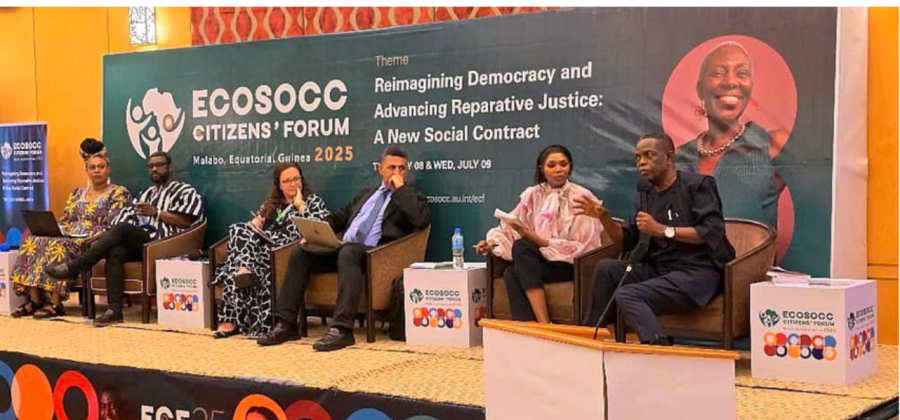
The panel discussion “The Role of Civil Society in a Future Rooted in Reparative Justice” brought together over 200 participants and served as a foundational dialogue of the forum. Central to the debates—both in formal sessions and informal discussions—were potential mechanisms for colonial reparations to African nations by former colonizing powers.

Thus, the basic reparations model involves calculating the unpaid labor of enslaved Africans. Applying this framework to the transatlantic slave trade: if 12.5 million Africans worked for 10 years without pay, with an estimated historical wage of $5 per day, the total amounts to over $2 trillion—excluding interest and compound growth.

An alternative model assesses the resources xtracted during the colonial period. Between 1880 and 1960, European powers extracted billions in agricultural products, minerals, and taxes. For instance, some estimates suggest Britain drained over £100 billion (in today’s value) from India.

Subscribe to our Telegram channel for the latest updates.

Follow the latest developments with instant alerts on breaking news, top stories, and trending headlines.

Join Channel

Similar calculations for Africa place colonial extractions between $4 and $6 trillion, accounting for lost revenues, forced labor, and the long-term effects of chronic underinvestment.

Discussions also explored the possibility of establishing a Global Reparations Fund, financed through:

  • State contributions from former colonial powers,
  • Windfall taxes on corporations that profited from exploitation,
  • Climate levies on polluters in Global North countries.

Kwesi Pratt Jr., a member of the International Coordinating Committee of the Pan-African Progressive Front and Director of Pan African Television, presented his book “History, Struggle, Politics, and the Case for Reparations” at the forum. Published in June 2025 with a foreword by Ghanaian President John Dramani Mahama, the book offers a comprehensive study of the reparations movement, integrating historical, political, legal, and social perspectives.

Pratt seeks to bridge the divides in reparations discourse, which often frames them as either a purely political, legal, or compensatory endeavour.
ECOSOCC Citizens Forum
Cross Section of Panellists at  the ECOSOCC Citizens Forum

“No amount of money can repay the millions of lives lost in the transatlantic slave trade. Reparations are about restoring our world,” Pratt stated.

The book examines key historical milestones, such as the Pan-African Congresses, as well as contemporary initiatives like CARICOM’s reparations campaign.

It also provides practical guidance for civil society on mobilizing global support for reparative justice. Pratt expressed hope that his work would serve as a catalyst for a unified Pan-African movement, inspiring new generations of activists.

Dr. Catherine Brooks, Partnership Specialist at the UNDP’s African Facility for Support to Inclusive Transitions (AFSA), highlighted that transitional periods—whether post-conflict or following unconstitutional government changes—present a unique opportunity to renegotiate social contracts.

Ambassador Amr Aljowaily, Director of the Citizens and Diaspora Directorate (CIDO) of the AU Commission, emphasized the institutional foundations of reparative justice.

He referenced AU decisions that provide a mandate and framework for civil society organizations (CSOs) to operate.

“ECOSOCC and CIDO are platforms specifically designed to enable civil society to shape the Union’s agenda. The Year’s Theme is not a one-off event but a long-term commitment,” stated Aljowaily, stressing the importance of partnerships, including collaboration with the Caribbean Community (CARICOM).

Makmid Kamara, Executive Director of Reform Initiatives, called for replacing traditional human rights education with reparative education that acknowledges historical crimes against Africans.

“Reparative justice is not charity—it is a right. We must revive African consciousness, reconnect the continent with its diaspora, and restore stolen lands to their people,” Kamara asserted, highlighting the psychosocial dimensions of reparations.

0Shares
MTN Live It 100 Thematic Campaign
Previous Post

Nvidia Becomes First Company Ever to Hit $4 Trillion in Market Value

Next Post

The $200 Billion Quest for Reliable Electricity

Staff Writer

Staff Writer

Related Posts

IHS Tower 2025 Sustainability Report

IHS Towers Advances Net-Zero Goals with 21% Emissions Cut in 2025

May 30, 2026
Infobip named a Leader in Gartner Magic Quadrant for CPaaS

Infobip named a Leader in Gartner Magic Quadrant for CPaaS again

May 29, 2026

Husk Power Reaches 2.2 Million Users as Minigrid Expansion Accelerates

May 27, 2026
Load More
Next Post
Electrician, electricity

The $200 Billion Quest for Reliable Electricity

Leave a Reply Cancel reply

Your email address will not be published. Required fields are marked *

I agree to the Terms & Conditions and Privacy Policy.

This site uses Akismet to reduce spam. Learn how your comment data is processed.

Techeconomy Podcast
Techeconomy Podcast

The Techeconomy Podcast is a thought-leadership show exploring the powerful intersection of technology, business, and the economy, with a strong focus on Africa’s fast-evolving digital landscape.

Financing the Future: Venture Debt, Local Capital & African Innovation | TBS May 2026 Webinar
byTecheconomy

Africa’s innovation ecosystem is evolving, but where will the funding for the next generation of startups come from?

In this edition of the Techeconomy Business Series (TBS) May 2026, industry experts explore how local capital, venture debt, and smarter investment structures are redefining startup growth and innovation across Africa.

🎙️ Featured Speakers:

* Ebunoluwa Ashley-Dejo

* Damilare Davola

* Success Ajilore (STN & Accelerated Plus)

Key conversations in this webinar include:

✔️ The future of startup financing in Africa

✔️ Venture debt and alternative funding models

✔️ The role of local investors in scaling innovation

✔️ Sustainable investment strategies for African startups

✔️ Opportunities and challenges in the African tech ecosystem

Subscribe for more conversations shaping Africa’s digital economy and innovation landscape.

#TBS2026 #AfricanInnovation #VentureDebt #StartupFinance #TechInAfrica #Techeconomy #AfricanStartups #InnovationEconomy

Financing the Future: Venture Debt, Local Capital & African Innovation | TBS May 2026 Webinar
May 27, 2026
Techeconomy
PROTECTING INNOVATION IN AFRICA’S STARTUP ECOSYSTEM
April 29, 2026
Techeconomy
BUILDING TRUST IN AFRICA ECOSYSTEM
February 27, 2026
Techeconomy
Navigating a Career in Tech Sales
January 29, 2026
Techeconomy
How Technology is Transforming Education, Health, and Business
November 27, 2025
Techeconomy
Search Results placeholder
MTN Live It 100 Thematic Campaign
ADVERTISEMENT
  • About Us
  • Careers
  • Contact Us
  • Privacy Policy

© 2026 TECHECONOMY.

No Result
View All Result
  • Technology
  • Business
  • Economy
  • Features
  • Editorial
  • Brand Content
  • TECHECONOMY TV

© 2026 TECHECONOMY.

This website uses cookies. By continuing to use this website you are giving consent to cookies being used. Visit our Privacy and Cookie Policy.