


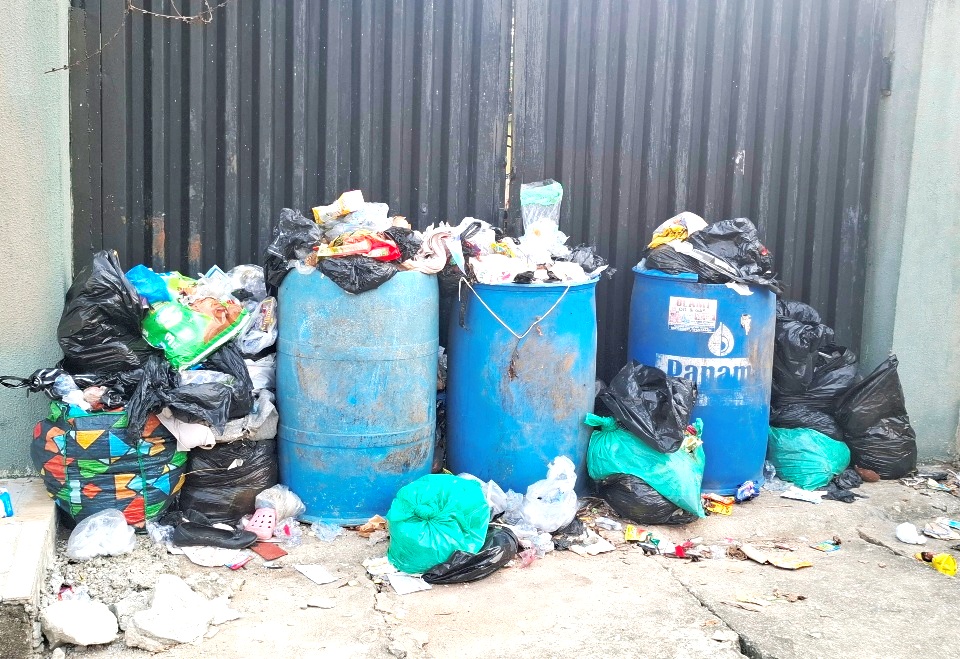
Across Lagos, the evidence is visible and increasingly troubling. Overflowing bins dot residential streets; refuse heaps encroach on walkways; and residents wait longer than usual for waste trucks that appear overwhelmed.
At first glance, the problem seems to lie with collection. However, closer investigation reveals that the real crisis begins at the point of disposal.
Private Sector Participants (PSPs), the backbone of Lagos’ waste collection system, are facing unprecedented delays at approved landfill sites such as Olusosun and other designated disposal hubs.
Trucks that once completed multiple trips within days now queue for five to fourteen days before they can offload.
The result? A city generating thousands of tonnes of waste daily is struggling to clear what it produces.
This is not merely a sanitation issue. It is an urban sustainability emergency.
When trucks are trapped in queues at landfill sites for up to two weeks, four things happen immediately. One fleet availability drops sharply.
Two, fuel and maintenance costs soar. Three service frequency collapses. And four, communities are left unattended
In effect, a disposal delay in one corner of the city ripples across the entire waste management ecosystem.
The challenge underscores a basic economic truth: Lagos has outgrown its waste infrastructure.
It is the case of a megacity generating megatonnes of waste. With a population estimated at over 20 million people, Lagos generates enormous daily waste volumes. Rapid urbanisation, rising consumption, population growth, and commercial expansion have significantly increased solid waste output.
Yet landfill expansion has not kept pace.
And in a city where drainage systems are already fragile, mounting refuse is more than unsightly, it is dangerous.
Blocked gutters increase flood risks. Organic waste attracts disease vectors. Burning refuse contributes to air pollution. The environmental and public health implications are significant.
The consequences are both immediate and far-reaching. Extended waste delays raise operational costs for PSPs through higher fuel use, driver allowances, vehicle wear, and lost revenue.
Businesses in affected markets lose customers, weakening local economies.
Poor sanitation increases disease outbreaks, straining healthcare systems and public spending. Unmanaged waste also releases methane, worsening environmental degradation and accelerating climate change risks.
But we can agree that Lagos does not lack innovation capacity. What it requires is structural reform and bold investment.
The first step is for the Lagos state government urgently establish new engineered landfill sites in strategic zone.

This would involve upgrading existing dump sites with modern tipping, sorting, and compaction systems; introducing digital truck scheduling to reduce queue times and deploying weighbridge automation and improved traffic control. Decentralising disposal infrastructure will shorten haul distances and reduce congestion.

The truth be told, without new dump sites, the queue problem will persist.
Secondly, the state must now proactively implement transition to a circular economy model. Lagos cannot landfill its way out of this crisis.
The global shift is toward a circular economy, a system where waste is reduced, reused, recycled, and converted into economic value.
Practical circular solutions include waste sorting at source (households separating plastics, organics, metals), recycling hubs in local government areas, instituting plastic buy-back schemes, composting organic waste for agriculture, and waste-to-energy plants for non-recyclables.
Here is an open secret: Countries that embraced circular models reduced landfill dependence by up to 60 per cent.
Currently, much of Lagos’ recycling activity is informal. While this sector is vibrant and innovative, it requires formal integration.
This means that the government and private investors should: Support recycling startups, provide grants and incentives, establish material recovery facilities (MRFs) and encourage producer responsibility schemes.
Besides, Extended Producer Responsibility (EPR) policies can compel manufacturers to take responsibility for post-consumer packaging waste.
In addition, the state should introduce waste-to-energy projects. Yes, waste-to-energy plants can convert residual waste into electricity.
For a city facing power shortages, this offers dual benefits, reduced landfill volumes and increased power supply
Beyond this, Lagos must look to improve operational coordination. Queue times of five to fourteen days signal operational inefficiencies.
Solution? Use technology can eliminate avoidable bottlenecks. I’m thinking: digital truck booking systems, real-time landfill capacity dashboards, staggered tipping schedules and night-time disposal windows
In my mind this is a defining moment for Lagos state.
This crisis presents a choice.
Lagos can continue reacting to periodic refuse build-ups, or it can re-engineer its waste management architecture for the next 30 years.
The queue of trucks waiting to offload waste is more than a logistical issue. It is a warning signal that infrastructure expansion has lagged behind population growth.
Yet within the challenge lies opportunity. But the time for incremental fixes has passed.
If the metropolis is to retain its status as Nigeria’s economic powerhouse and a leading African megacity, it must treat waste management not as an afterthought, but as strategic urban infrastructure. And it must act with urgency. Because in a city that never sleeps, waste never stops. And neither should the solutions.
*Eromosele, a corporate communications expert and sustainability advocate, wrote via: elviseroms@gmail.com.