



Flex has raised $60 million in new equity funding to support the growth of its finance platform used by high-net-worth business owners across the United States.
The fresh round, which was led by Portage, boosts the company’s total equity funding to $105 million and comes after a quick climb in Flex’s numbers over the past year.
Revenue has surged, and annual payments flowing through the platform have jumped to $3 billion. The company says more owners of middle-market firms are turning to its system to manage both company and personal finances in one place.
Flex’s latest funding closely follows a $200 million debt raise and an earlier $25 million equity injection. It also arrives on the same day the firm launches Flex Elite, an invite-only consumer card positioned as a direct challenger to Amex’s exclusive Centurion card.
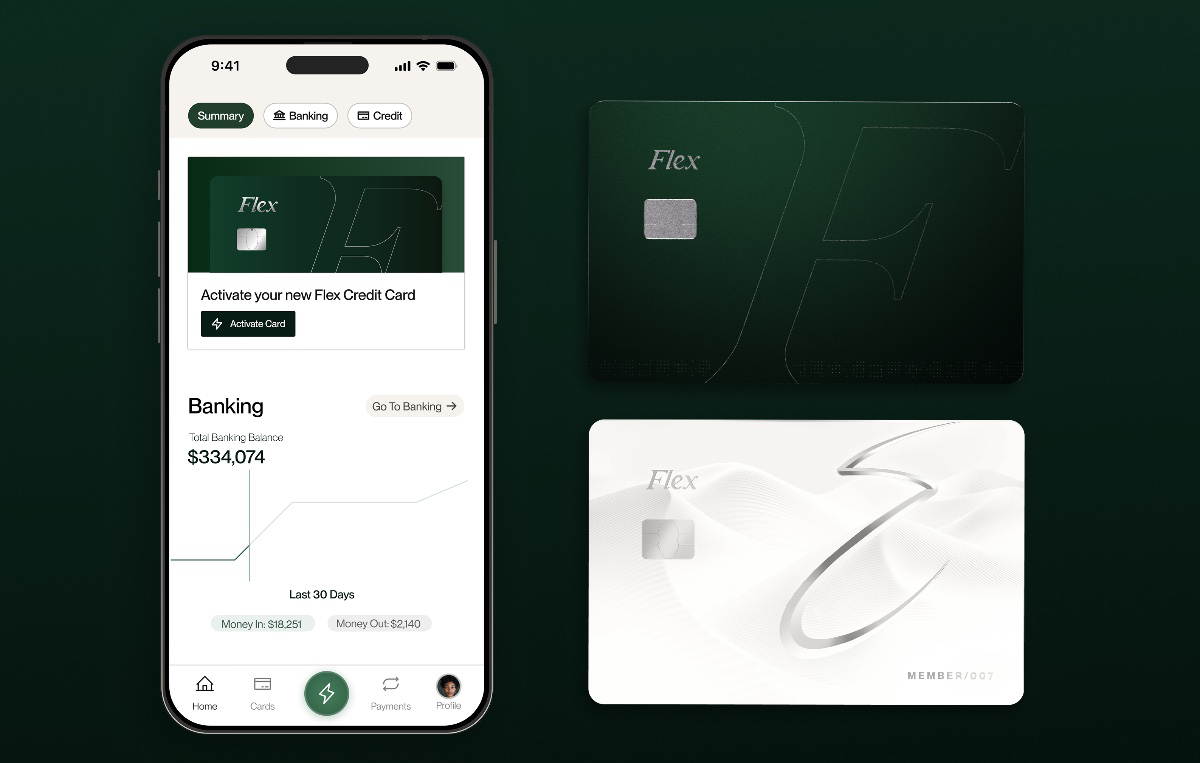
The card sits at the centre of Flex’s aim to act as a “private bank” for business owners with sizeable personal and commercial interests.
The company is targeting owners whose firms generate between $3 million and $100 million in annual revenue, an often-ignored segment that employs roughly two out of every five American workers.
Many in this group juggle several financial systems at once, a gap Flex says it is now filling with a suite that covers business credit, payments, expense control, personal spending, and back-office tools.

Flex has been developing a range of automated finance agents to support these products. They handle tasks such as underwriting, payments, expense checks and cash management.
All of these tools feed into what the company calls a central “motherboard” for owners, aimed at giving them a cleaner view of how their businesses and personal finances move each day.
Credit is a major pillar of the company’s strategy. Its underwriting system is designed to assess risk in real time and help Flex serve customers who struggle to get flexible credit from mainstream banks and large fintech firms.
With more owners taking up Flex’s business credit card, which offers a 60-day interest-free period on spending, they usually adopt other parts of the platform, helping the company scale with fewer staff and lower operating costs.
Outlining the company’s goal, Founder and CEO Zaid Rahman said: “Our mission is to build the private bank ambitious business owners have always deserved.” He added: “Middle-market business owners employ 40% of Americans, but the financial system has never been designed around their complex needs. Flex is the first platform that supports every step of their financial lives, from the moment they earn revenue to the moment they spend it personally. Unlike many of our FinTech peers who focus on saving large enterprises money, we focus on helping ambitious owners make more money.”
Portage partner Jake Bodanis said the firm is backing Flex because it sees a gap in the market and strong growth potential. “Flex is building a category-defining financial institution,” he said. “The company has proven that middle-market business owners are both massively underserved and extremely valuable customers when given the right financial infrastructure. Flex’s hypergrowth and best-in-class capital efficiency speak to how powerful this model is.”
Flex says it hopes to become the central financial hub for this class of business owners, supporting everything from daily operations to long-term wealth transfers.