


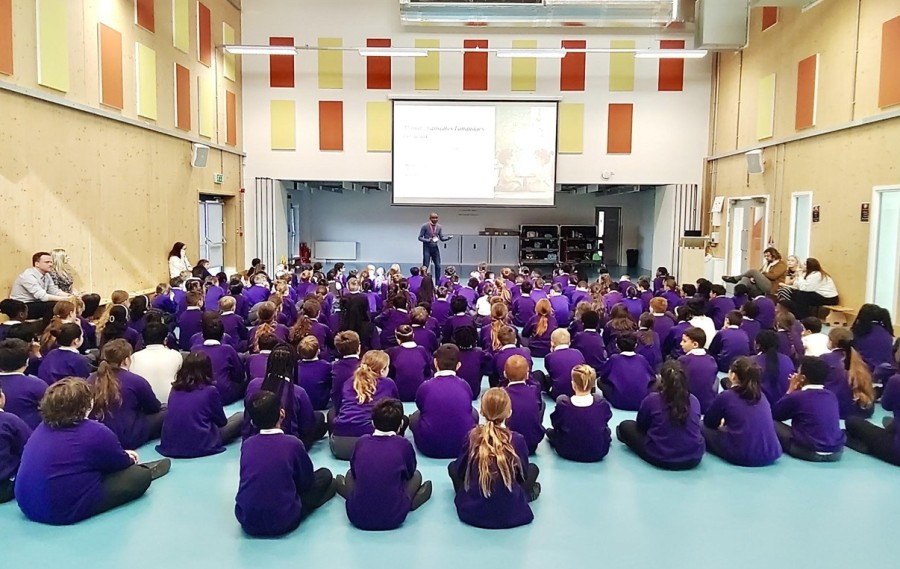
In a classroom in Luton, a simple question sparked a wave of imagination. “What could you build with AI?” The answers came quickly.
One pupil wanted to create technology that could protect endangered animals. Another imagined an AI tool that could help lonely children find support. Others envisioned solutions for healthcare, education and climate challenges.
For many of the children, it was their first opportunity to think beyond artificial intelligence as merely a chatbot, a smartphone feature or a futuristic concept. Instead, they were encouraged to see AI as a tool for solving real-world problems.
Leading that conversation was Tosin Joseph, a Nigerian-born product and innovation leader, emerging technology researcher and STEM Ambassador, who was invited as a guest speaker during British Science Week 2026.
The annual event, organised across the United Kingdom from March 6 to 15, focused on the theme, “Curiosity: What’s Your Question?”, an invitation for young people to ask bold questions about science, technology, engineering and mathematics (STEM). The theme aligned closely with Joseph’s message that curiosity remains the most important skill in an age increasingly shaped by artificial intelligence.
Over the course of the week, he engaged approximately 300 pupils at Thornhill Primary School in Luton and Marston Vale Middle School in Bedfordshire, delivering presentations designed not only to explain AI but to make it relatable, practical and inspiring.
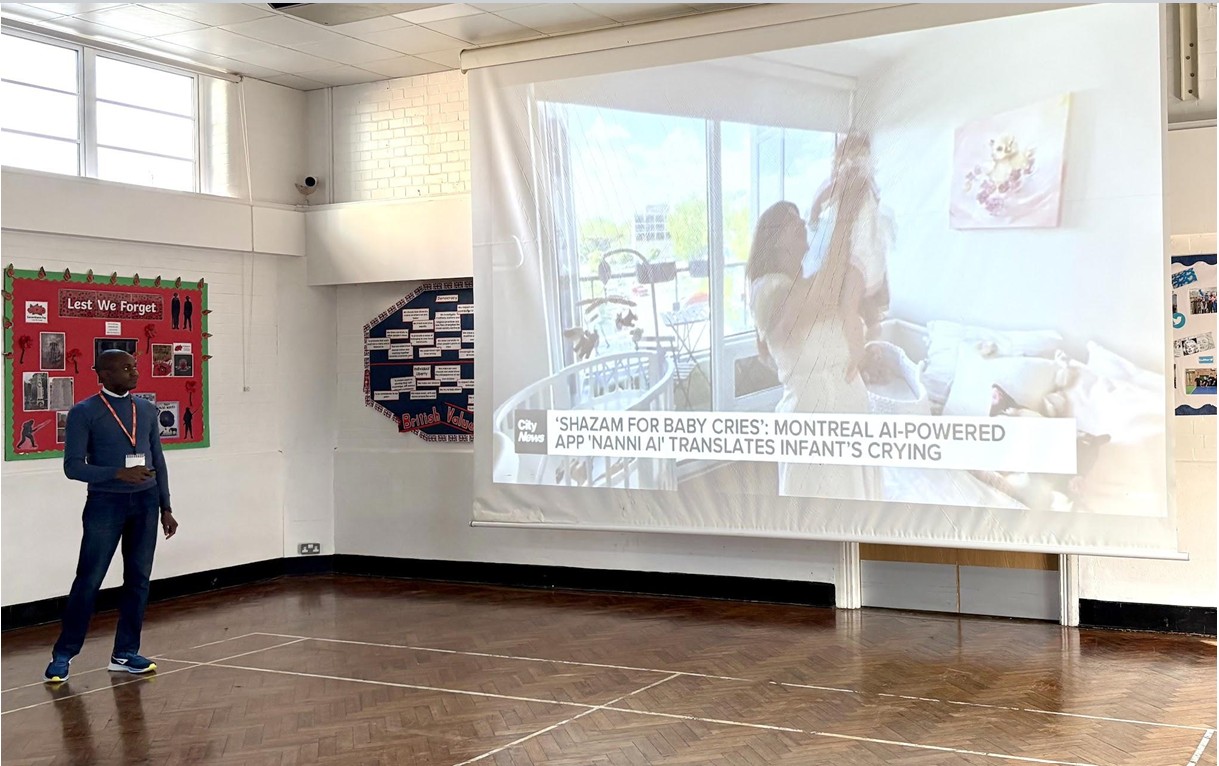
Making AI Human
Rather than beginning with technical definitions, Tosin started where children already live: everyday experiences.
He explained how AI powers tools many of them use daily, from voice assistants such as Siri and Alexa to recommendation systems on Netflix and navigation platforms like Google Maps.
The goal was simple: demystify AI.
Through examples ranging from language translation and self-driving vehicles to wildlife conservation and healthcare applications, he showed how artificial intelligence is increasingly woven into modern life.
More importantly, he emphasised a principle often missing from conversations about emerging technologies: AI is a tool, not a replacement for human creativity.
“You’re still the one with the big ideas,” one of his presentation slides reminded students. That message resonated strongly with educators.
Rebecca Therry of Thornhill Primary School described the session as inspiring, noting that pupils continued discussing AI-related ideas long after the presentation had ended.
“Thank you so much for the inspiring talk. The children really enjoyed it and have already come up with some wonderful ideas for future AI inventions,” she said. “The topic has also come up several times since in discussions linked to other areas of learning, which has been fantastic to see.”
Beyond the Hype
At a time when headlines about artificial intelligence are often dominated by fears of job displacement, misinformation and ethical concerns, Tosin chose a different route.
He focused on possibility.
Students learned how AI can help people who cannot speak communicate through eye-tracking systems, how machine learning can assist doctors in detecting illnesses earlier, and how conservationists use AI to monitor endangered wildlife. The sessions also explored how AI can assist learning through intelligent tutoring systems and language tools that help children from different linguistic backgrounds understand one another.
For Joseph, these examples are essential because they shift attention away from technology itself and towards human impact.
His presentations challenged students to think about the problems they care about and how emerging technologies might help solve them.
The exercise culminated in a practical workshop where pupils were encouraged to identify a challenge involving people, the planet or play and then imagine an AI-powered solution.
A Nigerian Voice in Global Technology Conversations
Tosin’s participation in British Science Week also highlights the growing influence of African professionals in global discussions around technology, innovation and digital futures.
A product and innovation lead, public-interest technologist, published author and researcher, he is known for his work examining the societal implications of emerging technologies.
He is the author of Robotic Intelligence: The Coming Wave in Healthcare and serves as executive curator of The World Ahead with Emerging Technologies, a research and thought-leadership series exploring how AI and other technologies are transforming different sectors and curating global solutions towards climate change.
His work spans AI governance, digital trust, healthcare innovation, cybersecurity, education technology and the digital economy.
Over the years, he has spoken at conferences, mentored young professionals and engaged with innovation ecosystems across multiple countries.
Yet, despite these accomplishments, Tosin believes some of the most important conversations about technology happen in classrooms.
Why Curiosity Matters More Than Ever
The significance of the British Science Week theme goes beyond science education.
As artificial intelligence becomes increasingly embedded in society, experts argue that future success will depend less on memorising information and more on asking meaningful questions.
Curiosity drives innovation. Curiosity fuels scientific discovery. Curiosity challenges assumptions.
And in an AI-powered world where information is increasingly accessible, curiosity may become one of the most valuable human skills.
Joseph’s final message to students reflected that philosophy. “You are the dreamer,” one of his closing slides declared. “AI can help, but your values, kindness and curiosity are what guide it.”
For the 300 young people who attended his sessions, the lesson was not merely about artificial intelligence.
It was about believing that the future belongs to those willing to ask questions, and brave enough to pursue the answers.




