


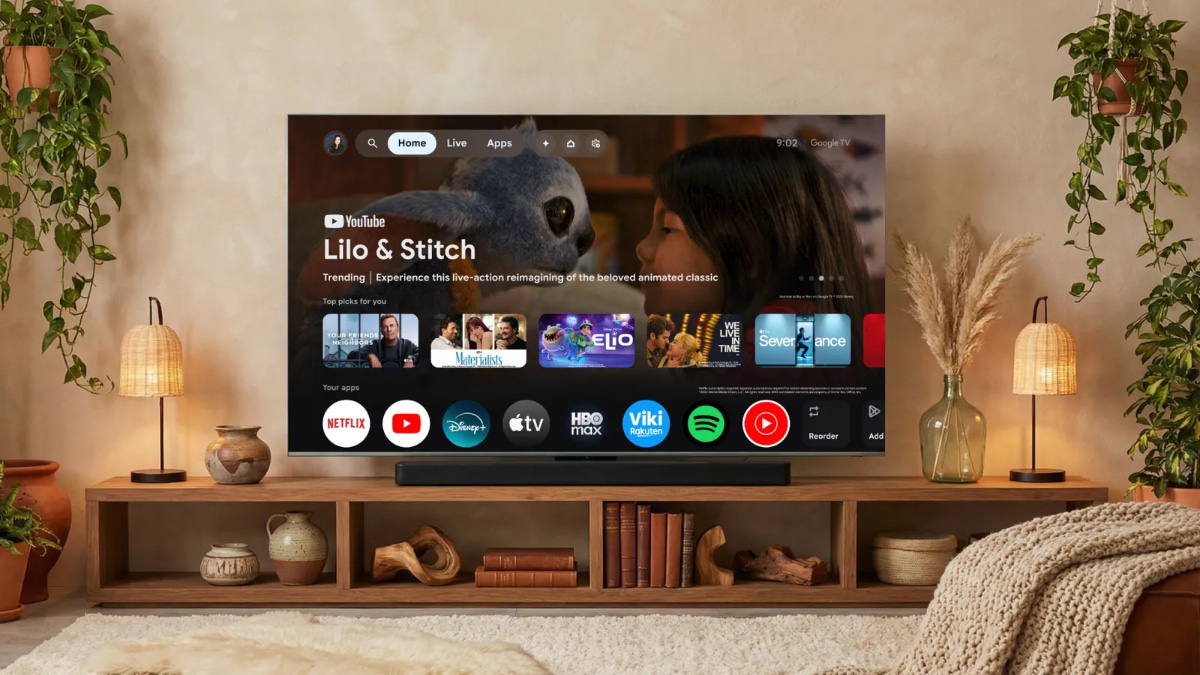
Google is expanding Gemini to the living room, and this time the television (TV) is the focus.
At CES 2026 in Las Vegas, the company revealed new Gemini features for Google TV that go beyond content search, aiming to change how people interact with their screens entirely.
Instead of scrolling through menus or adjusting settings mid-show, viewers will soon be able to speak to their TV in plain language.
You can ask for recommendations that suit more than one person, request a recap of a series you missed, or describe a film without knowing its title.
Gemini is built to respond like a conversation, not a command list. If you forget a show’s name but remember the plot or an actor, that’s enough.
Google demonstrated this with everyday questions, including, “What’s the new hospital drama everyone’s talking about?” The response is not just text. Gemini uses a visual layout that changes based on the question, mixing words, images, video context and live sports data when needed. The idea is to make the TV screen useful, not cluttered.
The company is starting this rollout with TCL, its launch partner for Gemini on TV. The features will first appear on TCL’s flagship QM9K series before expanding to other Google TV devices in the coming months.
That is important because Google TV and Android TV OS already run on more than 300 million monthly active devices worldwide, including televisions, streaming boxes and projectors. This gives Gemini instant scale once the wider rollout begins.
Entertainment is only part of the plan. Google wants the TV to double as a learning tool. When users ask a question they want to understand, the screen can present a guided overview of the topic.

Concepts are broken down visually, with narration, and follow-up questions can be asked without restarting the search. It feels closer to a lesson than a lookup.
Personal media is also getting attention. Gemini can search through Google Photos on the TV, helping users find specific people or moments. It can apply artistic styles to photos and videos and turn them into cinematic slideshows.
Google believes that people want to relive memories on a larger screen, not just a phone.
One of the most practical changes is how Gemini handles TV settings. If the picture looks wrong or the sound is unclear, there’s no need to pause and hunt through menus.
Saying things like “the screen is too dim” or “I can’t hear the dialogue” prompts Gemini to adjust the right controls instantly, without pulling you out of what you’re watching.
All of this depends on software. The new features require devices running Android TV OS 14 or higher and an active internet connection. OS 14, which began rolling out widely in 2025, brought upgrades such as picture-in-picture, improved energy-saving modes, smoother performance and stronger accessibility and security features.
A Google account is also required, and support will vary by language, country and device at launch.
Strategically, Google is no longer treating the TV as a passive screen. With Gemini, it is positioning the television as an always-on home hub, capable of conversation, learning and control.
In that process, Gemini is also stepping into the role once held by the older Google Assistant, promising more natural dialogue and bigger abilities.