



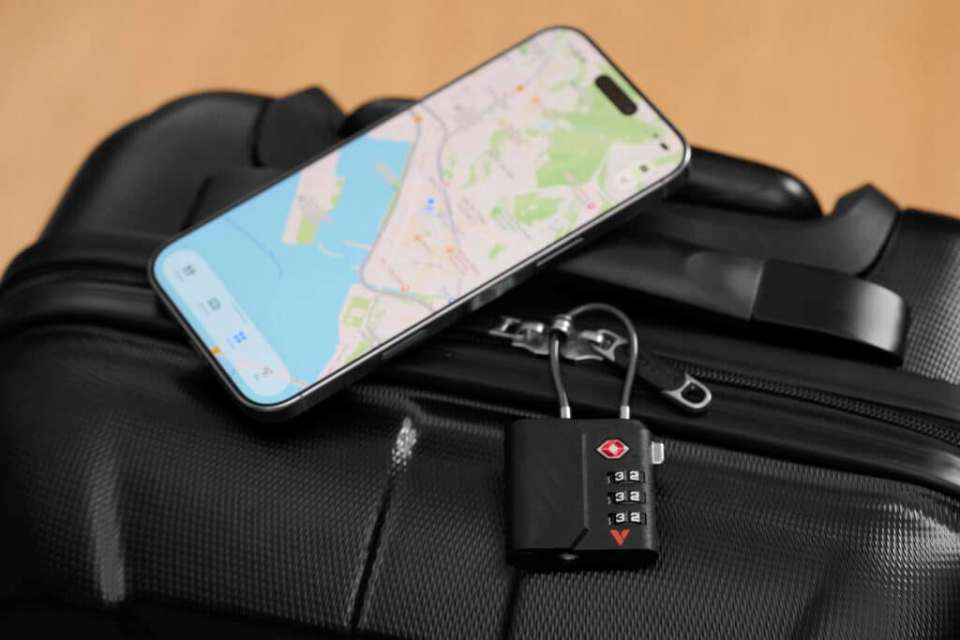
SITA has integrated the Find Hub share item location feature from Google into its global baggage tracking platform, WorldTracer, a system widely used by airlines to trace and reconcile delayed or mishandled baggage.
The integration allows passengers who track their luggage using compatible devices to securely share their bag’s location with airlines when baggage is delayed.
Once shared, airline teams can view the information directly within WorldTracer, enabling faster recovery and more accurate tracing.
Traditionally, airlines relied mainly on airport baggage scans and data exchanges between carriers to locate missing luggage.
With passenger-authorised location sharing, airlines gain an additional layer of visibility that can help narrow search areas and prioritise recovery when bags fail to arrive as expected.
The system is designed to keep control firmly in the hands of travelers. When baggage is delayed, passengers can generate a secure link through Find Hub and share it with the airline handling the case.
The link can be revoked at any time, expires automatically, and the location data remains encrypted, ensuring passengers decide who can access the information and for how long.

“Airlines are operating in an environment where passengers expect visibility of their baggage at every step of the journey,” said Nicole Hogg, portfolio director, Baggage at SITA. She noted that uncertainty around delayed baggage often leads to higher compensation costs, customer service pressure, and reputational risks for airlines.
According to Hogg, the industry is moving from manual tracing processes to more data-driven recovery systems. Passenger-authorised location sharing provides airlines with real-time insights at critical moments when bags go missing.
The integration also reflects a broader shift toward more open and secure data-sharing across the travel ecosystem, as airlines, airports, and technology providers collaborate to improve operational performance and passenger experience.
Data from the SITA Baggage IT Insights 2025 shows that baggage mishandling rates have declined by 67% over the past two decades, even as global passenger volumes have more than doubled.
The improvement has been attributed largely to smarter baggage systems and improved use of operational data.
Currently, WorldTracer is used by more than 500 airlines and ground handlers across about 2,800 airports worldwide, making it one of the aviation industry’s most widely deployed baggage tracking platforms.
By enabling secure location sharing from consumer technology ecosystems, the system aims to create a more connected and transparent approach to baggage recovery, benefiting both airlines and travelers as global air travel continues to grow.