


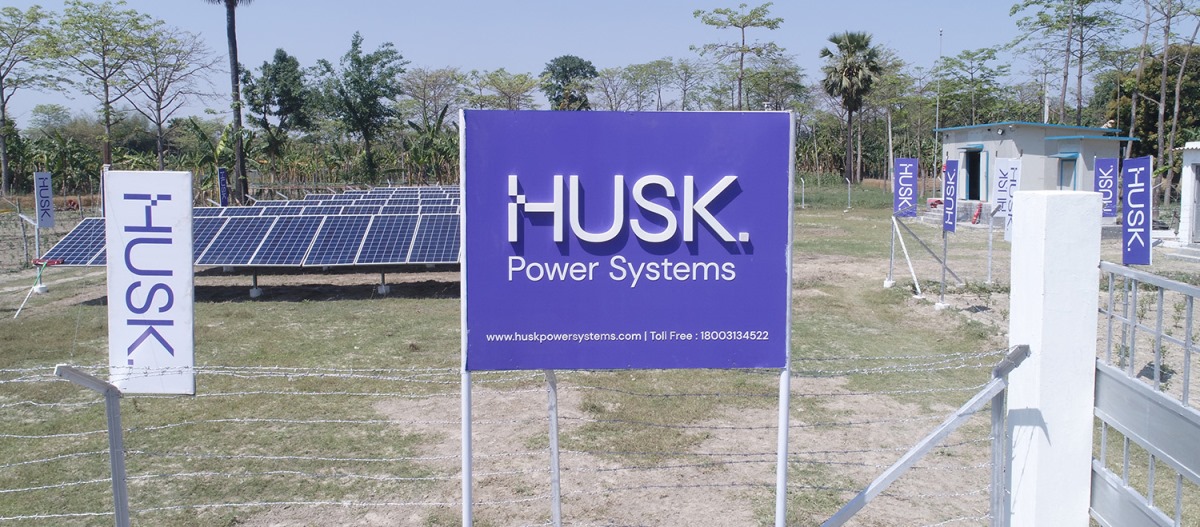
Husk Power Systems, one of the world’s largest operators of community solar minigrids, says it has expanded electricity access to more than 2.2 million people across Africa and Asia as decentralized renewable energy gains momentum in underserved communities.
The company disclosed in its Q1 2026 impact report that it now operates across more than 400 communities, with installed capacity rising to 47.4 megawatts (MW), reinforcing the growing role of off-grid energy infrastructure in bridging electricity access gaps in emerging markets.
Husk said the expansion reflects increasing demand for reliable and affordable energy solutions in rural communities where national grid infrastructure remains either weak or entirely absent.
According to the report, many communities connected through its solar minigrids now receive between 20 and 22 hours of electricity daily, a reliability level the company says often surpasses supply from conventional national grids in several developing economies.
The company also disclosed that its operations have helped avoid more than 83,000 tonnes of carbon dioxide emissions, highlighting the environmental impact of decentralized clean energy systems as countries pursue global net-zero targets.
In Nigeria, Husk said it has built 66 minigrid plants within the last six years, positioning the country as one of its key growth markets in Africa.
Beyond infrastructure deployment, the company said it is increasingly focusing on measuring the economic impact of renewable energy access.
Husk announced that it has partnered with the World Bank and Swedfund to launch a Randomized Controlled Trial in Nigeria aimed at generating data-driven insights into how solar minigrids influence local economic growth, livelihoods, and productivity.
The initiative is expected to provide empirical evidence on the contribution of decentralized energy systems to rural development and financial inclusion.
Husk also highlighted the expansion of its residential solar brand, BEEM, which it said is simplifying access to clean energy solutions through a multilingual digital platform designed for households and small businesses.
The company’s growing visibility within the global energy transition ecosystem was further underscored by the appointment of Manoj Sinha, the chief executive officer, to the Mission 300 Private Sector Council, an initiative focused on expanding electricity access to 300 million Africans by 2030.
Industry analysts say the growth of decentralized renewable energy solutions is becoming increasingly important across Africa, where millions of households and businesses still lack access to reliable electricity despite rising digital adoption and economic activity.
With governments and development institutions intensifying efforts to expand energy access while reducing carbon emissions, minigrid operators are expected to play a larger role in powering rural economies, supporting small businesses, and accelerating inclusive development across underserved regions.



