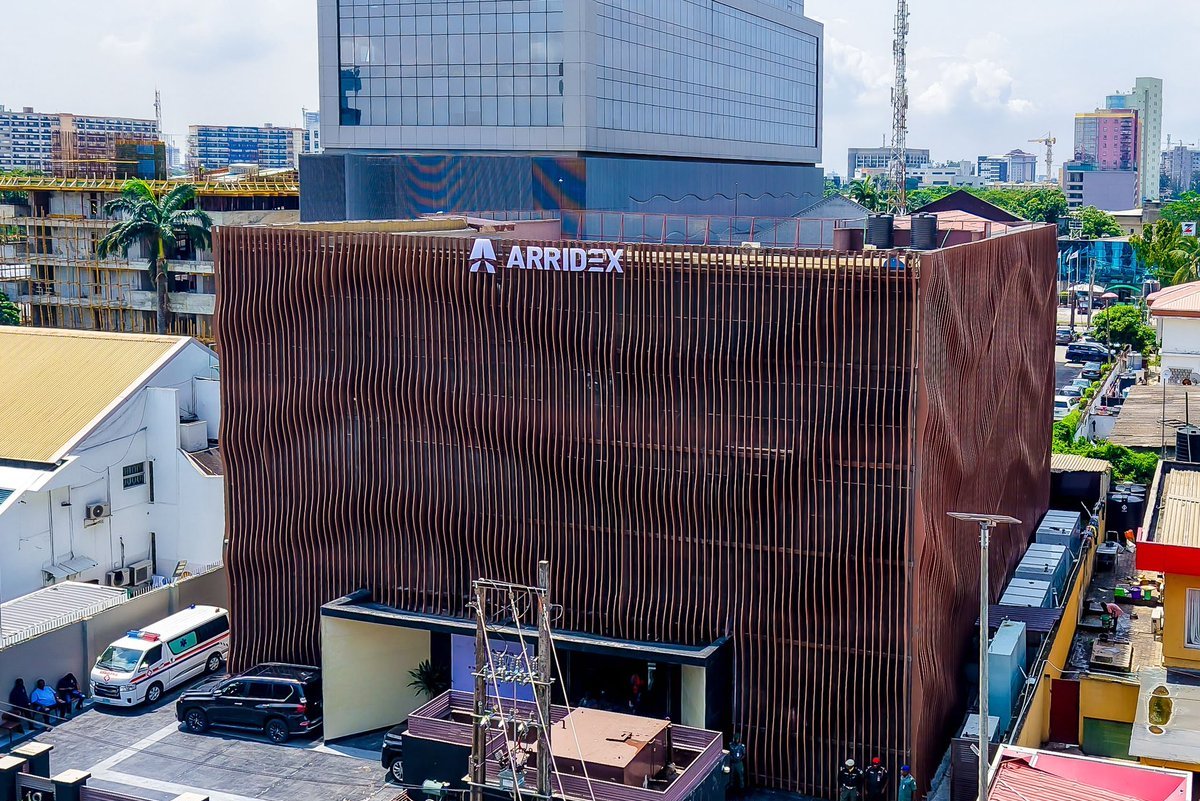
The commissioning of the Arridex Omnifactory in Lagos has marked a commendable step in Nigeria’s industrial development, introducing what is described as West Africa’s first multi-technology industrial additive manufacturing facility.
The plant, developed by Arridex, formerly RusselSmith, brings advanced 3D printing and digital production systems into Nigeria’s manufacturing space at a commercial scale.
Lagos State Governor, Babajide Sanwo-Olu, who attended the launch on June 10, 2026, described the facility as a first-of-its-kind in the region and a significant addition to Africa’s growing industrial capacity.
He said,
“Today, I opened West Africa’s first multi-technology industrial additive manufacturing facility in Lagos.
“By producing industrial components and spare parts here in Lagos, Arridex is helping to reduce our dependence on imports, strengthen critical industries and support economic growth. I commend the Arridex team for their vision and commitment to building solutions that serve not only Nigeria but the wider African continent.
Commissioning of Arridex Omnifactory in Lagos by Lagos State Governor, Babajide Sanwo-Olu | Photo Credit: X/BabajideSanwoolu
“Lagos will continue to support investments that create opportunities, grow local capacity and position our state as a hub for innovation and industry.”
For years, Nigeria’s industrial sector has depended heavily on imported spare parts, components and specialist equipment. This reliance has exposed manufacturers and operators to exchange rate pressures, global supply chain delays and long procurement cycles that often lead to downtime and higher costs.
Arridex says the Omnifactory is designed to address these challenges by enabling on-demand local production of industrial parts.
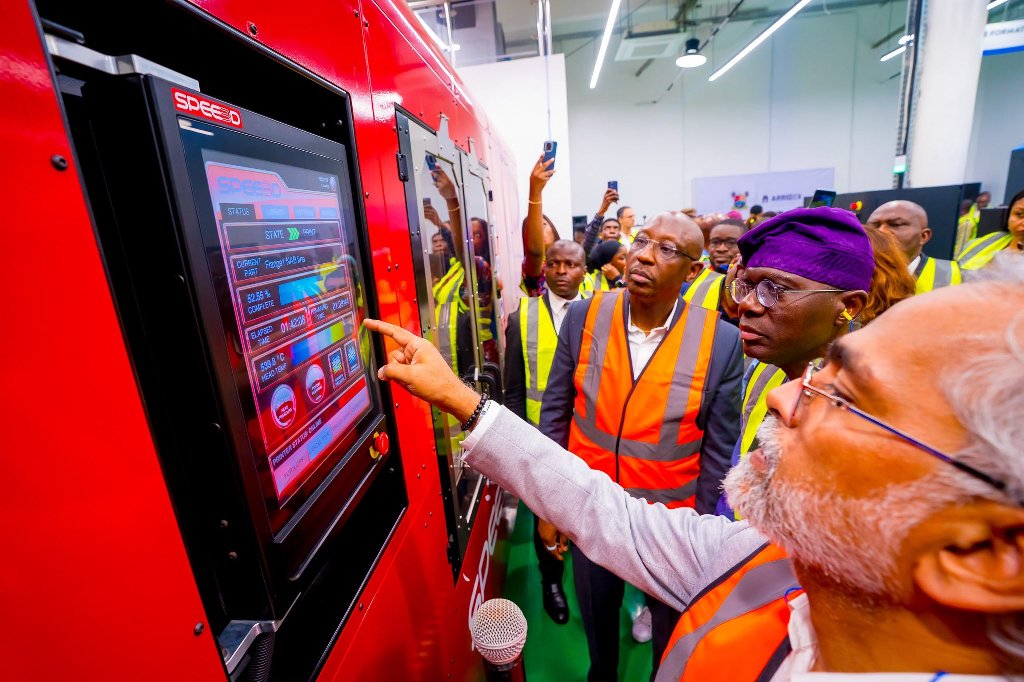
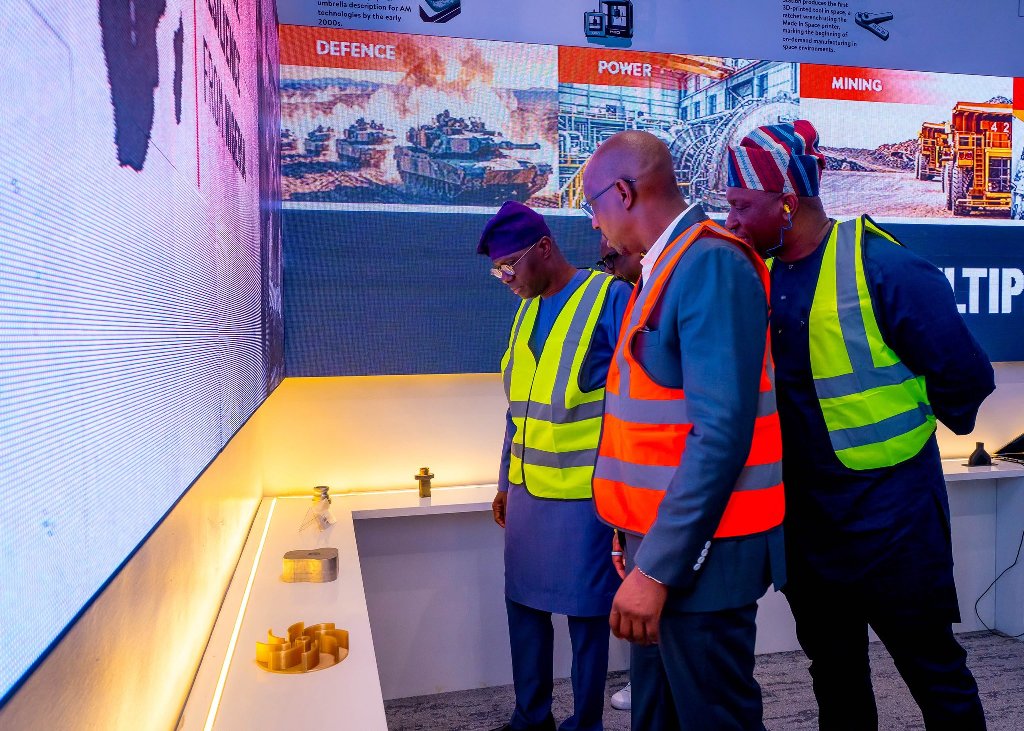
A tour of Arridex Omnifactory | Photo Credit: X/BabajideSanwoolu
At the core of the facility is additive manufacturing technology, commonly referred to as industrial 3D printing.
Unlike conventional manufacturing, which removes material through cutting or machining, additive manufacturing builds components layer by layer from digital designs.
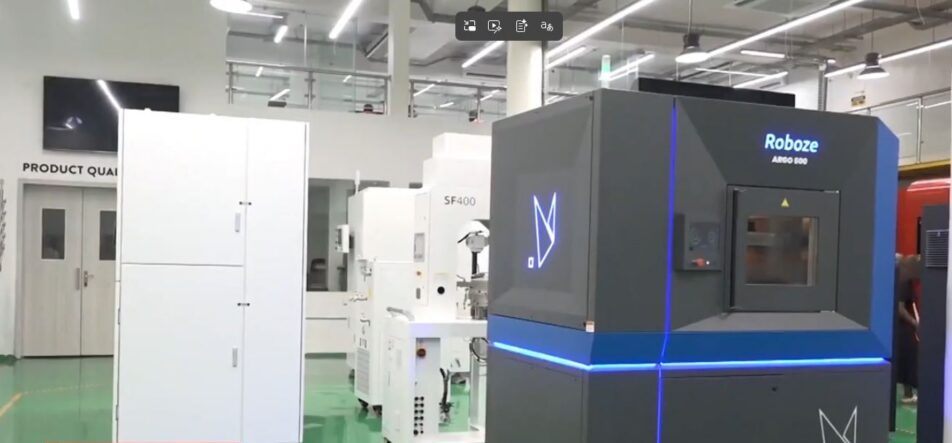
The Lagos facility integrates several production technologies, including Laser Powder Bed Fusion, Cold Spray, Fused Filament Fabrication and Selective Laser Sintering.
Together, these systems allow the production of both metallic and non-metallic industrial components under one roof.
Group Chief Executive Officer of Arridex, Kayode Adeleke, said the project reflects Nigeria’s potential to emerge as a regional hub for advanced manufacturing.
He said,
“We have gathered here today to open a door. A door to a different idea of what is possible on this continent.
“The idea is that the things the world needs can be designed in Africa, made in Africa and trusted everywhere in the world.”
One of the advantages of the facility is its potential to reduce Nigeria’s dependence on imported industrial parts. Many operators in sectors such as manufacturing and energy currently wait weeks or months for critical components sourced from Europe, North America and Asia.
Arridex said local production will significantly shorten delivery timelines and improve reliability across key industries.
The development also aligns with the Federal Government’s industrialisation agenda, which prioritises import substitution, local value addition and expansion of domestic manufacturing capacity.
Industry stakeholders have repeatedly stressed the need to strengthen local production in order to conserve foreign exchange and improve economic resilience.
The oil and gas sector is expected to be one of the major beneficiaries. Arridex is the first company certified by the Nigerian Upstream Petroleum Regulatory Commission (NUPRC) for additive manufacturing applications within the industry.
Courtesty: Google/NTA
This certification allows operators to source replacement components locally, potentially reducing downtime and cutting maintenance costs.
Given the sector’s importance to Nigeria’s export earnings, improved equipment availability could translate into stronger operational efficiency and higher output.
Beyond spare parts production, the Omnifactory is expected to contribute to the development of a broader advanced manufacturing ecosystem in Nigeria. Its large-format additive manufacturing capability makes it possible to produce larger industrial structures, including marine components and specialised equipment.
This opens opportunities for engineers, designers, suppliers and technology startups to participate in a growing industrial value chain.
Analysts say advanced manufacturing is becoming a core part of the Fourth Industrial Revolution, where automation, digital systems and artificial intelligence are reshaping production processes. Nigeria’s entry into this space signals a gradual shift towards more technology-driven industry.
Globally, supply chain security and local manufacturing capacity are becoming strategic priorities, making domestic production capabilities increasingly important.
The facility is also expected to increase demand for skilled professionals in engineering, robotics, materials science, software development and industrial design. While immediate job creation may not be large compared to labour-intensive sectors, the long-term impact is expected to be stronger in skills development and technical capacity.
However, the success of the Omnifactory will depend on sustained investment, industry adoption, regulatory support and workforce development. Expanding local demand and ensuring consistent quality standards will also be critical if Nigerian-made components are to compete with imported alternatives.
The Arridex Omnifactory reveals a transition in Nigeria’s industrial direction, from heavy reliance on imports to a gradual build-up of advanced manufacturing capability.
If sustained, the project could serve as a model for how local technology firms can contribute to industrial transformation and support Nigeria’s long-term goal of building a more diversified, technology-driven economy.