


Public institutions in Nigeria have a knack for policy inconsistency. They can aggressively pursue a course of action one moment and, the very next, introduce measures that directly contradict their stated objectives.
The Central Bank of Nigeria (CBN) is currently at the centre of one such paradox.
Everyone alive in the last couple of years witnessed the CBN champion financial inclusion, digital banking and cashless transactions.
It actively encouraged banks to expand their digital footprint, increase adoption of digital payments and decongest the banking halls. Nigerians responded positively.
People embraced digital banking, relying on ATMs, mobile transfers and POS terminals instead of entering the banking halls.
The CBN has issued a new directive that significantly increases charges on ATM withdrawals. The move, under the guise of improving efficiency, threatens to erode public confidence in the cashless policy and could force Nigerians back into the banking halls.
It raises questions about Nigeria’s commitment to the Sustainable Development Goals (SDGs), especially Goal 8 (Decent Work and Economic Growth) and Goal 9 (Industry, Innovation, and Infrastructure).
Last week, the CBN released a circular announcing new charges on ATM withdrawals, set to take effect from March 1, 2025.
Under the new directive, customers using their bank’s ATMs will not be charged. However, interbank withdrawals will now incur a fee of N100 per N20,000 at on-site ATMs and up to N500 at off-site ATMs.
International withdrawals will be charged based on acquirer fees, and the previous three free interbank withdrawals per month ceased.
A person withdrawing N100,000 from an ATM that does not belong to their bank could pay close to N3,000 in fees.
This is a huge increase from the existing system, where customers are entitled to three free withdrawals before incurring minimal charges.
This new policy contradicts CBN’s previous commitment to financial inclusion and digital economy growth.
Now, the introduction of new ATM withdrawal charges is likely to have several unintended consequences for Nigerians.
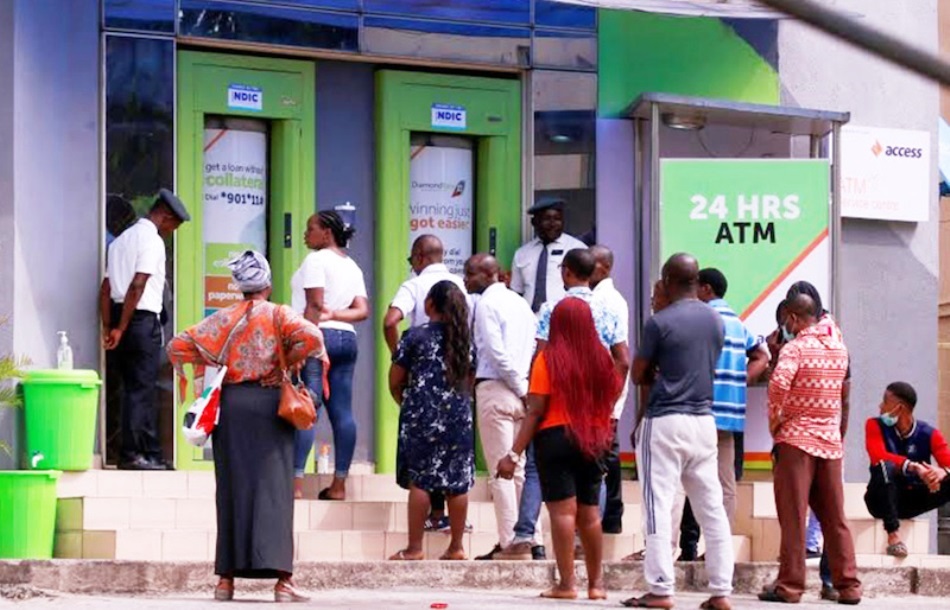
One immediate effect will be the surge in the crowds in the banking halls, as many individuals, particularly those who cannot afford high transaction fees, will prefer to withdraw cash inside the bank.
This defeats the purpose of the ATM expansion, which was meant to provide convenience and ease congestion in the banking halls.
In addition, the ripple effect will be felt by POS agents. As ATMs become a less attractive option due to higher costs, more Nigerians will turn to POS terminals for cash withdrawals.
This increased demand may push POS agents to raise service fees, making transactions even more expensive for everyday users.
Moreover, these additional banking costs come at a time when inflation is already eroding the purchasing power of citizens. For many Nigerians struggling with economic hardship, the extra financial burden will worsen their situation.
It will inadvertently make basic financial transactions more costly and less accessible.
The new charges will pose a setback for financial inclusion and undermine the progress towards a more digital economy.
So, what’s the way forward?
To address the challenge posed by the new ATM withdrawal charges, the CBN should focus on policies that promote financial inclusion rather than discourage it.
So, instead of imposing additional fees, it should encourage competition among banks by incentivizing them to expand ATM access, particularly in remote areas.
This would reduce dependence on interbank withdrawals and improve overall efficiency.
In addition, reintroducing the previous allowance of three free interbank withdrawals per month would help sustain ATM usage without burdening customers.
At the same time, strengthening digital payment infrastructure is crucial if the goal is to transition to a cashless economy.
Many Nigerians still struggle with failed transactions, delays and high mobile banking fees, which must be addressed to build trust in digital payments.
The CBN should also regulate POS and mobile banking charges to prevent financial services from arbitrarily increasing fees in response to rising ATM costs.
Without regulation, POS operators will likely raise their charges, making basic transactions more expensive for the public.
Furthermore, before implementing major policy changes, the CBN must prioritize public awareness and stakeholder engagement.
Consulting financial institutions, consumer advocacy groups and the general public will ensure that new directives are well-received and do not disrupt economic activities.
The CBN’s new ATM withdrawal charges represent, in my view, a step backwards in the country’s financial inclusion journey.
While the apex bank may claim that these charges will improve ATM efficiency, the reality is that they will discourage digital banking, force people back into long queues in the banking halls and impose additional hardship on the masses. I can almost safely predict it would lead to fights in the banking halls.
For now, however, the question remains: Is the CBN pushing Nigerians back into the banking halls? This is precisely what it looks like right now. Nigerians deserve respite.
*Eromosele, a corporate communication professional and public affairs analyst, wrote via elviseroms@gmail.com



