



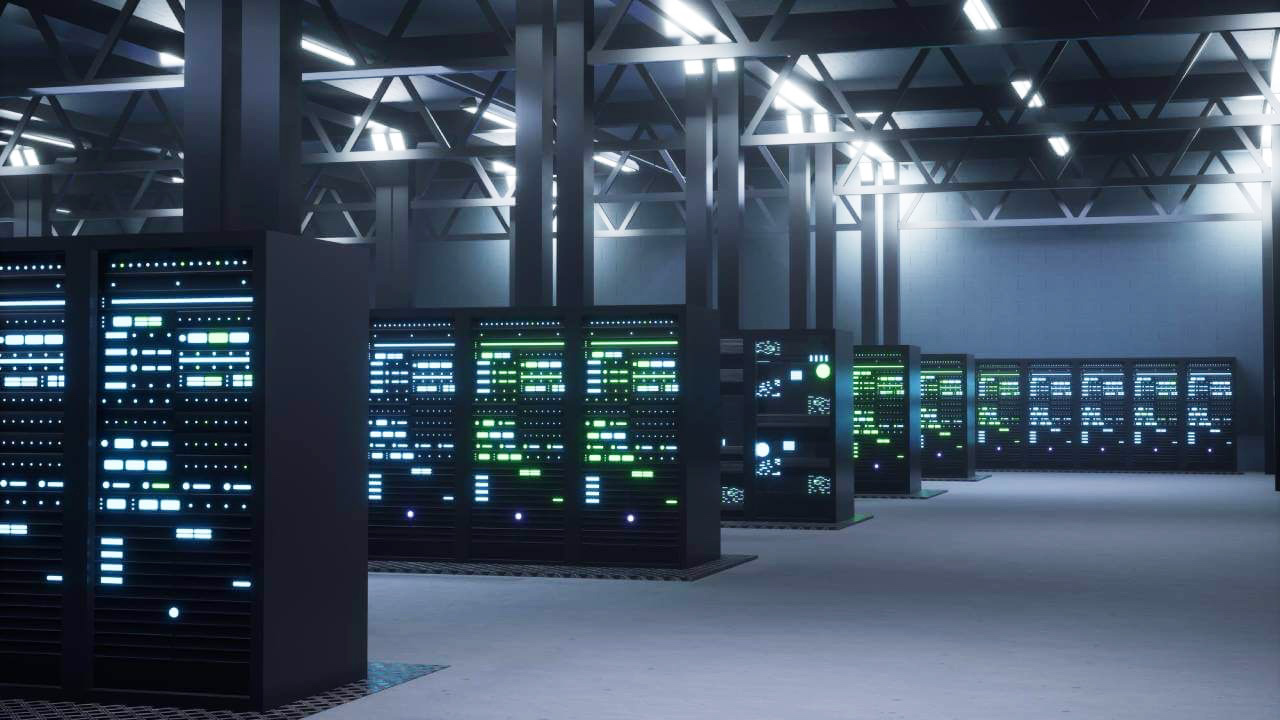
Lagos is turning into West Africa’s most valuable digital property market, with data centres now overtaking housing, offices and hotels as the fastest-growing real estate asset in the city.
New figures from Estate Intel’s Lagos Real Estate Development Pipeline Report 2025/2026 show that Lagos’ data centre capacity could exceed 218 megawatts by 2030, more than tripling the current 78.6MW installed across the city.
In plain terms, this has gone beyond a niche sector to become the backbone of Lagos’ property sector.
The unique part is the scale of the build-out already underway. Over 146MW of additional capacity is in the pipeline, a volume that represents a 186.37% increase on existing stock.
No other property segment in Lagos is expanding at that pace. The report stated, “The data centre sector stands out as the fastest growing asset class, with a development pipeline that is 186.37% of the estimated total stock, as supply pushes towards 218MW+ by 2030.”
Looking at investor thinking, we see land is no longer being valued only for flats, offices or malls. Developers are chasing server halls, power redundancy and fibre routes, driven by demand from cloud services, fintech platforms, content providers and data-heavy applications.
Lagos already hosts more than 20 operational data centres, making up over 70% of Nigeria’s installed and planned capacity. Major projects now define the skyline, with 21st Century Technologies’ 50MW facility in Ikeja, Airtel Africa’s 38MW Nxtra centre in Eko Atlantic, and Open Access Data Centres’ 24MW site in Ilasan. MTN, Kasi Cloud and Jovis Nigeria are also deep into development.
Global capital is following closely. Equinix’s 2022 acquisition of MainOne’s data centre assets marked a turning point, while Digital Realty and Open Access Data Centres continue to expand aggressively in Lagos.
Their presence shows that the city is not a local market, but a regional hub for cloud and high-performance computing.

Beyond real estate, ResearchAndMarkets estimates Nigeria’s data centre market will grow from $322.65 million in 2025 to $684.57 million by 2030. Cloud services are expanding at over 20% annually, while demand for GPU-heavy workloads is pushing operators to build at scale.
Government projections add to this, with the digital economy expected to contribute up to $18.3 billion by 2026.
Estate Intel warns that supply is running ahead of actual usage in the short term. As more facilities come online, operators may face empty racks before demand fully catches up.
The report cautions that “Installed capacity is expanding faster than utilised capacity, raising the likelihood of higher vacancy levels as new stock is delivered ahead of full demand absorption.” Energy costs, heavy reliance on diesel power and foreign exchange volatility continue to squeeze margins and complicate project timelines.
Elsewhere in Lagos’ property market, the picture is mixed. Residential development is far behind demand, with just 34,800 housing units in the pipeline against an estimated deficit of 2.7 million homes.
Developers are leaning towards luxury projects, where returns are more resilient to inflation and currency swings. Estate Intel noted, “Residential rents rose during the year as landlords adjusted pricing upward to offset the impact of currency devaluation,” yet strong demand ensured quick re-occupation of vacated units.
Hotels are slowly returning to favour. More than 3,700 new rooms are expected between 2026 and 2029, although many projects were delayed by economic challenges.
Offices, meanwhile, are a tenant-led market, with most new developments driven by owner-occupiers rather than speculative investors.
Taken together, the report shows a city in transition. Lagos real estate is not limited to homes and offices. Digital infrastructure is now taking over, changing investment priorities and land use across the city.
Short-term imbalances may emerge, but the long-term direction shows data centres have moved from the margins to the centre of Lagos’ property and economic strategy.