



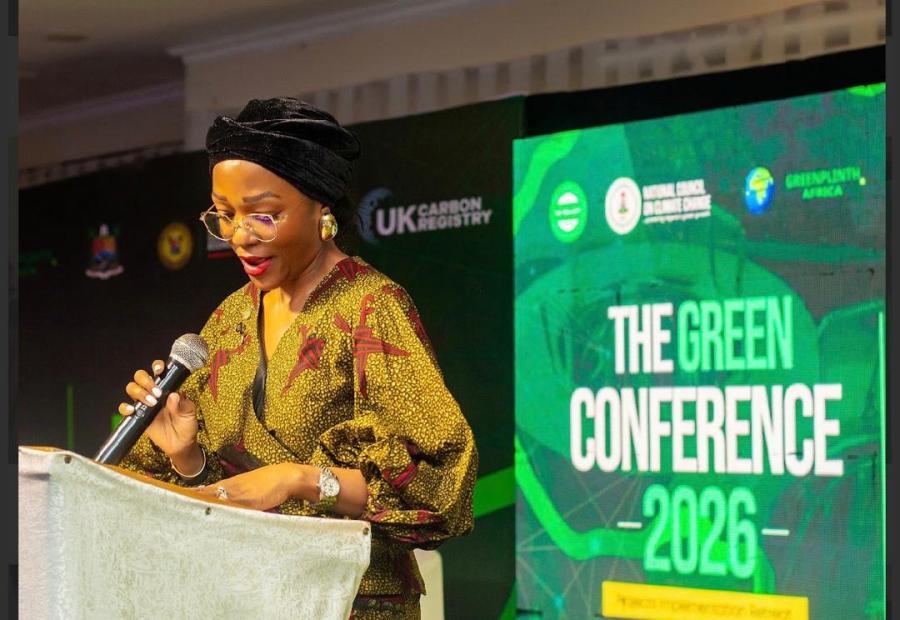
Africa’s climate transition must move beyond environmental rhetoric to become a powerful engine for economic transformation, job creation, and industrial development, Omotenioye Majekodunmi, director-general of the National Council on Climate Change (NCCC), has said.
Speaking at the Green Conference 2026 in Lagos, Majekodunmi delivered a policy message that framed climate action not merely as a sustainability obligation but as a strategic pathway for Africa’s economic future.
Her message to policymakers, development partners, and investors was direct: “It is about jobs. It is about industries. It is about prosperity.”

According to her, Africa’s climate strategy must be built around a development model that harnesses the continent’s natural resources while ensuring environmental responsibility and resilience.
“Let us utilise the resources beneath our feet to power the prosperity above our heads, building an Africa that is industrialised, resilient and climate-responsible,” she said.
Her remarks underscored a growing shift in global climate policy thinking, positioning climate action as an economic opportunity capable of catalysing industrial growth, attracting climate finance, and creating millions of jobs across emerging economies.
Majekodunmi explained that Africa has enormous, untapped opportunities in the global green economy, particularly through its reserves of critical minerals, renewable energy potential, forests, and agricultural resources.
If properly harnessed, she noted, these assets could support the development of new industries ranging from renewable energy manufacturing to carbon markets, climate-smart agriculture, and green infrastructure.
As Nigeria’s apex climate governance institution, the National Council on Climate Change (NCCC) is spearheading efforts to integrate climate policy into the country’s broader economic development framework.
The agency is currently working to align Nigeria’s national development priorities with international climate commitments through decarbonisation strategies across key sectors, mobilisation of climate finance and green investment, development of carbon markets and green infrastructure, and support for sub-national climate action initiatives.
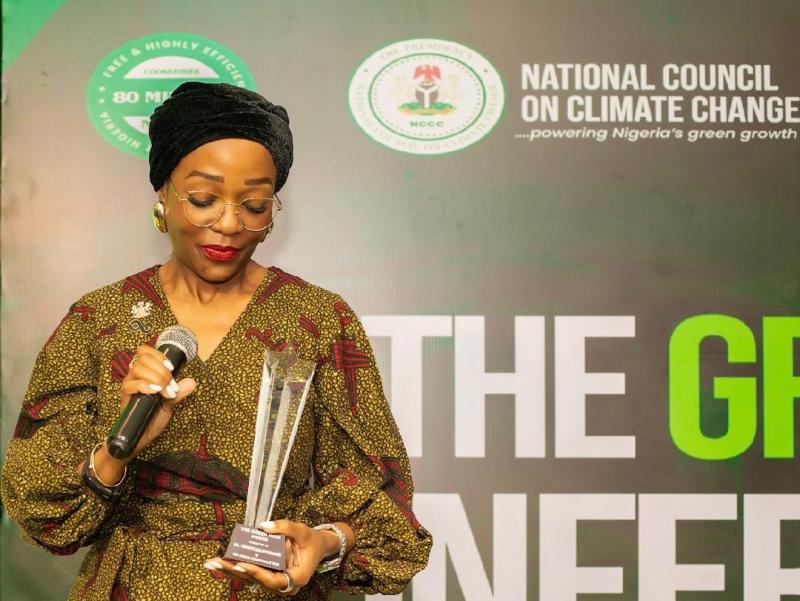
In recognition of her contributions to advancing climate policy and sustainability initiatives in Nigeria, Majekodunmi was presented with the Green ICON Award at the conference.
Beyond policy conversations, the conference also produced significant implementation milestones.
One of the most notable developments was the signing of a Memorandum of Agreement (MoA) between Benue State Government and GreenPlinth Africa for the deployment of two million clean cookstoves across the state.
The agreement makes Benue the first state in Nigeria to formally partner with GreenPlinth Africa in a large-scale clean cooking programme aimed at reducing deforestation and greenhouse-gas emissions.

Speaking on behalf of the state government, the Director-General of the Benue State Council on Climate Change, Dr Daniel Mailumo, described the initiative as a major step toward achieving the state’s environmental and climate goals.
“The deployment of clean cookstoves to Benue means rural women will no longer rely heavily on firewood but on cleaner, low-emission alternatives. This initiative will help protect our forests while also improving health outcomes and supporting our journey toward net-zero emissions,” Mailumo said.
Under the Benue agreement, participating households will receive energy-efficient cookstoves, stainless steel cooking pots and biomass briquettes made from agricultural waste.
The initiative will also incorporate social protection elements including health insurance coverage and monthly stipends for beneficiary households, creating an integrated model that links environmental sustainability with social and economic empowerment.
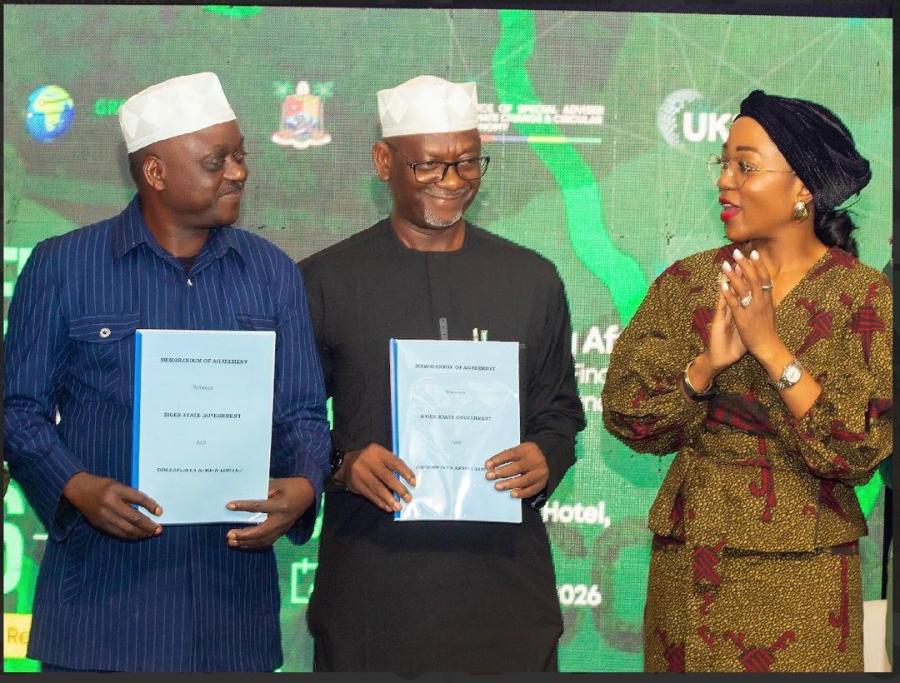
Following Benue’s pioneering move, Niger State also signed a Memorandum of Agreement with GreenPlinth Africa for the deployment of two million clean cookstoves, making it the second state in Nigeria to formally adopt the initiative.
Representing the state government, the Commissioner for Environment and Climate Change, Abubakar Musa, said the programme aligns with Niger State’s commitment to sustainable development and environmental protection.
Daniel Galadima, director-general of the Niger State Agency for Green Initiatives, who signed the agreement on behalf of the state, said the programme is a practical step toward addressing the environmental and economic challenges associated with traditional cooking systems.
“This initiative is about democratising access to clean cooking energy. It will reduce deforestation, lower carbon emissions, and provide safer, more sustainable cooking solutions for families across Niger State,” Galadima said.
The agreements with Benue and Niger states form part of a broader national initiative being developed by GreenPlinth Africa to deploy up to 80 million clean cookstoves across Nigeria.
The programme is expected to reduce greenhouse-gas emissions, decrease deforestation rates, improve public health outcomes, and create green jobs across local supply chains.
Experts at the conference noted that large-scale clean cooking programmes such as the GreenPlinth initiative also create opportunities for carbon credit generation and climate finance mobilisation.
By reducing emissions associated with firewood use, projects like these can generate verified carbon credits that attract international climate investment.
The Green Conference concluded with a consensus among participants that Africa’s climate strategy must increasingly focus on implementation, investment, and economic transformation.
For Majekodunmi, the message is clear: climate action must deliver tangible economic benefits for people across the continent, new industries, new jobs, and sustainable prosperity.