

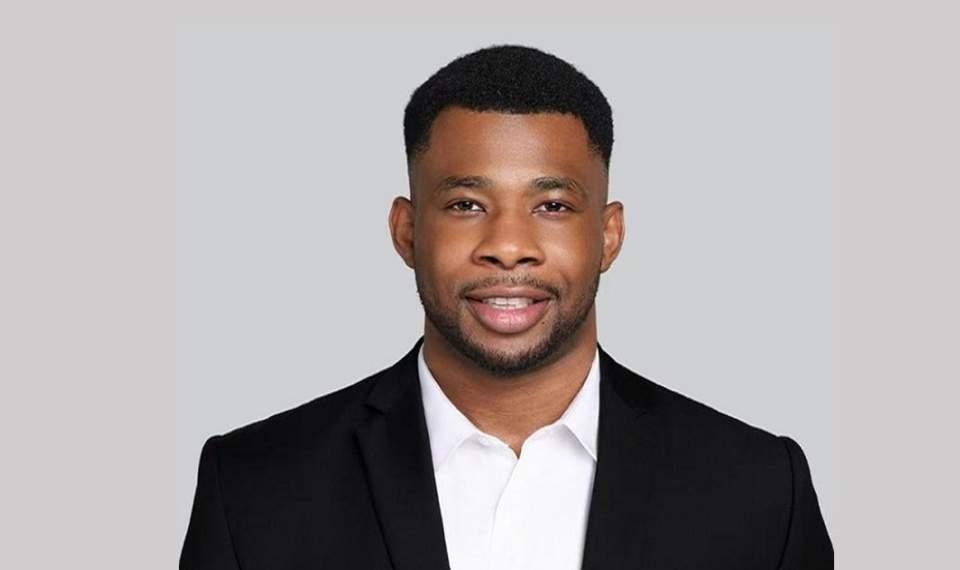
In the neon-lit, high-speed corridors of Shenzhen, China’s answer to Silicon Valley, African representation in deep tech is often a lonely conversation. But for Francis Okafor, an engineer from Anambra State, the goal isn’t just to blend in; it’s to lead.
Based in China for eight years, Okafor has carved out a niche in an ecosystem that remains one of the world’s most competitive manufacturing and innovation hubs.
Beyond his corporate responsibilities, Okafor is involved in technology advocacy and community building.
Currently serving as a Tech Lead at IDEMIA, the multinational giant synonymous with biometrics and identity security, Okafor manages a complex web of DevOps, AI, and robotics across five continents.
Yet, despite the fancy title, he is still very much in the trenches.
“Even though I’m a tech lead, I still write the core code,” Okafor told Techeconomy. “My work is about 70 per cent tech and 30 per cent managerial. I’m still a full-fledged tech guy.”
Breaking the Sports and Music Stereotype
For many in China, the African brand is often limited to the creative arts or athletics. Entering elite engineering and hacker circles as a Nigerian AI expert comes with a side of culture shock, for the locals.
“In China, Africans are usually seen as being good at sports or music,” Okafor says. “When you say you’re an engineer or working in AI, people don’t really associate that with Africans.”
This lack of representation is what drove him to move beyond the keyboard. He currently chairs the Shenzhen Afrotech Community and co-founded the Shenzhen–Hong Kong Afrotech Network, aiming to bridge the gap between African talent and Chinese innovation.
The China Model: Copy, Block, Improve
Okafor’s vantage point in Shenzhen gives him a front-row seat to the Chinese Miracle.
His assessment of why China won the tech race is blunt: they stopped being just consumers.

“The Chinese don’t just adopt technology,” he explains. “They take the idea, block it, improve it, and build their own.”
He notes a stark contrast with the Nigerian ecosystem, which he believes is currently stuck in a consumption loop.
“In Nigeria, we accept and consume. Instead of copying and localising, we remain users,” he said.
AI: The Great Upskill
As the global anxiety over Artificial Intelligence reaches a fever pitch, Okafor remains a pragmatist.
He likens the current AI fear-mongering to the early days of the internet. While jobs will shift, he argues that the displacement is actually a call to evolve.
“If you don’t upskill, then yes, AI will replace you. But if you use AI as an assistant, it will empower you… Every Nigerian has a responsibility to understand AI and apply it in their own field,” Francis Okafor told Techeconomy.
Bringing it Home
A pivotal conversation with Ambassador Nini Okey-Uche at the Nigerian Embassy in Beijing served as a wake-up call for Okafor.
The message was clear: contributing to China’s GDP is great, but Africa needs that knowledge transfer.
“She told me it wasn’t good that I was contributing so much in China and nothing back home. That conversation changed my thinking.”
Okafor is now exploring formal pathways to link the Nigerian tech scene with Shenzhen’s industrial might. For him, it’s about more than just business; it’s about a fundamental shift in perception.
“I want to change the narrative. Africans are not just entertainers. We are very good engineers too.”