

Microsoft, working in partnership with the Federal Government of Nigeria, Data Science Nigeria (DSN), and Lagos Business School (LBS), has announced that more than 350,000 Nigerians have now been trained in artificial intelligence skills under its AI National Skills Initiative (AINSI).
The milestone underscores the strength of the multi-stakeholder collaboration aimed at building Nigeria’s AI talent pipeline and accelerating digital inclusion.
It also builds on Microsoft’s broader engagement with the Nigerian government, through which more than four million Nigerians have received digital skills training since 2021, spanning areas such as productivity, cloud computing, and emerging technologies.
Together, the partners say the initiative is positioning Nigeria to compete more effectively in the global digital and AI-driven economy.
Recall that in February this year Microsoft announced its plan to invest one million dollars (approximately N1.6billion) to deepen artificial intelligence (AI) training for Nigerians within the next three year.
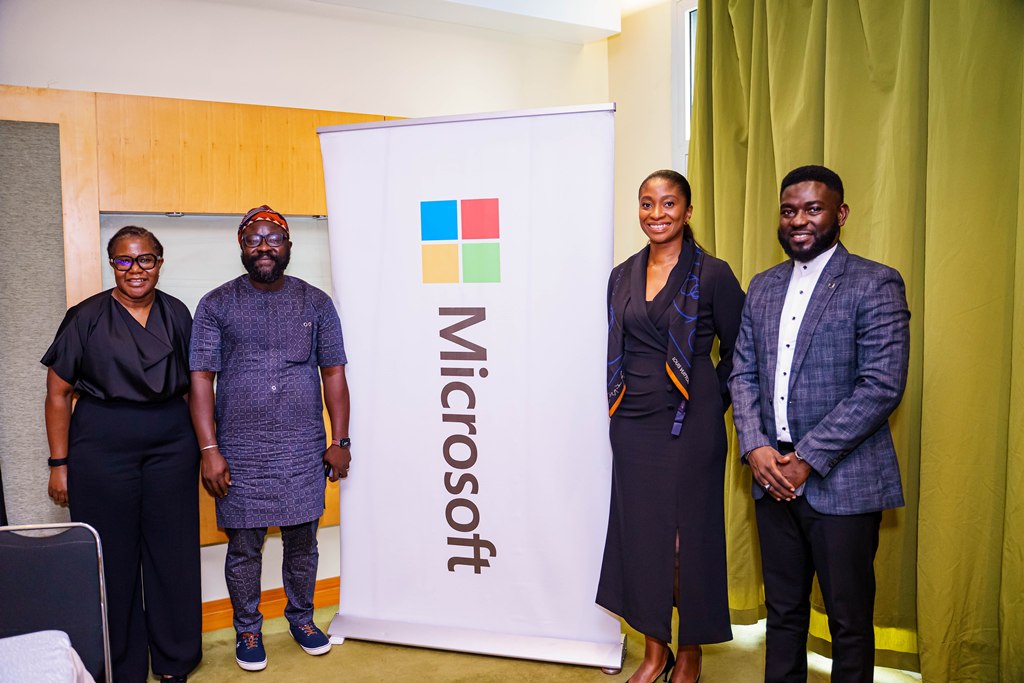
Speaking during media interactive session today, Abideen Yusuf, general manager, Microsoft Nigeria and Ghana, said: “Nigeria cannot afford to wait,” adding that “AI is reshaping every sector, and the countries that move fastest on skills will lead. We must equip people now, at scale and with intent, so the immense opportunity presented by AI doesn’t pass us by.”
Also commenting, Professor Olayinka David-West, dean of Lagos Business School, emphasised this point:
“AI skilling is no longer optional for Nigeria’s digital future, it is the foundation of our competitiveness. At Lagos Business School, we believe that equipping leaders and citizens with AI capabilities is essential for driving inclusive growth, innovation, and national transformation.”
As it stands, a significant percentage of Nigerian graduates are still to acquire digital skills, highlighting the importance of workforce readiness.
Launched earlier this year, the second phase of the Nigeria skilling programme, under Microsoft’s AINSI, aims to reach 1 million citizens over three years, strengthening Nigeria’s AI capability and national competitiveness.
AINSI is helping drive a range of different programmes designed to embed AI skills across every sector of the economy.

Empowering organisational leaders
Over the past year, AINSI has advanced ethical and inclusive AI leadership in Nigeria’s public sector.
Working with Lagos Business School, the Federal Ministry of Communications, Innovation and Digital Economy, and the National Centre for Artificial Intelligence and Robotics, Microsoft has trained 99 public sector leaders, including Members of the National Assembly and senior executives from 58 ministries and agencies.
These sessions equipped leaders with strategies for AI-powered reporting and sector-specific roadmaps.
Equipping developers for the future
“Developer-focused programmes are creating a strong pipeline of technical talent. Through government-driven initiatives like Developers in Government (DevsInGov) and the 3 Million Technical Talent initiative, led by the Ministry of Communications, Innovation and Digital Economy, developers in public sectors have gained new skills”.
“Around 645 participants have been trained in analytics and AI integration. Another 1,000 developers learned advanced skills in areas such as DevOps, machine learning and data science.
“These efforts are helping Nigeria’s workforce prepare for the future by advancing AI fluency across the digital ecosystem” said Nonye Ujam, director, Government affairs, Microsoft West Africa.
Bringing AI skills to every tech user
To reach everyday tech users, developers, and business leaders, Microsoft hosted a flagship programme, Microsoft AI Skills Week – engaging over 235,000 participants through AI digital literacy workshops, business leader strategy sessions and an Agentic AI hackathon.
Partnering with VISA, TeKnowledge, UNICEF, Data Science Nigeria, and Lagos Business School, the initiative trained more than 11,400 individuals and certified over 1,700. A standout moment was the Agentic AI hackathon, showcasing innovative solutions for document verification, risk assessment, and fraud detection, demonstrating the real-world impact of AI skills in fintech.
“Our collaboration with Microsoft has demonstrated that AI readiness requires coordinated investment across every stakeholder group, government, developers, educators, and communities. By building capacity for evidence-driven governance, responsible innovation, classroom integration, and community adoption, we are laying the foundation for a globally competitive workforce. True digital transformation happens when the entire ecosystem moves forward together,” said Dr. Bayo Adekanmbi, CEO/founder, Data Science Nigeria.
Looking ahead, Microsoft said that it will continue to work with the partners in driving Nigeria’s digital transformation through targeted upskilling in AI and cybersecurity, expanded access to AI education, and ongoing developer training.
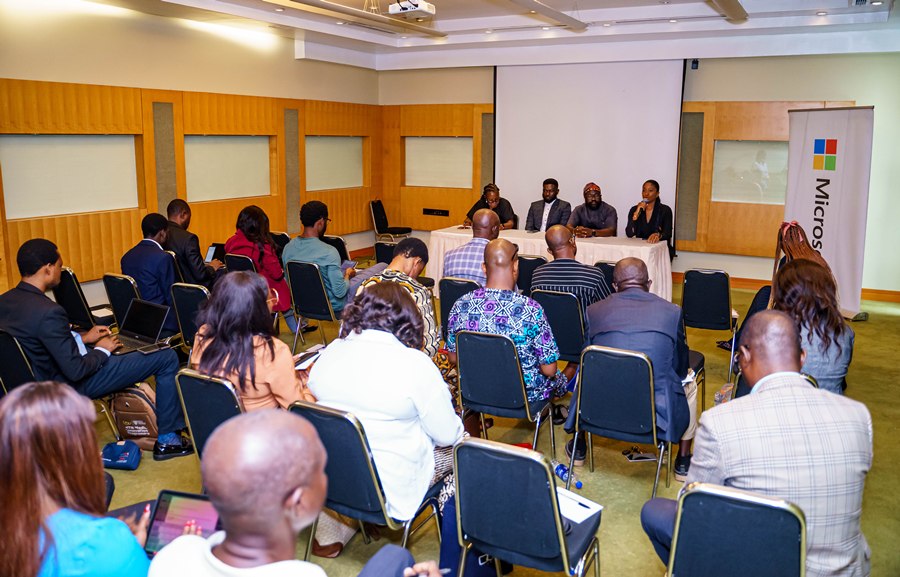
These activities aim to build local expertise at all levels and support Nigeria’s young population in taking an active role in Africa’s digital future.
“Nigeria is on track to capture 43% of Africa’s projected $136 billion AI-driven productivity gains by 2030,” concluded Yusuf. “By collaborating with the government to equip leaders, developers, and tech users, we’re building a future-ready workforce and helping Nigerians adopt and adapt the technology, thereby maximising its potential.”