


ADVERTISEMENT
Wednesday, June 3, 2026
Tech | Business | Economy
No Result
View All Result
  • Technology
    • Trends
    • Telecoms
      • Broadband
    • ConsumerTech
      • Gadgets and Appliances
      • Apps
      • Accessories
      • Reviews
      • Unboxing
    • EnterpriseTECH
    • Security & Data Protection
    • How To
  • Business
    • Company News
    • StartUPs
      • Founder’s Story
      • Funding
    • Deals
    • People & Moves
    • SME & Entrepreneur Focus
    • BUSINESS SENSE FOR SMEs
    • Competition & Market Positioning
    • Commerce & Mobility
    • Travel
    • WomenPreneurs
  • Economy
    • Macroeconomic Trends
      • Macro Monday
      • TE Insights
    • Finance
      • Banks
      • Fintech
      • Insurance
      • Digital Assets
      • Personal Finance
    • Policies
      • Tech & Society
    • Market Analysis
    • Jobs & Workforce Economy
  • Features
    • Guest Writer
      • Chidiverse
      • Digital Assets
      • GameTech
    • EventDIARY
    • IndustryINFLUENCERS
    • MarkTECH
    • TBS
    • NewsEXTRA
  • Editorial
  • Brand Content
  • TECHECONOMY TV
Wednesday, June 3, 2026
Tech | Business | Economy
No Result
View All Result
Tech | Business | Economy
No Result
View All Result

Home » MTN Nigeria Adopts Eco-friendly SIMs Cards

MTN Nigeria Adopts Eco-friendly SIMs Cards

Adetunji Tobi by Adetunji Tobi
October 18, 2024
in Company News, Telecoms
Reading Time: 2 mins read
0
MTN

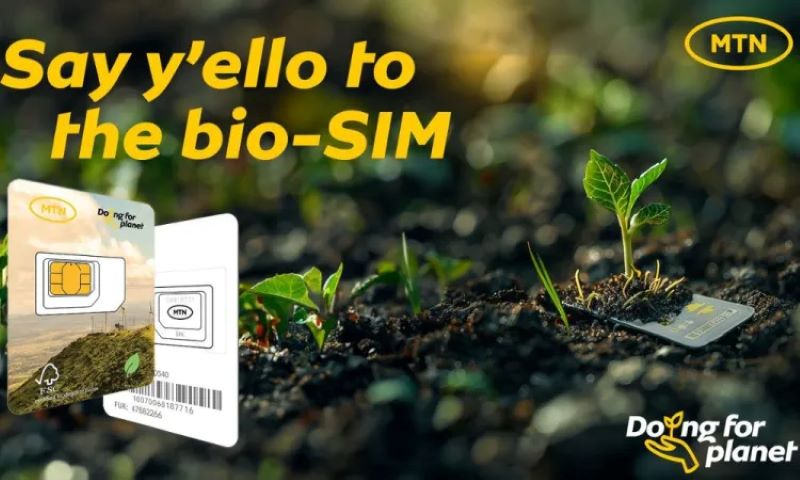
Biodegradable SIM.

African Telecommunication giant, MTN Nigeria, on Friday announced the introduction of paper-based biodegradable eco-friendly SIM cards, in line with its Project Zero goals to reduce Greenhouse gas (GHG) emissions and achieve net zero emissions by 2040.

The biodegradable paper-based SIM card is said to be safer for the environment, as it supports the management of products throughout their lifecycle in a manner that promotes circularity and reduces waste.

This comes barely a week after the Nigerian Communications Commission (NCC) announced plans to issue a revised corporate governance code, updating the last code from 2016 with a key focus on the introduction of mandatory sustainability reporting for telecom operators.

MTN in a statement noted that the gradual elimination of plastic-based SIM cards would help the company make a huge contribution to plastic pollution prevention, showing its commitment to continuously exploring ways to integrate sustainable practices into its operations.
Comparing the benefits of the 100% biodegradable paper-based SIM cards to the Polyvinyl Chloride (PVC) plastic-based material, these eco-friendly SIMs can biodegrade naturally and are recyclable, thus reducing waste pollution.

It also lowers carbon emissions footprint during production and disposal.
This helps eradicate the material problems of plastic SIM cards, such as landfill or incineration disposal, limited recycling options and contribution to waste pollution.

Subscribe to our Telegram channel for the latest updates.

Follow the latest developments with instant alerts on breaking news, top stories, and trending headlines.

Join Channel

MTN said this move aligns with its promise to ‘Doing for the Planet’, prioritizing eco-responsibility and minimizing the company’s environmental footprint through responsible and sustainable waste management practices.

“Our new eco-friendly SIM cards represent part of our continuous commitment to environmental responsibility, as well as our dedication to reducing waste, supporting local Nigerian vendors, and integrating sustainability into business operations as well as the daily lives of the people”, said Tobe Okigbo, Chief Corporate Services and Sustainability Officer.
Also commenting on the development, the General Manager of sustainability and Shared Value at MTN, Adekemi Adisa, said:
“Our people and the environment where they live drive the innovative measures we take.
“The launch of our recyclable SIM cards embodies our commitment to sustainability, encouraging our customers to make eco-friendly choices, reducing waste and paving the way for a more environmentally conscious future for Nigerians.”
As the world becomes increasingly conscious of the environmental impact of our actions, mobile network operators globally are taking steps to reduce their carbon footprint.
This has led to the introduction of biodegradable, paper-based SIM cards.
Traditional SIM cards, which have been the overall norm on the continent, are typically made from non-renewable plastic materials derived from fossil fuels.

These plastic SIM cards contribute to the growing global plastic waste crisis, with millions of discarded cards ending up in landfills and oceans, harming marine life and the environment.

Conversely, paper-based SIM cards also known as bioSIMs, are made using 100% Forest Stewardship Council (FSC) certified paper, meaning the forests where the paper comes from are responsibly and sustainably managed.

Once discarded, these bioSIMs will safely decompose in the natural environment over time

0Shares
upperlink
Advertisements
Previous Post

#WorldFoodDay2024: Glovo Champions Sustainable Urban Food Delivery in Nigeria

Next Post

It’s Time to Make Dividends of Technology Equitable in Nigeria – Abraham Great

Adetunji Tobi

Adetunji Tobi

Tobi Adetunji is a Business Reporter with Techeconomy. Contact: adetunji.tobi@techeconomy.ng

Related Posts

Egbin Power employees

Egbin Power Honours Outstanding Employees, Talents

June 3, 2026
Taiwo Afolabi Cup Football

Amokachi, Dosu Joseph, Fatai Amoo Grace Taiwo Afolabi Cup Final

June 2, 2026

Fidelity Bank Sees Technology as a Strategic Enabler of Efficiency, Growth

June 2, 2026
Load More
Next Post
Abraham Great - Techeconomy business series

It’s Time to Make Dividends of Technology Equitable in Nigeria – Abraham Great

Leave a Reply Cancel reply

Your email address will not be published. Required fields are marked *

I agree to the Terms & Conditions and Privacy Policy.

This site uses Akismet to reduce spam. Learn how your comment data is processed.

Techeconomy Podcast
Techeconomy Podcast

The Techeconomy Podcast is a thought-leadership show exploring the powerful intersection of technology, business, and the economy, with a strong focus on Africa’s fast-evolving digital landscape.

Financing the Future: Venture Debt, Local Capital & African Innovation | TBS May 2026 Webinar
byTecheconomy

Africa’s innovation ecosystem is evolving, but where will the funding for the next generation of startups come from?

In this edition of the Techeconomy Business Series (TBS) May 2026, industry experts explore how local capital, venture debt, and smarter investment structures are redefining startup growth and innovation across Africa.

🎙️ Featured Speakers:

* Ebunoluwa Ashley-Dejo

* Damilare Davola

* Success Ajilore (STN & Accelerated Plus)

Key conversations in this webinar include:

✔️ The future of startup financing in Africa

✔️ Venture debt and alternative funding models

✔️ The role of local investors in scaling innovation

✔️ Sustainable investment strategies for African startups

✔️ Opportunities and challenges in the African tech ecosystem

Subscribe for more conversations shaping Africa’s digital economy and innovation landscape.

#TBS2026 #AfricanInnovation #VentureDebt #StartupFinance #TechInAfrica #Techeconomy #AfricanStartups #InnovationEconomy

Financing the Future: Venture Debt, Local Capital & African Innovation | TBS May 2026 Webinar
May 27, 2026
Techeconomy
PROTECTING INNOVATION IN AFRICA’S STARTUP ECOSYSTEM
April 29, 2026
Techeconomy
BUILDING TRUST IN AFRICA ECOSYSTEM
February 27, 2026
Techeconomy
Navigating a Career in Tech Sales
January 29, 2026
Techeconomy
How Technology is Transforming Education, Health, and Business
November 27, 2025
Techeconomy
Search Results placeholder
upperlink
Advertisements
ADVERTISEMENT
  • About Us
  • Careers
  • Contact Us
  • Privacy Policy

© 2026 TECHECONOMY.

No Result
View All Result
  • Technology
  • Business
  • Economy
  • Features
  • Editorial
  • Brand Content
  • TECHECONOMY TV

© 2026 TECHECONOMY.

This website uses cookies. By continuing to use this website you are giving consent to cookies being used. Visit our Privacy and Cookie Policy.


