


Long before the sun rises in many remote Nigerian villages, life is already in motion, farmers setting out to their fields, traders preparing their stalls, students trekking long distances in search of network signal just to download assignments or send messages home.
For decades, these communities have lived on the fringes of Nigeria’s digital map, disconnected from the tools and opportunities that urban centres take for granted.
That reality is now beginning to change.
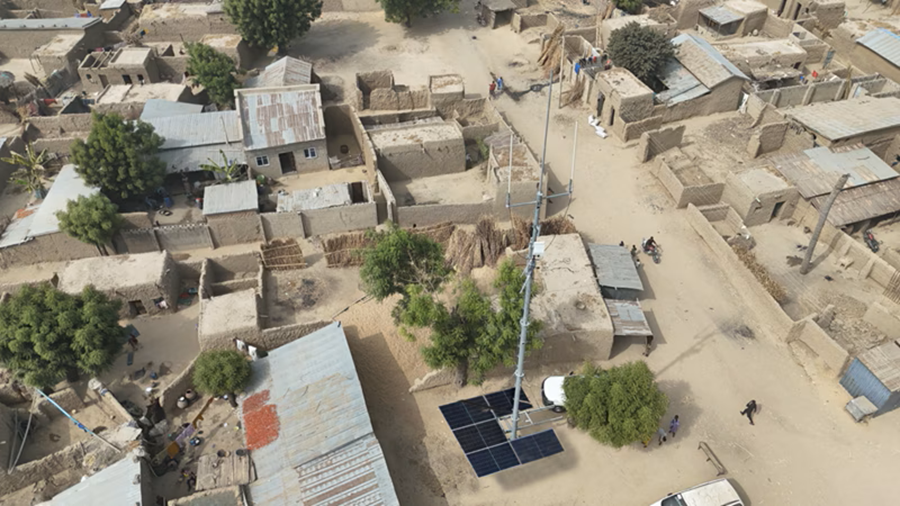
In a groundbreaking move that promises to reshape the prospects of rural connectivity, MTN Nigeria and Huawei have completed the world’s first commercial deployment of RuralCow, an ultra-simple, rapid-deployment mobile base station designed specifically for rural settlements that have long been considered too remote or too costly to cover.
A New Chapter for Nigeria’s Unconnected Millions
With nearly 105 million Nigerians living in rural areas, the nation carries one of Africa’s largest connectivity gaps.
For years, operators struggled with the steep cost of building conventional base stations in places where power is unreliable, population clusters are dispersed, and expected revenue is modest.
In many villages with fewer than 3,000 residents, traditional telecom economics simply didn’t work.
The return on investment stretched into a decade. Heavy machinery couldn’t reach many terrains. Fibre lines were absent. And yet, demand for communication remained powerful and urgent.
RuralCow: A Simple Idea Transforming Hard Places
Determined to break this stalemate, Huawei engineered RuralCow, a compact, all-in-one mobile site that blends innovation with practicality.


The system fuses the baseband, radio, and transmission into one unit, drastically cutting equipment volume by 70% and slashing power consumption by 85%.
Even more transformative: it requires no fibre or microwave links, yet can transmit signals across 30 km, even in non-line-of-sight environments.
For the first time, operators can roll out coverage in remote communities without heavy machinery or prohibitive installation costs.
On the ground, the impact is immediate. Live deployments show that in rural areas with 1,000–3,000 residents, RuralCow reduces the ROI period from 5–10 years to about 3 years—unlocking a business case that was previously out of reach.
A Vision of Digital Equity
For MTN Nigeria, this milestone is more than another technology deployment—it is a declaration of intent.
“We believe that everyone deserves the benefits of a modern connected life,” said Yahaya Ibrahim, chief technical officer of MTN Nigeria.
“Rapidly extending wireless coverage to remote rural areas and ensuring equal access to digital benefits is our shared mission.”
Huawei echoes this vision.
“As an industry leader in inclusive connectivity, Huawei is committed to narrowing the digital divide,”
said Fang Xiang, vice president, Huawei Wireless Network Product Line.“RuralCow is a simple, green, cost-effective solution designed for rural areas. We will continue our innovation-driven mission of ‘Connecting the Unconnected’ toward a digitally inclusive world.”
Lighting Up the Last Mile
With RuralCow now live in Nigeria, remote communities once deemed “unreachable” are gaining access to mobile services that can power education, healthcare, commerce, and resilience.
For villagers who once walked kilometres searching for a single bar of signal, the sight of a new RuralCow mast rising above farmland is more than an engineering feat, it is a bridge to possibilities long delayed.
Now, the story of Nigeria’s digital future is being rewritten from the most unexpected places: the villages that were once disconnected are finally joining the conversation.