


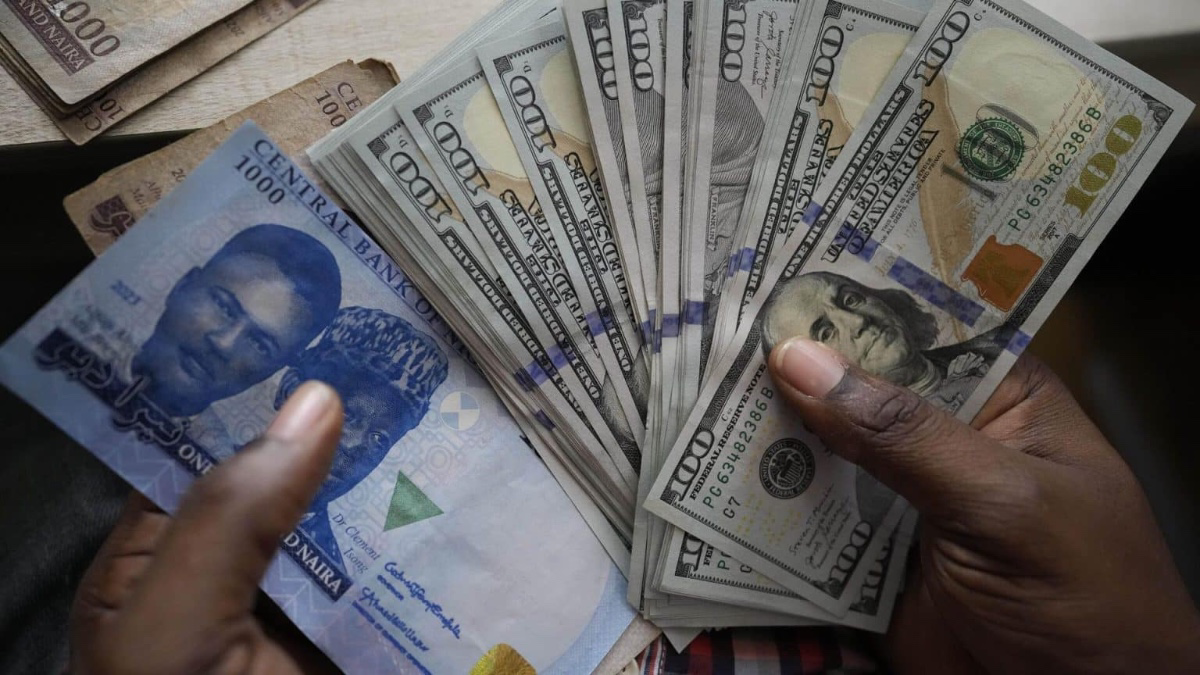
The naira started the week on a bearish note, trading at ₦1,479 per dollar in the parallel market, a ₦3 decline from its previous close of ₦1,476/$, according to data obtained from Naira Rates.
The depreciation was driven by increased seasonal demand for the US dollar from businesses and importers at the start of the new year, placing added pressure on the already limited dollar supply in the parallel market.
Market speculation and a persistent liquidity gap in official FX windows also continue to drive end-users toward the parallel market. This pressure has been unchanged despite the slow return of business activities following the Yuletide holidays.
The naira traded flat against the Pound Sterling, Euro, and Canadian Dollar, respectively closing at ₦2,204.40/GBP, ₦1,753.40/EUR, and ₦1,092.99/CAD.
Analysts attribute the relative stability of the pound, euro, and Canadian dollar to lower transaction demand compared to the US Dollar during the trading period.
Subscribe to our Telegram channel for the latest updates.
Follow the latest developments with instant alerts on breaking news, top stories, and trending headlines.

A “flat” trade indicates a short-term balance between supply and demand, limiting price fluctuations.
In the cryptocurrency market, the naira traded at ₦4.83 million per Ethereum, ₦141.61 million per Bitcoin, and ₦206,759.08 per Solana. It also traded at ₦1,473.50 per USDT and ₦1,474 per USDC.
For international card transactions, GTBank quoted the dollar at ₦1,438/$, while Standard Chartered Bank traded at ₦1,449/$, ₦1,956/GBP, ₦1,704/EUR, and ₦1,057/CAD.
At the Central Bank of Nigeria’s (CBN) Nigerian Foreign Exchange Market (NFEM) window, the naira closed at ₦1,430.85/$, ₦1,925.11/GBP, and ₦1,677.66/EUR on Friday, January 2, 2026.
Today’s rate had not been published by the apex bank as of the time of filing this report.