


In Nigeria, the conversation around the cost of internet access is reaching a fever pitch.
More of our daily lives, from banking to schooling, are shifting online, and the price of staying connected has become a major pain point.
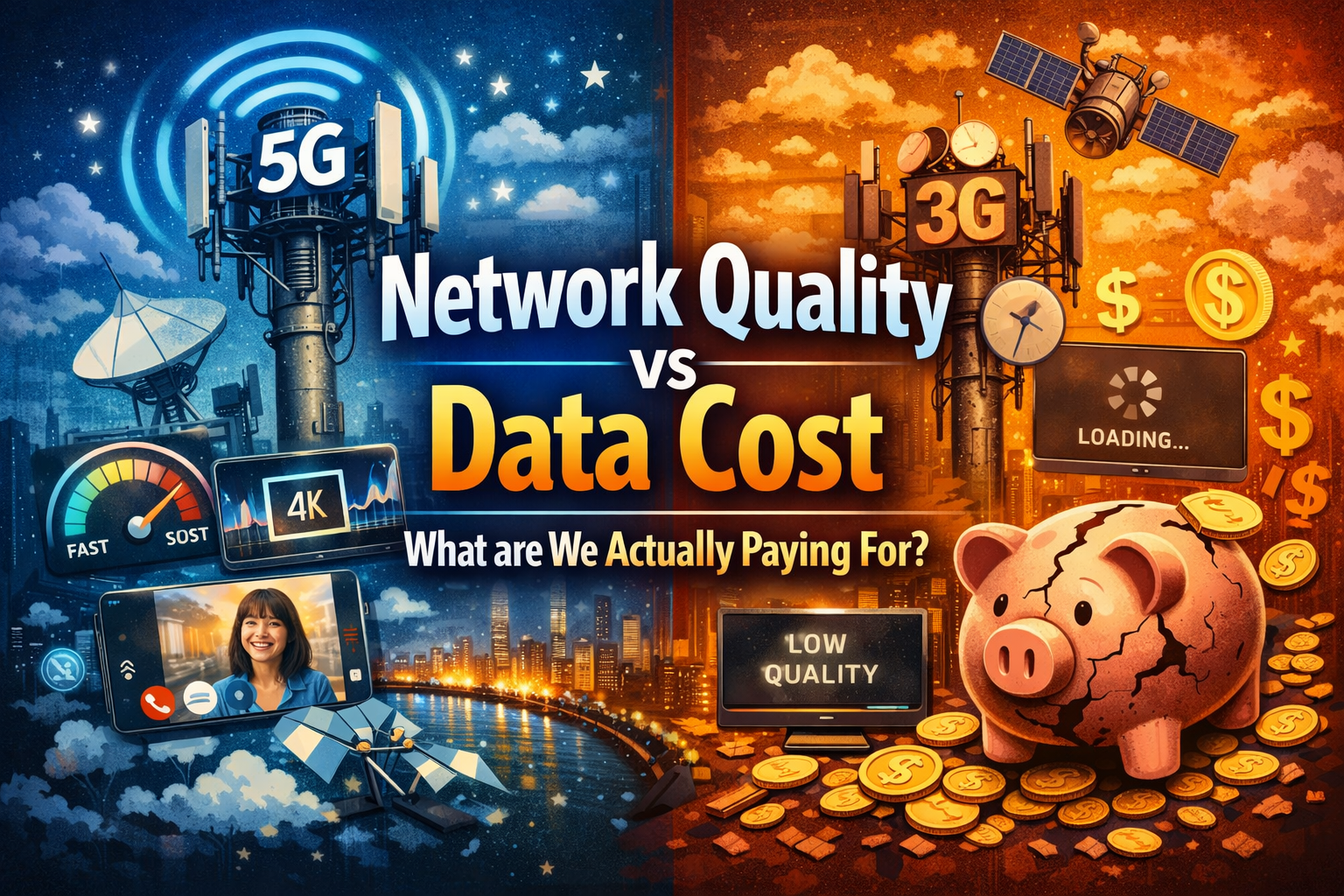
However, beyond the talks about high costs and “cheaper” bundles, the question of what consumers are actually buying cannot be ignored.
Is it just a bucket of gigabytes, or is it the quality of the pipe those gigabytes travel through?
To understand this, we need to separate two concepts that are usually lumped together, and these are network performance and price.
While they are related, they don’t always move in the same direction.
Defining “Network Quality”
When operators like MTN, Airtel, Glo, and 9mobile discuss “network optimisation,” they are usually balancing three technical pillars:
- Speed:This is the most obvious metric, how fast data moves to and from your device. High speeds mean seamless 4K streaming and lightning-fast downloads.
- Stability:Speed is irrelevant if the connection drops every five minutes. A stable network stays consistent even during “peak hours” when everyone in the neighbourhood is trying to log on at once.
- Latency:Usually overlooked, latency is the delay between a command and a response. If you’ve ever experienced “lag” during a video call or a multiplayer game, you’ve felt the sting of high latency. You can have a “fast” connection that still feels sluggish because the latency is too high.
The True Cost of Data
Data cost is typically measured by the price per gigabyte (GB). While providers offer a dizzying array of daily, weekly, and monthly bundles designed to look affordable, the “real” value depends entirely on the usability of that data.
We must also consider “Fair Usage Policies” and throttling. Many users have experienced the frustration of buying a large bundle, only to have their speeds slashed to a crawl after hitting a certain threshold.
In these cases, you haven’t run out of data; you’ve just run out of quality. A “cheap” plan that only works at 3:00 AM isn’t actually a bargain.
The Trap of “Cheap” Data
It is human nature to hunt for the lowest price. However, in the telecom world, you usually get what you pay for. During peak hours, usually evenings and weekends, network congestion becomes a major factor.
If a provider’s infrastructure is overstretched, the bandwidth is shared among too many people. You might have 20GB sitting in your balance, but if the network is congested, that data is effectively trapped.
What Do Consumers Actually Value?
While price is a massive factor in Nigeria’s current economy, reliability is what keeps users from switching SIM cards.
- For Remote Workers:A steady connection is the difference between an effective meeting and a dropped call.
- For Small Businesses:Reliability means processed payments and successful digital marketing.
- For Students:It means attending a virtual lecture without the video freezing every thirty seconds.
In reality, many users are willing to pay a slight premium if it guarantees they won’t have to toggle their “Airplane Mode” on and off just to send a WhatsApp message.
The Tradeoff: Speed vs. Savings
Premium plans often promise prioritised traffic or better performance during high-traffic periods. On the flip side, budget-friendly alternatives might offer massive data volumes but sacrifice reliability.
The important metric isn’t “Price per GB,” but “Price per Reliable GB.” If you focus only on the size of the plan, you might be buying a lot of something you can’t actually use.
When we buy a data plan, we aren’t just buying digital storage; we are buying access. We are paying for speed, signal strength, and coverage.
Next time you look at a data menu, don’t just ask, “How much is 10GB?” Ask, “How will that 10GB perform when I have a deadline at 2:00 PM?”
Taking our focus away from volume to reliability is the only way to make an informed choice in a crowded market.