


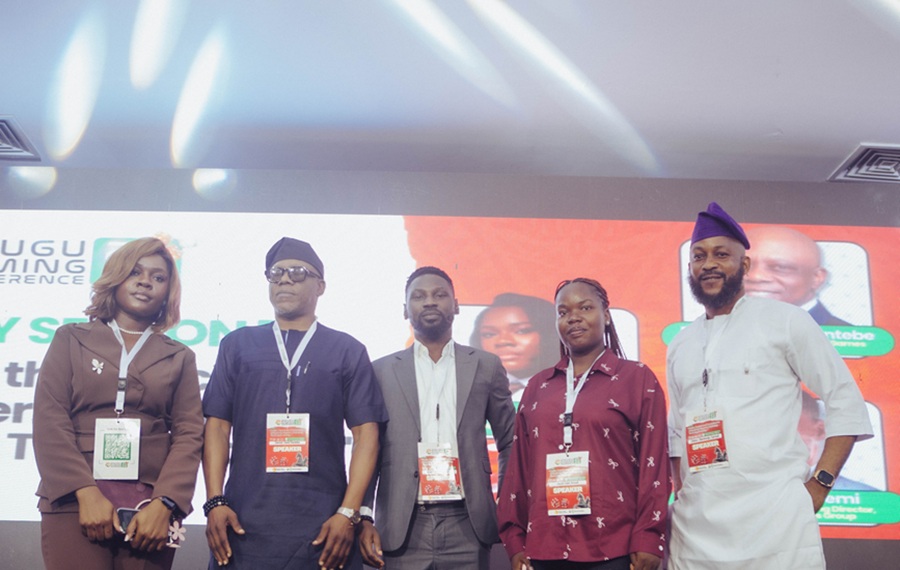
- Panellists at the Enugu Gaming Conference 2026 (#EGC2026) split Nigeria’s iGaming stack into four layers – platforms, payments, product design and security, and found the country owns some, rents others, and is not yet ready to govern the last.
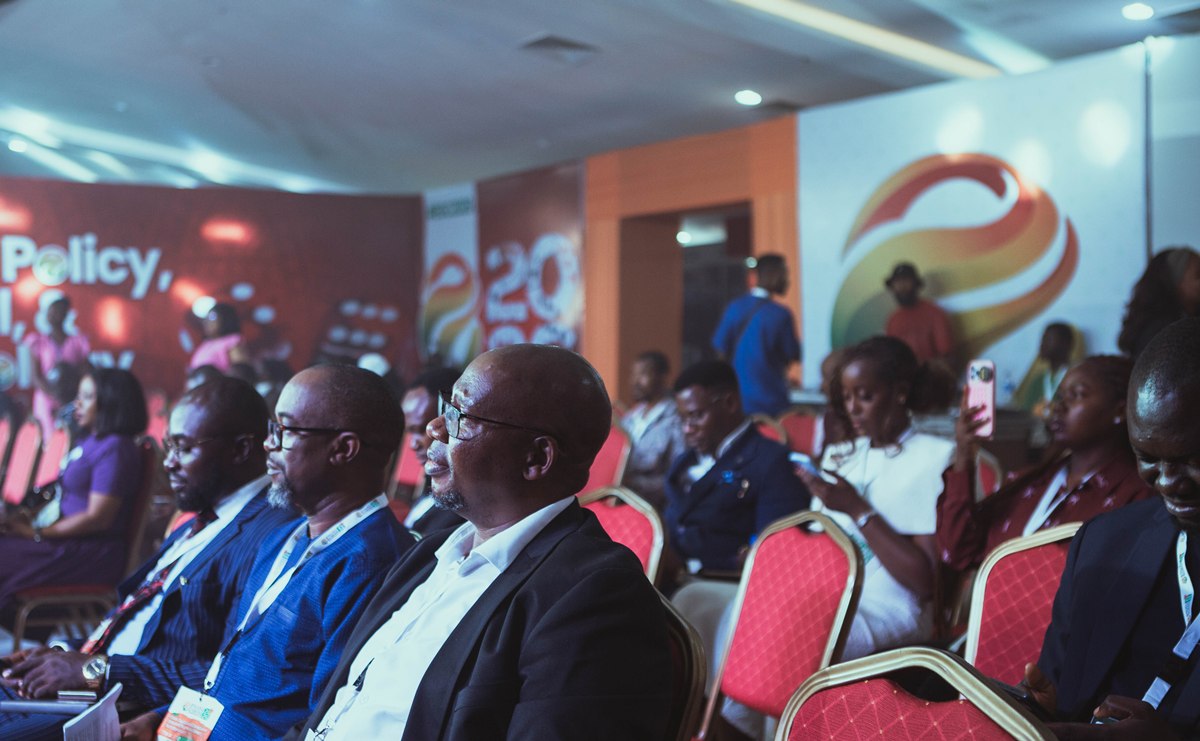
A panel session at the Enugu Gaming Conference 2026 (#EGC2026) put a blunt question to four operators, developers and risk specialists in Nigeria’s betting and gaming industry: how much of the technology powering the sector is genuinely Nigerian, and does it matter if local firms own only the layer the customer sees?
The panel moderated by Peace Ugonma Nwankpa, iGaming analyst and writer at Find.co, discussed: “Building the Stack: Can Nigeria Own its iGaming Technology?” and featured Derrick David Kentebe, founder, CEO and executive chairman of YangaGames Technologies Limited; Olaitan Olanrewaju Samuel, business development manager at DalaPay and founder of iBetAfrica; Kelani Opeyemi Mercy, co-founder and lead at iSoftnova Tech Limited; and Oluchi Faith Amadi, a cybersecurity GRC analyst at Privacure, Cybarik Limited.
Platforms: a rent-or-buy decision, not a talent gap
Kentebe told the panel that most Nigerian operators still rely on foreign platform providers, but said this reflects perceived reliability and support capacity rather than a shortage of local engineering talent.
He argued Nigerian developers are increasingly pitching operators directly, often at a fraction of the cost of foreign vendors, and said the industry is now having a more open conversation about local content than in previous years.
He said trust, not skill, is the remaining barrier: developers need to demonstrate they understand compliance concerns such as responsible-gaming controls and data protection from the design stage.
On whether full platform ownership matters, Kentebe said there is no universal answer, it depends on an operator’s strategy, capital position and long-term goals, and that “you can either rent or you can buy.”
Payments: Nigeria doesn’t own the cross-border leg
Asked whether Nigeria owns payments outright or only the domestic segment, Olaitan Olanrewaju Samuel said local rails handle domestic transfers seamlessly because the infrastructure sits entirely within Nigeria.
Cross-border transfers are a different matter, he said: once a transaction leaves the country, his example was a transfer to Ghana, it must pass through international settlement systems and comply with the destination country’s own regulatory rules.
“When it is crossing the border… we don’t own it. It is never for us,” he said, comparing the patchwork of national payment regulations across Africa to driving on shared highways rather than a private estate road.
He called for African countries to build common cross-border payment rules, similar to a regional road network, to make settlement easier across the continent over time.
Product: coding talent is not the same as risk expertise
Kelani Opeyemi Mercy said the technical barrier to a homegrown sportsbook or betting platform is smaller than the trust barrier.
Writing code, she said, is a learnable skill; pricing risk, tying algorithms to the odds, margins and payout mathematics that determine whether an operator is profitable, requires a different kind of expertise that many gaming-technology failures trace back to, regardless of how sound the underlying code is.
She said her company’s platform work has given Nigerian developers visibility into the mathematical assumptions behind foreign providers’ odds and reporting, allowing local teams to interrogate figures presented to regulators or partners.
Asked what would ultimately tip an operator toward a Nigerian-built system, she pointed to integrity and track record: she said she has seen locally contracted developers who were later found working against the operators that employed them, and said trustworthiness and a demonstrated delivery record matter as much as technical capability.
Security: ‘We are not yet ready to own it’
Oluchi Faith Amadi gave the panel’s most direct answer on data protection, saying Nigerian operators are not yet ready to claim full ownership of the technology if they cannot secure the personal and financial data, including bank details and identification numbers that players hand over when they sign up.
She cited a conversation with an unnamed platform founder who described hosting on Microsoft Azure as sufficient protection, and said that reasoning misreads the cloud shared-responsibility model: providers secure the infrastructure, but the operator remains responsible for securing the data placed on it.
She said the scale of iGaming platforms, high transaction velocity and rich customer data in one system, makes them attractive targets, and argued that security has to be built in from the design stage rather than treated as a compliance step completed once and revisited only for the next audit cycle.
She described this as “cyber resilience”: continuous monitoring that would let a platform demonstrate its security posture at any point, not only when a certification is due for renewal.
“Security and data governance are not a feature of the stack,” she said. “They are a precondition to building the stack.”
Who moves first: operator or developer?
Nwankpa put a chicken-and-egg question to Kentebe, representing operators, and Mercy, representing developers: if a Nigerian operator will not risk its licence on a Nigerian-built platform, who should make the first move?
Kentebe said the burden falls on local developers to prove they can match or exceed the support and reliability operators already receive from established foreign vendors before an operator has reason to switch.
Mercy agreed, saying a local provider entering a market already served by foreign platforms for five to ten years has to demonstrate its case “beyond every doubt” before an operator will commit.
Speed versus security
The panel also addressed the operational tension between launch speed and security review, the pressure to get onboarding and deposits moving quickly, against the slower work of locking down a platform before launch.
A panellist speaking from a risk and compliance perspective said building security in from the start is faster overall than launching first and returning to add it later, citing a case in which a platform vendor deliberately skipped authentication to keep onboarding “easy,” then had to halt and rebuild before launch once the gap was flagged.
A second panellist, discussing payments specifically, said customers want both instant transfers and strong protection of their data, and that operators have to design for both simultaneously rather than trading one off against the other.

Closing verdicts
Asked to answer in one sentence whether Nigeria can own its own iGaming technology, panellists were broadly affirmative but qualified.
One panellist said security has to be treated as non-negotiable from the outset of any platform build. Olaitan said the industry can build platform ownership but will need cooperation from other African markets specifically on payments.
Nwankpa closed the session by noting that Nigerian operators currently rent significant parts of the technology stack and framed that as a deliberate financial choice rather than a failure, saying the panel’s four perspectives together mapped the honest gaps the session had set out to identify.



