



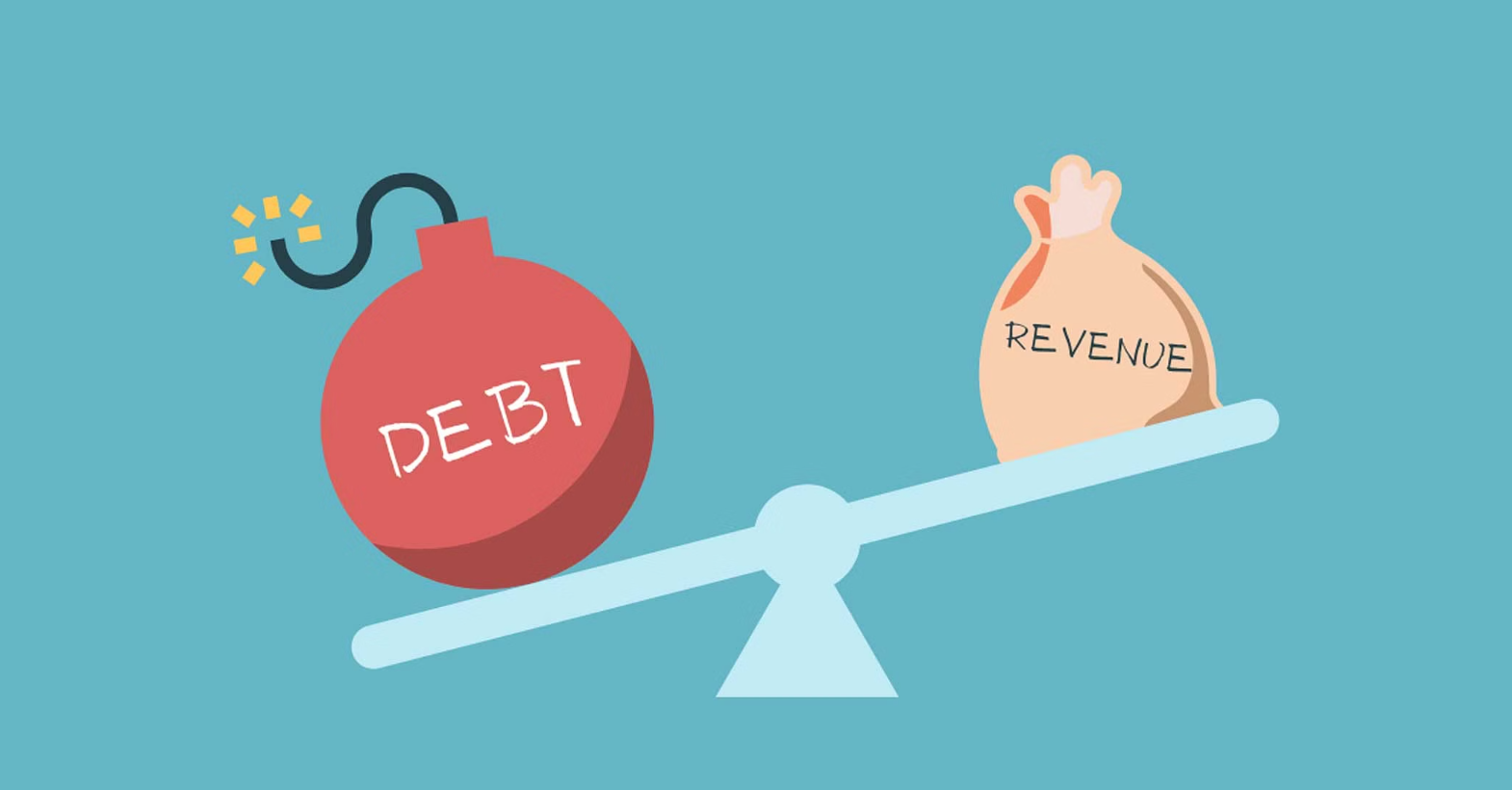
Nigeria is currently caught in a tightening fiscal vice as debt obligations increasingly crowd out the vital infrastructure spending needed to drive economic growth.
According to a media brief from the Federal Ministry of Finance, the Federal Government spent a staggering N27.2 trillion on debt servicing between 2024 and 2025, surpassing capital expenditure by N3.9 trillion in the same period.
The data paints a grim picture of budget overruns and macroeconomic shocks:
- 2024: Debt servicing hit 63tn (N4.07tn above the budget), exceeding capital spending by N1.04tn.
- 2025: The gap widened significantly; debt servicing rose to 57tn, outpacing the N11.7tn spent on capital projects by N2.87tn.
- Revenue Absorption: By late 2025, debt servicing was swallowing roughly 66% (two-thirds) of total Federal Government revenue, up from 60% in 2024.
The Ministry of Finance attributed the surge not necessarily to new borrowing, but to painful valuation effects.
The massive depreciation of the Naira automatically spiked the cost of servicing dollar-denominated external debt. Simultaneously, the Central Bank’s aggressive monetary tightening to fight inflation pushed domestic interest rates higher, making internal debt significantly more expensive to manage.
Subscribe to our Telegram channel for the latest updates.
Follow the latest developments with instant alerts on breaking news, top stories, and trending headlines.

A significant portion of the nominal debt jump involves the securitization of N30 trillion in Ways and Means advances.
Previously kept off the books, these Central Bank overdrafts have now been formally recognized in the public debt framework, a move the government describes as choosing long-term sustainability over short-term illusion.
While the government touts transparency and an 84% capital budget performance in 2024, the human cost remains the real concern.
With debt servicing now projected to hit N15 trillion in 2026, the fiscal space for education, healthcare, and digital infrastructure is shrinking.
As Dr. Muda Yusuf of the CPPE notes, this trajectory acts as a massive constraint on the government’s capacity to deliver growth-enhancing projects. For an economy desperately needing a deep tech and infrastructure revolution, being stuck in a loop of paying for past consumption rather than future production is a recipe for stagnation.
Despite a rise in aggregate revenue to N22tn by November 2025, a massive shortfall in oil revenue, actual inflows were just 19% of the N37.4tn projection, left the Federal Government bearing the brunt of the fiscal squeeze