


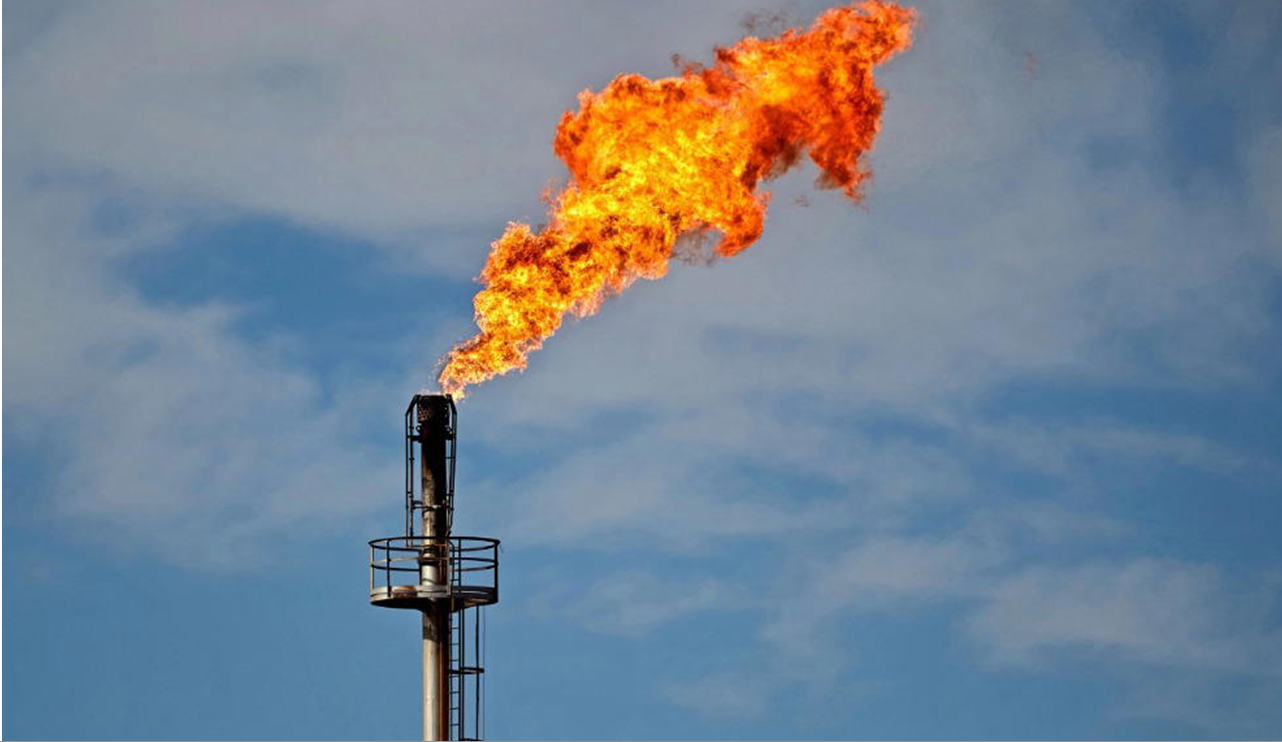
Nigeria continues to grapple with the economic, environmental, and social costs of gas flaring despite its status as one of Africa’s top producers of natural gas.
Recent data reveals that in 2024 alone, the country flared natural gas valued at $1.05 billion, equivalent to electricity generation potential of 30.1 thousand GigaWatt hours, enough to drastically reduce the nation’s chronic power shortages.
The penalties associated with gas flaring, estimated at $602 million, remain largely unenforced, raising concerns about regulatory weakness and ineffective oversight.
The Nigerian government has introduced several policies, including the Petroleum Industry Act (PIA) and the Gas Flaring, Venting & Methane Emissions (Prevention of Waste and Pollution) Regulations, 2023, aimed at tackling this menace. Additionally, the Nigerian Gas Flare Commercialization Project (NGFCP) was launched as a market-based solution to allocate flared gas to third-party investors for industrial and power sector use. Yet, implementation challenges have stifled progress.
In an exclusive commentary on the issue, Dr. Saheed Abudu, a researcher and lawyer specializing in Energy and Natural Resources Law and International Investment Law, and former researcher at the Tulane Center for Energy Law, described gas flaring as a symptom of Nigeria’s regulatory inertia.
“If Nigeria is to truly end this wasteful practice, it must look beyond its borders and learn from the successful blueprints of other oil and gas powerhouses. The framework of the NGFCP is theoretically sound, but without strong enforcement and political determination, it risks becoming another unfulfilled policy,” Dr. Abudu said.
He noted that the persistent lack of political will, overreliance on International Oil Companies (IOCs), and repeated shifting of flare-out deadlines undermine Nigeria’s credibility.
“The continuous revisions of flare-out deadlines, from 2025 now extended to 2030, together with the reluctance of producers to pay fines, underscore a regulatory environment that has failed to hold operators accountable. These delays communicate that compliance is optional,” he emphasized.
Dr. Abudu further highlighted deep-rooted institutional problems.
“Significant bottlenecks persist, including administrative delays, overlapping regulatory mandates, and above all, resistance from producers who see flare gas utilization as disruptive to their core oil operations. Inadequate infrastructure for gas gathering and distribution compounds the problem, making many flare sites commercially unviable without massive upfront investments,” he explained.
Drawing comparisons with other resource-rich nations, Dr. Abudu argued that Nigeria must adopt proven strategies.
He explained that Norway adopted a top-down approach where no gas utilization plan meant no project approval, and combined this with a stringent carbon tax that forced companies to innovate and invest in capture technologies.
Saudi Arabia, through its state-owned oil giant Saudi Aramco, pursued a national strategy that treated gas as a resource, not waste.
With a master gas gathering plan and billions invested in infrastructure, flaring was phased out, reflecting the level of corporate-level commitment Nigeria has lacked.
Angola, he added, offers the most relevant case for Nigeria. After decades of flaring, Angola rolled out its National Gas Master Plan, partnered with international investors, and, with World Bank support, built the infrastructure needed to monetize gas.
Their progress, he said, proves that resource stewardship is possible with political will and foreign partnerships.
Dr. Abudu outlined a roadmap Nigeria could adopt to reverse its losses and position itself as a competitive gas economy.
“Nigeria must transition to stricter enforcement of regulations, making flare penalties genuinely punitive rather than symbolic. No new oil project should proceed without a credible gas utilization plan. The government must also act as a catalyst, as Angola did, by incentivizing investment in gas infrastructure and ensuring that producers cannot simply evade their obligations,” he stressed.
He added that empowering third-party investors to participate in gas commercialization is key, but this requires deliberate policies to strengthen the domestic gas market.
“The government must make the Nigerian gas market more competitive and attractive for investors. Incentives, security of investments, and legal certainty are crucial. Without these, potential investors will continue to shy away, leaving the problem unresolved,” he said.
Experts agree that ending gas flaring is not just about environmental sustainability but also about unlocking economic potential. If properly harnessed, flared gas could power industries, create jobs, and generate billions in revenue.
Dr. Abudu concluded with a stark warning:
“The flames burning across the Niger Delta are not merely an environmental hazard; they represent wasted economic opportunities and human development potential. Nigeria cannot afford to treat gas flaring as business as usual. It must move from rhetoric to decisive action.”



