



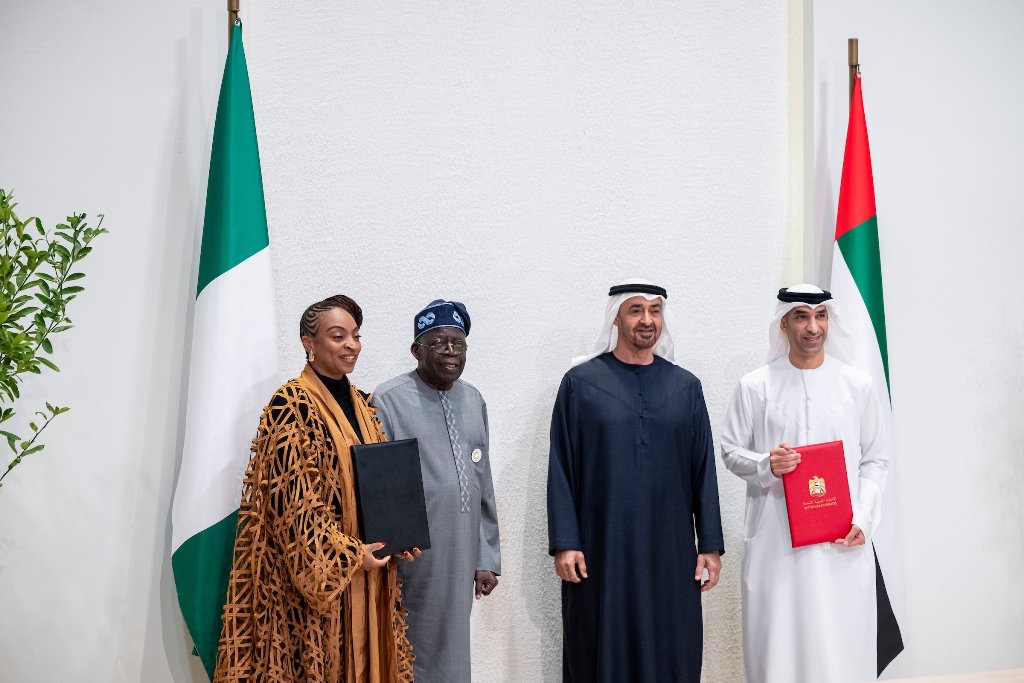
In a move that could reshape Nigeria’s trade landscape and widen economic horizons for local businesses, Nigeria and the United Arab Emirates (UAE) have agreed to remove tariffs on more than 13,000 goods traded between the two countries, a landmark step in deepening bilateral economic ties.
Signed on January 13, 2026, the Nigeria–UAE Comprehensive Economic Partnership Agreement (CEPA) was inked in the presence of Nigeria’s President Bola Tinubu and UAE President Sheikh Mohamed bin Zayed Al Nahyan, with Nigeria’s Minister of Industry, Trade and Investment Dr Jumoke Oduwole and the UAE’s Minister of Foreign Trade Dr Thani bin Ahmed Al Zeyoudi leading negotiations.
For many Nigerian manufacturers and exporters, the pact offers a fresh beginning.
“This agreement is a strategic instrument for economic transformation,” said the Nigerian minister, highlighting the promise of improved market access, broader investment flows and deeper cooperation.
Under the arrangement, Nigeria will eliminate tariffs on 6,243 products imported from the UAE, while the UAE will remove duties on 7,315 Nigerian products. The tariff cuts will be phased in over time, with a substantial share taking effect immediately and the rest scheduled over the next three to five years.
In practical terms, this means that agricultural and industrial exports such as fish, cereals, cotton, pharmaceuticals and chemicals will enter the lucrative UAE market duty-free, while machinery, vehicles, electrical equipment and various manufactured goods are also set for phased tariff removal.

On the Nigerian side, the agreement also frees a range of UAE-manufactured goods from tariffs, including mineral fuels, machinery and plastics, enhancing the flow of industrial and consumer products into local markets.
Beyond tariff elimination, the CEPA extends into services and commercial mobility. Nigerian businesses and professionals are now poised to access 108 service sectors in the UAE, and individuals can enter the UAE for business exploration and investment under structured visa arrangements.
Officials say the pact aligns with Nigeria’s broader economic goals, particularly the drive to diversify non-oil exports, attract foreign direct investment, and strengthen Nigeria’s position as a gateway into the wider African market under frameworks like the World Trade Organization and the African Continental Free Trade Area (AfCFTA).
For Nigerian entrepreneurs and exporters, the tariff-free access offers more than cost savings. It symbolises enhanced competitiveness and a clearer pathway into dynamic global markets, with the UAE serving as a strategic hub connecting Africa to the Middle East and beyond.
As implementation begins, businesses are advised to engage with trade agencies and commercial bodies to fully leverage new export opportunities and navigate the rules of origin and other technical requirements outlined in the agreement.