

ADVERTISEMENT
Friday, June 12, 2026
Tech | Business | Economy
No Result
View All Result
  • Technology
    • Trends
    • Telecoms
      • Broadband
    • ConsumerTech
      • Gadgets and Appliances
      • Apps
      • Accessories
      • Reviews
      • Unboxing
    • EnterpriseTECH
    • Security & Data Protection
    • How To
  • Business
    • Company News
    • StartUPs
      • Founder’s Story
      • Funding
    • Deals
    • People & Moves
    • SME & Entrepreneur Focus
    • BUSINESS SENSE FOR SMEs
    • Competition & Market Positioning
    • Commerce & Mobility
    • Travel
    • WomenPreneurs
  • Economy
    • Macroeconomic Trends
      • Macro Monday
      • TE Insights
    • Finance
      • Banks
      • Fintech
      • Insurance
      • Digital Assets
      • Personal Finance
    • Policies
      • Tech & Society
    • Market Analysis
    • Jobs & Workforce Economy
  • Features
    • Guest Writer
      • Chidiverse
      • Digital Assets
      • GameTech
    • EventDIARY
    • IndustryINFLUENCERS
    • MarkTECH
    • TBS
    • NewsEXTRA
  • Editorial
  • Brand Content
  • TECHECONOMY TV
Friday, June 12, 2026
Tech | Business | Economy
No Result
View All Result
Tech | Business | Economy
No Result
View All Result

Nigerian Government Faces 16 Key Demands from Trade Union Congress

Justice Godfrey Okamgba by Justice Godfrey Okamgba
June 7, 2023
in Company News
Reading Time: 3 mins read
0
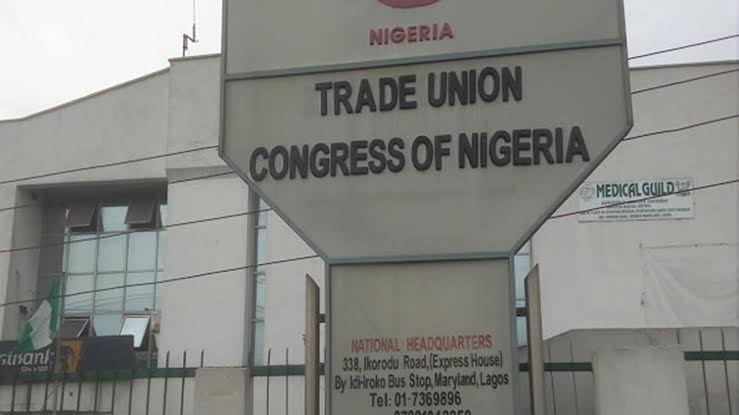
Trade Union Congress

The Trade Union Congress of Nigeria (TUC) has made a series of demands, including the implementation of a new minimum wage of N200,000 per month and a reversion to the previous pump price of N185 per liter for petrol.

The TUC called for a conducive environment for negotiation and stated that the minimum wage should be increased by the end of June 2023, with consequential adjustments for the cost of living allowance.

In a statement issued by TUC President Festus Osifo and Secretary General Nuhu Toro, the following demands were highlighted:

  1. Maintenance of the previous pump price of petrol (N185 per liter) while discussions continue.
  2. Increase in the minimum wage from the current N30,000 to N200,000, with consequential adjustments on the cost of living allowance.
  3. Inclusion of a representative of state governors in the negotiation process, with a commitment from all governors to implement the new minimum wage.
  4. Tax holiday for employees earning less than N200,000 or $500 per month, whichever is higher.
  5. Introduction of a PMS allowance for those earning between N200,000 and N500,000 or $500 to $1,200 per month, whichever is higher.
  6. Maintenance of a stable exchange rate for retailing PMS, with a limit of two percent fluctuation for the next 10 years. If the fluctuation exceeds two percent, the minimum wage will automatically increase at the same rate.
  7. Establishment of an intervention fund, with the government contributing N10 per liter on all locally consumed PMS, to address national issues in education, health, and housing. A governance structure involving labor, civil society, and government will manage the implementation.
  8. Provision of mass transit vehicles by the federal government and the immediate setup of a subsidized transportation system by state governments.
  9. Review of the National Health Insurance Scheme to cover more Nigerians and ensure an adequate supply of drugs.
  10. Visitation to refineries undergoing rehabilitation to assess the progress and establish a timeline for completion.
  11. Immediate constitution of the National Labour Advisory Council (NLAC) by the labor minister, allowing for discussions between government, labor, and employers on issues affecting workers.
  12. Provision of direct subsidies for food items, starting with the allocation of $800 million. Access to the National Housing Fund (NHF) for genuine workers, with a framework to be discussed and agreed upon.
  13. Deployment of Compressed Natural Gas (CNG) across the country as previously promised by the government, with the development of a framework and timeline.
  14. Reduction of the cost of governance by 15 percent in 2024 and 30 percent in 2025 through a joint framework between labor and government.
  15. Implementation of a comprehensive plan to maintain roads and expand the rail network nationwide, as well as the design of a social housing policy for workers through a rent-to-own system.
  16. Assessment of the state of electricity in the country and the formulation of an action plan with defined timelines for improvement.

The TUC’s demands encompass a range of issues, focusing on improving workers’ welfare, reducing the cost of living, and addressing infrastructure and social challenges in Nigeria


0Shares
Previous Post

Almost $30K Stolen via Fake Hardware Wallet, Kaspersky Investigation Shows 

Next Post

Controversial Nigeria Air Launch: Olumide Provides Answers to Lawmakers

Justice Godfrey Okamgba

Justice Godfrey Okamgba

Related Posts

Cape Verde ccTLD | Hello.cv | FMCIDE

FMCIDE-Hello.cv Deal Faces Backlash over Nigeria First Policy

June 11, 2026
ABBOTT IMG - healthcare local manufacturing

Nigeria Advances Local Healthcare Manufacturing through Multi-Stakeholder Collaboration

June 11, 2026

NRS Unveils Rev360 Digital Tax Platform to Improve Compliance

June 11, 2026
Load More
Next Post
Air Nigeria

Controversial Nigeria Air Launch: Olumide Provides Answers to Lawmakers

Leave a Reply Cancel reply

Your email address will not be published. Required fields are marked *

I agree to the Terms & Conditions and Privacy Policy.

This site uses Akismet to reduce spam. Learn how your comment data is processed.

Techeconomy Podcast
Techeconomy Podcast

The Techeconomy Podcast is a thought-leadership show exploring the powerful intersection of technology, business, and the economy, with a strong focus on Africa’s fast-evolving digital landscape.

Financing the Future: Venture Debt, Local Capital & African Innovation | TBS May 2026 Webinar
byTecheconomy

Africa’s innovation ecosystem is evolving, but where will the funding for the next generation of startups come from?

In this edition of the Techeconomy Business Series (TBS) May 2026, industry experts explore how local capital, venture debt, and smarter investment structures are redefining startup growth and innovation across Africa.

🎙️ Featured Speakers:

* Ebunoluwa Ashley-Dejo

* Damilare Davola

* Success Ajilore (STN & Accelerated Plus)

Key conversations in this webinar include:

✔️ The future of startup financing in Africa

✔️ Venture debt and alternative funding models

✔️ The role of local investors in scaling innovation

✔️ Sustainable investment strategies for African startups

✔️ Opportunities and challenges in the African tech ecosystem

Subscribe for more conversations shaping Africa’s digital economy and innovation landscape.

#TBS2026 #AfricanInnovation #VentureDebt #StartupFinance #TechInAfrica #Techeconomy #AfricanStartups #InnovationEconomy

Financing the Future: Venture Debt, Local Capital & African Innovation | TBS May 2026 Webinar
May 27, 2026
Techeconomy
PROTECTING INNOVATION IN AFRICA’S STARTUP ECOSYSTEM
April 29, 2026
Techeconomy
BUILDING TRUST IN AFRICA ECOSYSTEM
February 27, 2026
Techeconomy
Navigating a Career in Tech Sales
January 29, 2026
Techeconomy
How Technology is Transforming Education, Health, and Business
November 27, 2025
Techeconomy
Search Results placeholder
MTN Live It 100 Thematic Campaign
ADVERTISEMENT
  • About Us
  • Careers
  • Contact Us
  • Privacy Policy

© 2026 TECHECONOMY.

No Result
View All Result
  • Technology
  • Business
  • Economy
  • Features
  • Editorial
  • Brand Content
  • TECHECONOMY TV

© 2026 TECHECONOMY.

This website uses cookies. By continuing to use this website you are giving consent to cookies being used. Visit our Privacy and Cookie Policy.

