

ADVERTISEMENT
Saturday, May 30, 2026
Tech | Business | Economy
No Result
View All Result
  • Technology
    • Trends
    • Telecoms
      • Broadband
    • ConsumerTech
      • Gadgets and Appliances
      • Apps
      • Accessories
      • Reviews
      • Unboxing
    • EnterpriseTECH
    • Security & Data Protection
    • How To
  • Business
    • Company News
    • StartUPs
      • Founder’s Story
      • Funding
    • Deals
    • People & Moves
    • SME & Entrepreneur Focus
    • BUSINESS SENSE FOR SMEs
    • Competition & Market Positioning
    • Commerce & Mobility
    • Travel
    • WomenPreneurs
  • Economy
    • Macroeconomic Trends
      • Macro Monday
      • TE Insights
    • Finance
      • Banks
      • Fintech
      • Insurance
      • Digital Assets
      • Personal Finance
    • Policies
      • Tech & Society
    • Market Analysis
    • Jobs & Workforce Economy
  • Features
    • Guest Writer
      • Chidiverse
      • Digital Assets
      • GameTech
    • EventDIARY
    • IndustryINFLUENCERS
    • MarkTECH
    • TBS
    • NewsEXTRA
  • Editorial
  • Brand Content
  • TECHECONOMY TV
Saturday, May 30, 2026
Tech | Business | Economy
No Result
View All Result
Tech | Business | Economy
No Result
View All Result

Home » Nigeria’s Debt Burden and the Zambian Example

Nigeria’s Debt Burden and the Zambian Example

Joel Nwankwo by Joel Nwankwo
July 4, 2023
in Finance
Reading Time: 4 mins read
1
Nigeria's debt burden, Nigeria and IDA

Zambia’s economy shrank by 3% in 2020 and only increased by a modest 1% in 2021. After the parameter shrank by 2.8% in 2020, the IMF predicted a 1.1% real GDP growth by 2022. After expanding by 4.6% in 2021, Zambia’s real GDP recovered to 3.0% at the end of the 2022 fiscal year.

Zambia prepared for growth and true financial prosperity rather than stumbling onto it. Wholesale and retail trade, agriculture, mining, and quarrying were the key drivers of the recovery. Inflation decreased from 22.1% in 2021 to 10.1% in 2022, primarily due to fewer price shocks related to food.

Due to inflationary pressures, poorer medium-term growth forecasts, financial sector vulnerabilities, and risks the policy rate was kept at 9.0% in 2021 and 2022. The budget deficit decreased from 13.8% of GDP in 2020 to 8.1% of GDP in 2021 and 8.9% of GDP in 2022.

The kwacha increased by about 12%, reaching a high of 17.425 per dollar and surpassing its 200-day moving average. The nation’s dollar bond with a maturity of July 2027 had the best performance among peers in emerging markets. The nation in southern Africa is quickly turning into a model for developing economies. Perhaps the most significant agreement that the present administration has accomplished is the most recent debt restructuring.

Nigeria's debt burden
Hakainde Hichilema, President of Zambia

It is still too soon to say whether the country’s debt restructuring agreement will have a positive impact on the real economy, but it is reasonable to say that the debt of the nation has long been a divisive matter, adding to the uncertainty in its growth process. The scenario in Nigeria is comparable to this. Debt is hurting Nigeria’s economy and will continue to do so.

Subscribe to our Telegram channel for the latest updates.

Follow the latest developments with instant alerts on breaking news, top stories, and trending headlines.

Join Channel

Although debt in and of itself is not inherently negative, higher levels of debt can lower per capita income and result in a poorer community as a whole. The economic structure of Nigeria is a clear illustration of the harmful effects of debt.

Nigeria is experiencing economic difficulties as a result of its high levels of public debt, which have stunted GDP growth, slowed export growth, decreased per-capita income, and increased poverty levels.

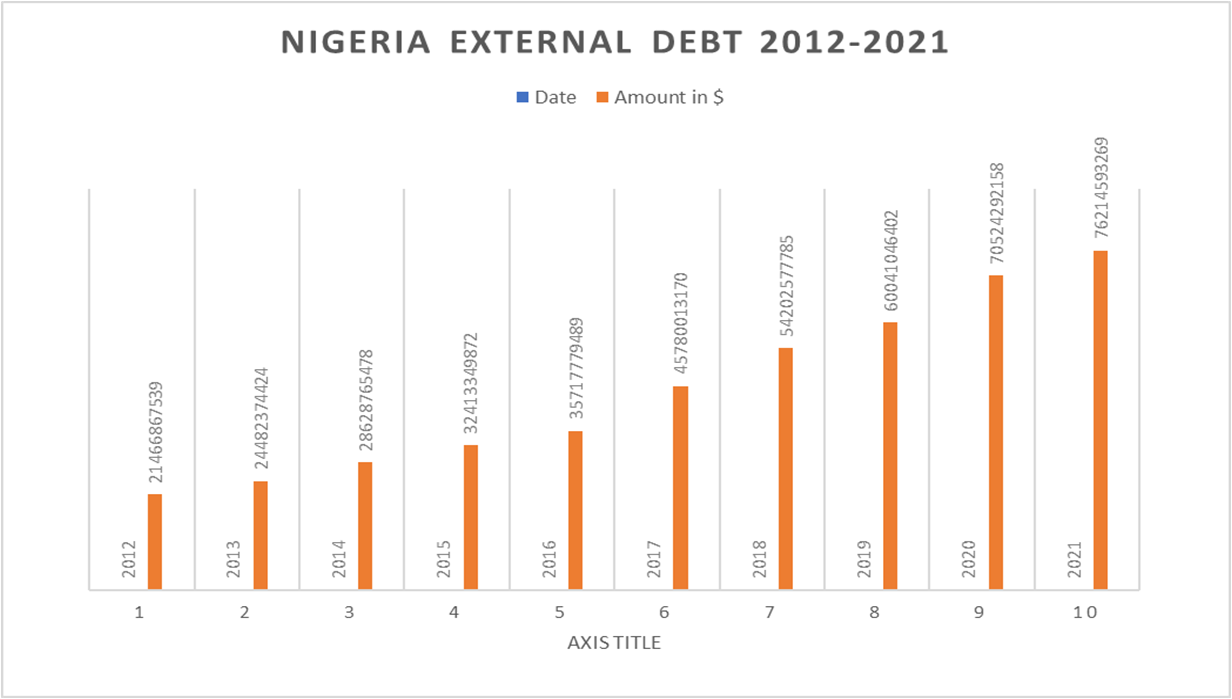
Nigeria’s debt-to-GDP ratio has been rising, but with the addition of ways and means, it is currently at 35.2%. The total Public Debt Stock owed by the government as of December 31, 2022, was N46.25 trillion, or $103.11 billion.

The overall domestic debt stock was N27.55 trillion (USD 61.42 billion) while the total external debt stock was N18.70 trillion (USD 41.69 billion) in terms of composition.

African economies have historically been characterized by fiscally conservative governments that have accumulated significant levels of debt from both local and foreign sources. These economies have shown that this dependency on debt is mostly caused by governments’ inability to finance crucial spending programs simply through the collection of tax revenues.

However, everyone is concerned about the entire amount of the debt owed by Nigeria. Given the vast natural resources of the nation, it seems incongruous.

Similar to Nigeria, Zambia’s debt burden continued to be a major impediment to economic growth, effectively denying the government access to global capital markets and forcing it to finance a recurring budget deficit through domestic borrowing, which restricts access to capital for the private sector and slows growth.

Sadly, Nigeria’s previous administrations have fallen short of their promises. We have seen our economy deteriorate and our politicians become corrupt over the past ten years. As a result, our debt has increased to unmanageable levels, which limits our ability to invest in the nation’s economy’s productive sectors and fill the gaps in health care, education, and other social services.
Source: TechEconomy

When there should have been more room for investment and growth, debt servicing, emoluments, and consumption have overtaken our national budget. The epidemic of corruption has further robbed us of the chance for prosperity by eroding our much-needed resources, including the debt itself.

Going forward, Zambia is expected to support more beneficial development initiatives. Zambia’s creditors completed a $6.3 billion debt restructuring accord, clearing the way for the International Monetary Fund (IMF) to disburse $188 million.

The $6.3 billion debt Zambia owes to foreign governments, particularly China, will be rescheduled over more than 20 years with a three-year grace period during which just interest payments are required.

The agreement not only relieves the nation’s rising debt burden and releases crucial financial resources to resurrect the economy of the nation, but it also serves as a model for other debt-stricken African nations dealing with drawn-out negotiations with their creditors.

The progress Zambia has made so far since announcing its debt restructuring plan validates its concept as a more effective road map. Nigeria may use such tactics or find one that works to address its debt issues.

0Shares
MTN Live It 100 Thematic Campaign
Previous Post

Corporate Communications in Nigeria’s Public Sector: Challenges and Prospects

Next Post

INTERVIEW: Blendification CEO Dan Bruder Speaks on Empowering new Workplace Using AI 

Joel Nwankwo

Joel Nwankwo

Joel Nwankwo is a tech journalist. He is passionate about telling stories as it relates to Africa's social and financial tech advancements. You can reach him at joel.nwankwo@techeconomy.ng

Related Posts

Naira and British Pounds, IMTOs | Pound

Pound to Naira FX Rate Today, May 29, 2026

May 29, 2026
Hot money in Nigeria - Naira | official market | Dollar

Dollar to Naira FX Rate for Today, May 29, 2026

May 29, 2026

Ghana Suspends Proposed 0.75% Wallet-to-Bank Transfer Fee, VASPA Applauds

May 28, 2026
Load More
Next Post
FNG Bond Savings

DMO Opens Subscription For 2 FGN Savings Bonds

Comments 1

  1. Pingback: Nigeria’s Debt Burden and the Zambian Example | Agriculture Forum Nigeria

Leave a Reply Cancel reply

Your email address will not be published. Required fields are marked *

I agree to the Terms & Conditions and Privacy Policy.

This site uses Akismet to reduce spam. Learn how your comment data is processed.

Techeconomy Podcast
Techeconomy Podcast

The Techeconomy Podcast is a thought-leadership show exploring the powerful intersection of technology, business, and the economy, with a strong focus on Africa’s fast-evolving digital landscape.

Financing the Future: Venture Debt, Local Capital & African Innovation | TBS May 2026 Webinar
byTecheconomy

Africa’s innovation ecosystem is evolving, but where will the funding for the next generation of startups come from?

In this edition of the Techeconomy Business Series (TBS) May 2026, industry experts explore how local capital, venture debt, and smarter investment structures are redefining startup growth and innovation across Africa.

🎙️ Featured Speakers:

* Ebunoluwa Ashley-Dejo

* Damilare Davola

* Success Ajilore (STN & Accelerated Plus)

Key conversations in this webinar include:

✔️ The future of startup financing in Africa

✔️ Venture debt and alternative funding models

✔️ The role of local investors in scaling innovation

✔️ Sustainable investment strategies for African startups

✔️ Opportunities and challenges in the African tech ecosystem

Subscribe for more conversations shaping Africa’s digital economy and innovation landscape.

#TBS2026 #AfricanInnovation #VentureDebt #StartupFinance #TechInAfrica #Techeconomy #AfricanStartups #InnovationEconomy

Financing the Future: Venture Debt, Local Capital & African Innovation | TBS May 2026 Webinar
May 27, 2026
Techeconomy
PROTECTING INNOVATION IN AFRICA’S STARTUP ECOSYSTEM
April 29, 2026
Techeconomy
BUILDING TRUST IN AFRICA ECOSYSTEM
February 27, 2026
Techeconomy
Navigating a Career in Tech Sales
January 29, 2026
Techeconomy
How Technology is Transforming Education, Health, and Business
November 27, 2025
Techeconomy
Search Results placeholder
MTN Live It 100 Thematic Campaign
ADVERTISEMENT
  • About Us
  • Careers
  • Contact Us
  • Privacy Policy

© 2026 TECHECONOMY.

No Result
View All Result
  • Technology
  • Business
  • Economy
  • Features
  • Editorial
  • Brand Content
  • TECHECONOMY TV

© 2026 TECHECONOMY.

This website uses cookies. By continuing to use this website you are giving consent to cookies being used. Visit our Privacy and Cookie Policy.


