

ADVERTISEMENT
Friday, June 5, 2026
Tech | Business | Economy
No Result
View All Result
  • Technology
    • Trends
    • Telecoms
      • Broadband
    • ConsumerTech
      • Gadgets and Appliances
      • Apps
      • Accessories
      • Reviews
      • Unboxing
    • EnterpriseTECH
    • Security & Data Protection
    • How To
  • Business
    • Company News
    • StartUPs
      • Founder’s Story
      • Funding
    • Deals
    • People & Moves
    • SME & Entrepreneur Focus
    • BUSINESS SENSE FOR SMEs
    • Competition & Market Positioning
    • Commerce & Mobility
    • Travel
    • WomenPreneurs
  • Economy
    • Macroeconomic Trends
      • Macro Monday
      • TE Insights
    • Finance
      • Banks
      • Fintech
      • Insurance
      • Digital Assets
      • Personal Finance
    • Policies
      • Tech & Society
    • Market Analysis
    • Jobs & Workforce Economy
  • Features
    • Guest Writer
      • Chidiverse
      • Digital Assets
      • GameTech
    • EventDIARY
    • IndustryINFLUENCERS
    • MarkTECH
    • TBS
    • NewsEXTRA
  • Editorial
  • Brand Content
  • TECHECONOMY TV
Friday, June 5, 2026
Tech | Business | Economy
No Result
View All Result
Tech | Business | Economy
No Result
View All Result

Home » Nigeria’s Poverty Headcount Surges to 63%

Nigeria’s Poverty Headcount Surges to 63%

Following Subsidy Reforms, Report Reveals

Staff Writer by Staff Writer
March 13, 2026
in Company News
Reading Time: 2 mins read
0
Accelerating Extreme poverty reduction through job creation and skills development and Tax Reforms | Nigeria’s Poverty

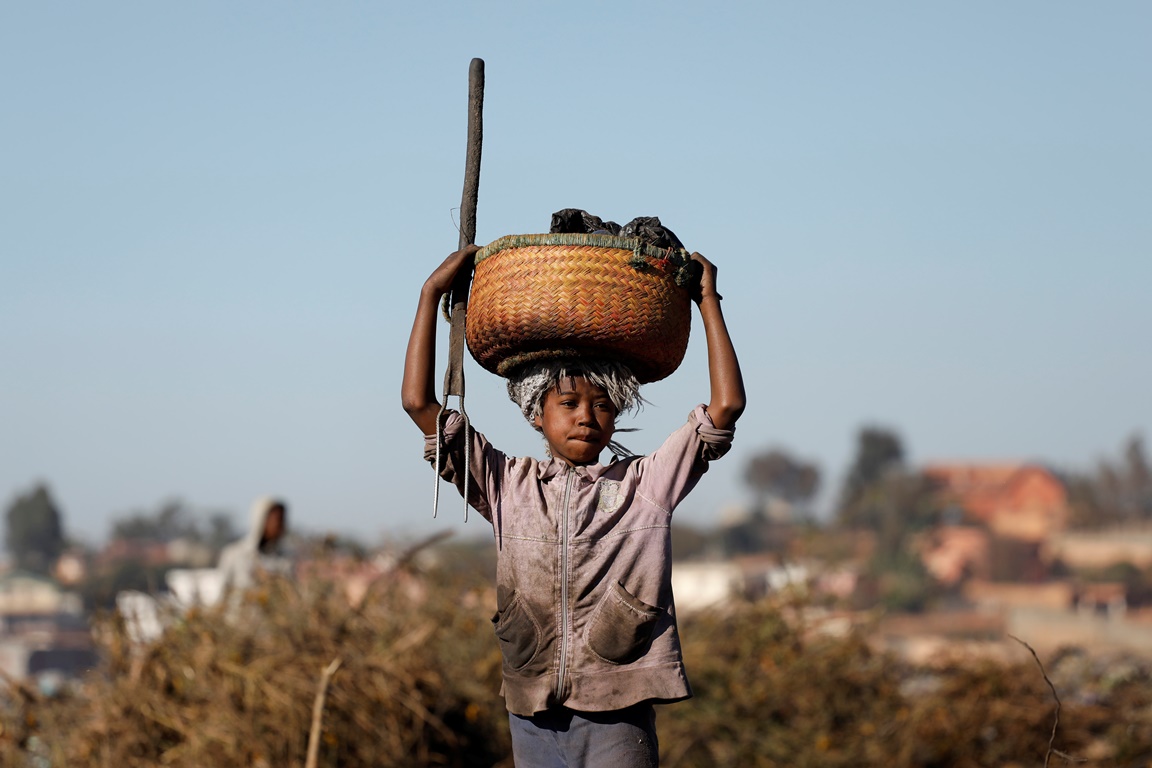
Accelerating poverty reduction through job creation and skills development - A child works in the Andralanitra garbage dump in Antananarivo, Madagascar, August 27, 2019. Picture taken August 27, 2019. REUTERS/Baz Ratner - RC13804CBA80

A new study has revealed that Nigeria’s poverty rate jumped to 63% in the wake of the federal government’s petrol subsidy removal and electricity tariff adjustments.

The report, presented at a stakeholders’ dialogue organized by Agora Policy in Abuja, highlights the deepening cost-of-living crisis despite the administration’s efforts to stabilize the macroeconomy.

The Poverty Surge and Palliative Cushion

Presenting the findings, Dr. Mohammed Shuaibu of the University of Abuja noted that the immediate aftermath of the reforms saw the national poverty headcount climb from a baseline of approximately 50% to a staggering 63%.

However, the report indicates that the introduction of social protection measures, such as the direct cash transfer program, helped moderate these figures. Following the deployment of these “safety nets,” the poverty rate reportedly eased to 56.2%.

Subscribe to our Telegram channel for the latest updates.

Follow the latest developments with instant alerts on breaking news, top stories, and trending headlines.

Join Channel

“While social transfers helped cushion the impact, especially for low-income households, the initial shock triggered a sharp erosion of purchasing power across the board,” Shuaibu stated.

Consumption Slump and Household Sacrifice

The analysis paints a grim picture of household welfare, showing a significant decline in consumption levels.

The study found that high-income households remained largely insulated from the reforms, while low-income families bore the brunt of inflationary pressures.

Qualitative data from focus group discussions across Nigeria’s six geopolitical zones revealed that many families have resorted to drastic coping strategies.

These include:

  • Reducing food consumption and rationing essential supplies.
  • Walking long distances to avoid surging public transport fares.
  • Borrowing to survive, leading to increased household debt.

Fiscal Gains vs. Social Cost

Despite the social hardship, the report acknowledged the fiscal necessity of the reforms. Data provided by the Central Bank of Nigeria (CBN) during the dialogue estimated that the previous fuel subsidy regime and foreign exchange distortions cost the Nigerian economy roughly 6% of its Gross Domestic Product (GDP).

Dr. Muhammad Abdullahi, deputy governor of the CBN for Economic Policy, emphasized that the situation had become unsustainable prior to the current administration’s intervention.

Business and Industry Impact

For the private sector, the report noted that the removal of the petrol subsidy had a contractionary effect on firm investments.

Business owners reported significant increases in operational and logistics costs, forcing many small and medium-sized enterprises (SMEs) to downsize or shut down operations entirely.

Stakeholders at the dialogue urged the government to expand and accelerate the implementation of social safety nets to prevent a further slide into poverty, particularly as the World Bank and PwC project that the absolute number of Nigerians living in poverty could remain elevated through 2026 without more targeted interventions.

As Nigeria pivots toward a market-driven energy sector, the resulting inflationary pressure continues to squeeze disposable income.

For the digital economy, this trend suggests a potential slowdown in consumer tech spending, even as the government seeks to reinvest subsidy savings into critical infrastructure and digital transformation initiatives.

0Shares
Previous Post

Easybuy Launches Sales Talent Program to Empower 10,000 Nigerians

Next Post

Billionaires’ Net Worth 2026: Dangote, Rabiu, Elumelu Top Nigeria’s Richest Ranking

Staff Writer

Staff Writer

Related Posts

Egbin Power employees

Egbin Power Honours Outstanding Employees, Talents

June 3, 2026
Taiwo Afolabi Cup Football

Amokachi, Dosu Joseph, Fatai Amoo Grace Taiwo Afolabi Cup Final

June 2, 2026

Fidelity Bank Sees Technology as a Strategic Enabler of Efficiency, Growth

June 2, 2026
Load More
Next Post
Dangote Rabiu Adenuga and Otedola net worth

Billionaires’ Net Worth 2026: Dangote, Rabiu, Elumelu Top Nigeria’s Richest Ranking

Leave a Reply Cancel reply

Your email address will not be published. Required fields are marked *

I agree to the Terms & Conditions and Privacy Policy.

This site uses Akismet to reduce spam. Learn how your comment data is processed.

Techeconomy Podcast
Techeconomy Podcast

The Techeconomy Podcast is a thought-leadership show exploring the powerful intersection of technology, business, and the economy, with a strong focus on Africa’s fast-evolving digital landscape.

Financing the Future: Venture Debt, Local Capital & African Innovation | TBS May 2026 Webinar
byTecheconomy

Africa’s innovation ecosystem is evolving, but where will the funding for the next generation of startups come from?

In this edition of the Techeconomy Business Series (TBS) May 2026, industry experts explore how local capital, venture debt, and smarter investment structures are redefining startup growth and innovation across Africa.

🎙️ Featured Speakers:

* Ebunoluwa Ashley-Dejo

* Damilare Davola

* Success Ajilore (STN & Accelerated Plus)

Key conversations in this webinar include:

✔️ The future of startup financing in Africa

✔️ Venture debt and alternative funding models

✔️ The role of local investors in scaling innovation

✔️ Sustainable investment strategies for African startups

✔️ Opportunities and challenges in the African tech ecosystem

Subscribe for more conversations shaping Africa’s digital economy and innovation landscape.

#TBS2026 #AfricanInnovation #VentureDebt #StartupFinance #TechInAfrica #Techeconomy #AfricanStartups #InnovationEconomy

Financing the Future: Venture Debt, Local Capital & African Innovation | TBS May 2026 Webinar
May 27, 2026
Techeconomy
PROTECTING INNOVATION IN AFRICA’S STARTUP ECOSYSTEM
April 29, 2026
Techeconomy
BUILDING TRUST IN AFRICA ECOSYSTEM
February 27, 2026
Techeconomy
Navigating a Career in Tech Sales
January 29, 2026
Techeconomy
How Technology is Transforming Education, Health, and Business
November 27, 2025
Techeconomy
Search Results placeholder
MTN Live It 100 Thematic Campaign
ADVERTISEMENT
  • About Us
  • Careers
  • Contact Us
  • Privacy Policy

© 2026 TECHECONOMY.

No Result
View All Result
  • Technology
  • Business
  • Economy
  • Features
  • Editorial
  • Brand Content
  • TECHECONOMY TV

© 2026 TECHECONOMY.

This website uses cookies. By continuing to use this website you are giving consent to cookies being used. Visit our Privacy and Cookie Policy.


